
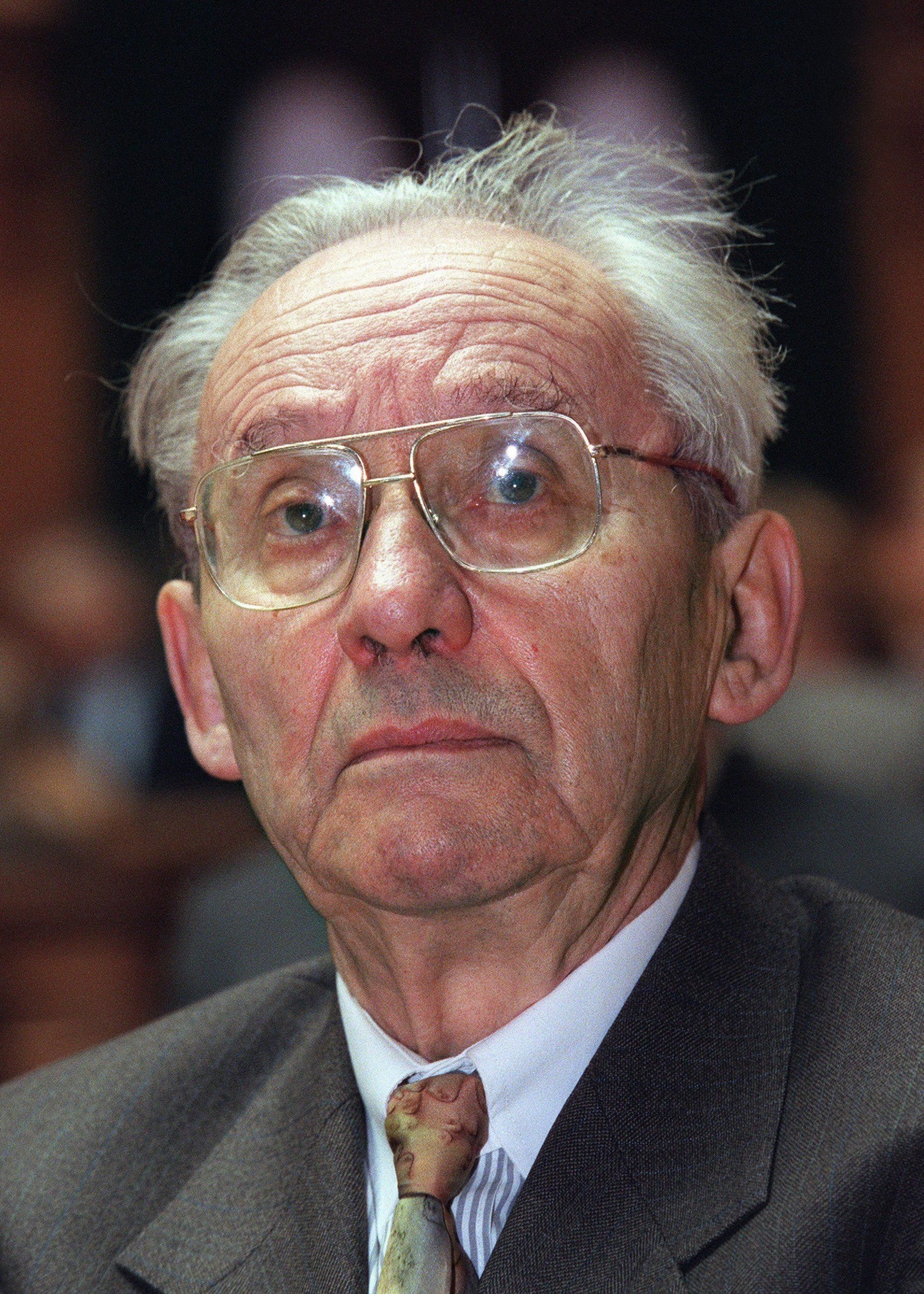
Paul Ricoeur, born on February 27, 1913, in Valence, France, is regarded as one of the most influential philosophers of the 20th century. His extensive body of work spans across multiple disciplines, including phenomenology, existentialism, hermeneutics, and the philosophy of language. Ricoeur’s intellectual journey is marked by his profound engagement with the challenges of interpretation and the role of narrative in shaping human understanding. His contributions to philosophy are not only significant in their depth but also in their enduring impact on various fields of study.
Early Life and Academic Pursuits
Paul Ricoeur’s early life was marked by tragedy. He lost both of his parents at a young age, which left him to be raised by his paternal grandparents. This early exposure to loss and existential questions would later shape much of his philosophical inquiry. Despite these challenges, Ricoeur excelled academically, pursuing philosophy at the University of Rennes, where he graduated in 1933.
Ricoeur’s academic career began in earnest after he completed his education. He started teaching philosophy at various institutions, including high schools and universities. His early teaching career included positions at the Lycée in Lorient and the Lycée Louis-le-Grand in Paris, where he began to develop his philosophical ideas further.
Ricoeur’s academic career took a significant turn when he began teaching moral philosophy at the University of Strasbourg. Here, he immersed himself in the study of phenomenology, particularly the works of Edmund Husserl, which would have a lasting influence on his thinking. Ricoeur’s commitment to phenomenology was solidified when he undertook the monumental task of translating Husserl’s Ideen into French, a work that remains a cornerstone of phenomenological studies in the French-speaking world.
The Influence of Phenomenology and Existentialism
During the mid-20th century, Paul Ricoeur became increasingly associated with phenomenology, a movement that seeks to explore the structures of consciousness and experience from a first-person perspective. He was deeply influenced by the works of Gabriel Marcel and Karl Jaspers, whose existentialist perspectives resonated with his own philosophical inquiries into human freedom, responsibility, and the meaning of life.
In 1947, Ricoeur published his first major works, including Gabriel Marcel and Karl Jaspers: Philosophy of Existence, and Karl Jaspers and the Philosophy of Existence (in collaboration with Mikel Dufrenne). These works marked the beginning of Ricoeur’s exploration of the human condition through the lens of existentialism, a theme that would continue to evolve throughout his career.
However, it was Ricoeur’s encounter with the hermeneutic tradition that would ultimately define his philosophical legacy. Hermeneutics, the theory and methodology of interpretation, particularly of texts, provided Ricoeur with a framework to address the complexities of meaning and understanding. His hermeneutic philosophy sought to bridge the gap between the literal and the symbolic, between the text and the reader, and between the intention of the author and the interpretation of the audience.
Hermeneutics and the Philosophy of Interpretation
Paul Ricoeur’s work in hermeneutics represents some of his most significant contributions to philosophy. His approach to interpretation is grounded in the belief that understanding is always mediated by language, culture, and history. For Ricoeur, interpretation is not merely about uncovering a singular, objective meaning; rather, it is an ongoing dialogue between the text and the interpreter.
Ricoeur’s seminal work, The Conflict of Interpretations (1969), exemplifies his approach to hermeneutics. In this collection of essays, Ricoeur explores the tension between different interpretations of texts, arguing that no single interpretation can claim absolute authority. Instead, he advocates for a pluralistic approach to interpretation, one that acknowledges the validity of multiple perspectives while also recognizing the limitations of each.
One of Ricoeur’s key insights in hermeneutics is his concept of the “hermeneutic arc.” This idea suggests that interpretation involves a movement from understanding to explanation and back to understanding. It is a cyclical process in which the interpreter engages with the text, formulates hypotheses, tests them against the text, and then revises their understanding in light of new insights. This approach underscores the dynamic and evolving nature of interpretation, which is never fully complete but always open to revision and reinterpretation.
Ricoeur’s hermeneutic philosophy also extends to his exploration of symbols and myths. In works such as The Symbolism of Evil (1960) and Freud and Philosophy: An Essay on Interpretation (1965), Ricoeur examines the ways in which symbols and myths convey meaning that goes beyond literal interpretation. He argues that symbols have a dual reference: they point to a concrete reality while also evoking deeper, often unconscious meanings. This duality makes symbols a powerful tool for understanding the human condition, as they bridge the gap between the known and the unknown, the rational and the irrational.
The Concept of Narrative Identity
One of Paul Ricoeur’s most influential contributions to contemporary thought is his concept of narrative identity. This idea is developed most fully in his three-volume work Time and Narrative (1983-1985) and his later book Oneself as Another (1990). Narrative identity refers to the way in which individuals construct their identities through the stories they tell about themselves. For Ricoeur, identity is not a static, unchanging essence but rather a dynamic process that is shaped by the narratives we create and engage with.
Ricoeur’s concept of narrative identity challenges traditional notions of selfhood that view identity as a fixed and stable entity. Instead, he argues that our identities are constantly evolving as we reinterpret our past experiences, integrate new information, and project ourselves into the future. This process of narrative construction allows individuals to make sense of their lives, establish continuity between past and present, and envision future possibilities.
Ricoeur’s exploration of narrative identity has had a profound impact on fields beyond philosophy, including psychology, literary theory, and ethics. It has influenced how we think about memory, history, and the role of storytelling in shaping personal and collective identities. Ricoeur’s work underscores the importance of narrative in human life, not just as a means of communication but as a fundamental way of understanding ourselves and the world around us.
Later Life and Legacy
In the 1960s and 1970s, Paul Ricoeur’s academic career reached new heights as he took on prominent teaching positions at the University of Nanterre and the University of Chicago. At Nanterre, Ricoeur served as rector from 1969 to 1970, during a period of significant social and political upheaval in France. His efforts to implement reforms in response to student protests demonstrated his commitment to academic freedom and his belief in the power of education to effect social change.
During his tenure at the University of Chicago, Ricoeur became closely associated with the Divinity School, where he continued to explore the intersections of philosophy, theology, and ethics. His work during this period reflects a deep engagement with questions of justice, responsibility, and the ethical implications of interpretation.
Paul Ricoeur’s contributions to philosophy were recognized with numerous awards and honors throughout his life, including the prestigious Hegel Prize (1985) and the Balzan Prize for Philosophy (1999). He was also a member of several esteemed academic institutions, including the Académie française.
Ricoeur’s legacy extends far beyond his written works. His influence can be seen in the many scholars who have drawn on his ideas to explore new avenues of thought in philosophy, theology, literature, and the social sciences. Ricoeur’s emphasis on the importance of dialogue, interpretation, and narrative continues to resonate in contemporary debates about identity, ethics, and the nature of understanding.
Conclusion
Paul Ricoeur passed away on May 20, 2005, in Châtenay-Malabry, France, leaving behind a rich intellectual legacy that continues to inspire scholars and thinkers around the world. His work remains a touchstone for those interested in the complexities of interpretation, the role of narrative in shaping human experience, and the ethical dimensions of understanding.
In reflecting on Ricoeur’s life and work, it becomes clear that his contributions to philosophy are not only a testament to his intellectual rigor but also to his deep commitment to exploring the human condition. Ricoeur’s thought invites us to consider the ways in which we make meaning in our lives, how we navigate the challenges of interpretation, and how we construct our identities through the stories we tell. In an era where questions of identity, meaning, and ethics are more pressing than ever, Paul Ricoeur’s insights offer valuable guidance and continue to shape the way we think about ourselves and the world.


