
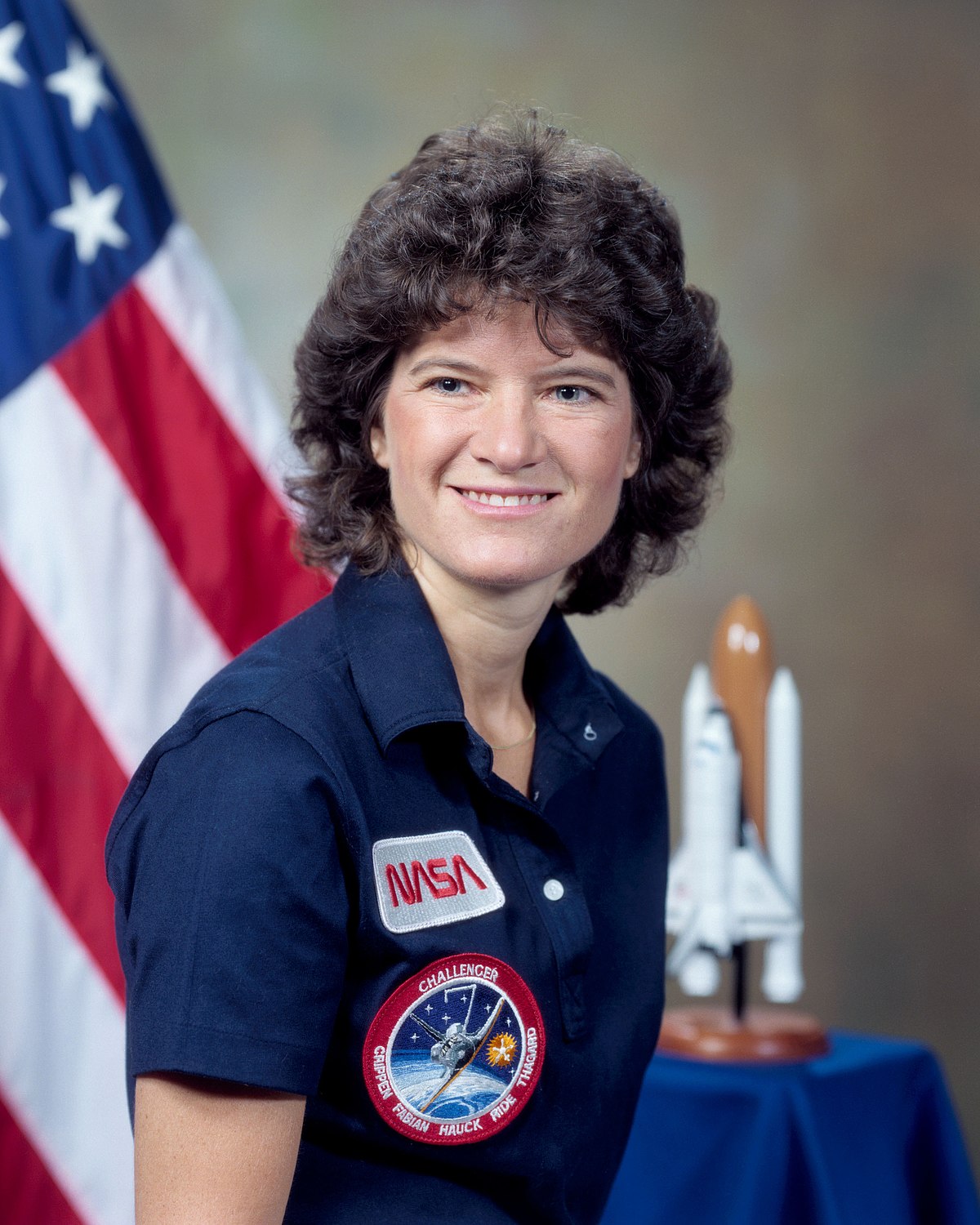
Sally Kristen Ride, a name synonymous with groundbreaking achievements in space exploration, was the first American woman to venture into space. Born on May 26, 1951, in Encino, Los Angeles, California, Ride’s life was marked by her contributions to science, her advocacy for STEM education, and her role as a trailblazer for women in space. This article explores the life, career, and enduring legacy of Sally Ride, providing detailed insights and historical context.
Early Life and Education
Sally Ride was born into a family that valued education and encouraged curiosity. Her father, Dale Ride, was a political science professor, and her mother, Joyce Ride, was a volunteer counselor at a women’s correctional facility. From a young age, Sally demonstrated a keen interest in both sports and academics. She was particularly passionate about tennis, a sport she played competitively during her youth. Her athletic talent earned her a scholarship to the Westlake School for Girls in Los Angeles.
After high school, Ride attended Swarthmore College but later transferred to Stanford University, where she found her true calling in physics. She graduated with a double major in English and Physics, showcasing her diverse intellectual interests. Sally continued her education at Stanford, earning a Master’s degree and a Ph.D. in Physics. Her research focused on astrophysics and laser physics, fields that would later play a critical role in her career at NASA.
Sally Ride and NASA
Sally Ride’s journey to becoming an astronaut began in 1978 when she answered a NASA advertisement seeking applicants for the astronaut program. This was a historic recruitment drive, as it was the first time NASA had opened its astronaut training program to women. Out of approximately 9,000 applicants, Ride was one of 35 selected, and one of six women chosen to join the program.
At NASA, Sally Ride quickly distinguished herself. She worked as a communications officer for the second (STS-2) and third (STS-3) Space Shuttle missions, a role that involved direct communication with the astronauts in space. She also contributed to the development of the Space Shuttle’s robotic arm, a critical tool for satellite deployment and retrieval.
The First American Woman in Space
On June 18, 1983, Sally Ride made history aboard the Space Shuttle Challenger during the STS-7 mission. At the age of 32, she became the first American woman to travel to space, a monumental achievement not only for her but for the nation as a whole. The mission, which lasted six days, involved deploying two communication satellites and conducting pharmaceutical experiments. Ride also operated the robotic arm, which was used to retrieve a satellite for the first time.
Ride’s journey into space was a significant milestone in the fight for gender equality in STEM fields. It shattered the glass ceiling for women in aerospace, proving that women were equally capable of performing in the demanding environment of space exploration. Her achievement was celebrated worldwide, and she became an instant icon, inspiring countless young women to pursue careers in science and engineering.
Subsequent Space Missions and the Challenger Disaster
Sally Ride’s success on STS-7 led to her selection for a second space mission. In 1984, she flew again aboard the Challenger on the STS-41-G mission, which lasted eight days. During this mission, Ride continued to demonstrate her expertise in operating the Space Shuttle’s robotic arm and contributed to various scientific experiments. By the end of her second mission, Ride had spent over 343 hours in space, solidifying her status as a veteran astronaut.
Tragically, Ride’s third scheduled mission never took place. On January 28, 1986, the Space Shuttle Challenger disintegrated 73 seconds after liftoff, killing all seven crew members on board. The disaster was a devastating blow to NASA and the nation. In the aftermath, Sally Ride was appointed to the Rogers Commission, the presidential commission tasked with investigating the causes of the accident. Her technical knowledge and experience as an astronaut were invaluable to the investigation, which ultimately identified the failure of an O-ring seal in one of the shuttle’s solid rocket boosters as the primary cause of the disaster.
Life After NASA
Following the Challenger disaster, Sally Ride transitioned to a more administrative role within NASA. She served at NASA’s headquarters in Washington, D.C., where she played a key role in the agency’s strategic planning and continued to advocate for the future of space exploration. In 1987, Ride left NASA to pursue a career in academia and public policy.
Ride became a professor of physics at the University of California, San Diego, where she also served as the Director of the California Space Institute. Her academic work focused on encouraging young people, especially girls, to pursue careers in science and engineering. In 2001, she founded Sally Ride Science, a company dedicated to promoting STEM education. The organization developed educational programs and materials aimed at engaging middle school students in science, with a particular emphasis on encouraging girls to explore STEM fields.
Personal Life and Legacy
Sally Ride was known for her privacy, particularly concerning her personal life. After her death, it was revealed that she had been in a long-term relationship with her partner, Tam O’Shaughnessy, a former tennis player and educational psychologist, for 27 years. This disclosure made Ride the first known LGBTQ+ astronaut, adding another layer to her legacy as a trailblazer and role model.
Ride passed away on July 23, 2012, at the age of 61, after a 17-month battle with pancreatic cancer. Her death was a significant loss to the scientific community and to all those who had been inspired by her achievements. In recognition of her contributions to space exploration and STEM education, President Barack Obama posthumously awarded her the Presidential Medal of Freedom, the nation’s highest civilian honor, in 2013.
The Enduring Impact of Sally Ride
Sally Ride’s impact on society extends far beyond her achievements as an astronaut. She was a pioneer for women in science, an advocate for education, and a symbol of courage and perseverance. Her legacy is preserved through various honors and memorials, including schools, scholarships, and awards named in her honor. The Sally Ride Science Festival, an annual event that celebrates science and encourages young people to pursue STEM careers, continues to inspire future generations.
Moreover, Sally Ride’s story is a testament to the importance of diversity and inclusion in STEM fields. Her journey from a tennis player and physics student to becoming the first American woman in space is a powerful narrative that underscores the potential of women and minorities in traditionally male-dominated industries. Ride’s life demonstrates that with determination, education, and support, barriers can be broken, and new frontiers can be explored.
Conclusion
Sally Ride’s life is a story of breaking barriers, not only in space but also in society. Her achievements as the first American woman in space and her dedication to promoting science education have left an indelible mark on the world. Sally Ride was more than an astronaut; she was a pioneer, a mentor, and a role model who showed that the sky is not the limit—it is just the beginning.
As we reflect on her contributions to space exploration, education, and equality, it becomes clear that Sally Ride’s legacy will continue to inspire and empower future generations. Her story is a reminder that the pursuit of knowledge and the courage to explore the unknown are the driving forces behind human progress.


