
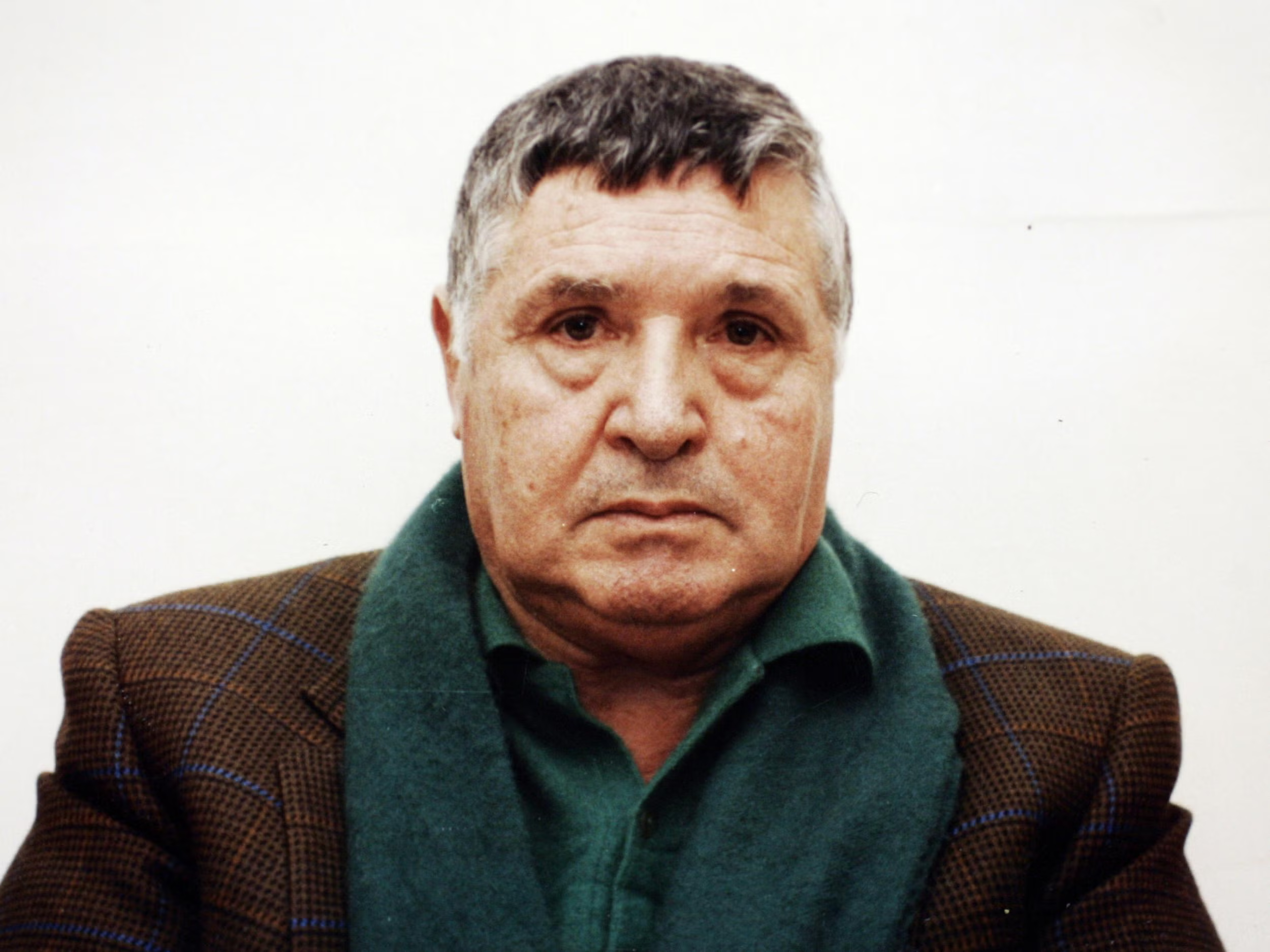
Salvatore “Totò” Riina, born on November 16, 1930, in Corleone, near Palermo, Sicily, remains one of the most infamous figures in modern Italian history. Known as the “Boss of Bosses,” Riina was the head of the Sicilian Mafia, also known as Cosa Nostra. His reign of terror over Italy lasted for decades, characterized by violence, intimidation, and a ruthless pursuit of power. This article delves into the life, age, fame, and key highlights of Totò Riina, providing detailed insights into the man who left an indelible mark on Italy’s criminal landscape.
Early Life and Entrance into the Mafia
Totò Riina was born into a poor family in the rural town of Corleone, Sicily. His early life was shaped by poverty and the harsh realities of post-World War II Italy. At the tender age of 19, Riina committed his first murder, which would set the tone for the rest of his life. In 1949, he killed a fellow youth during a brawl, resulting in a six-year prison sentence. Upon his release, Riina returned to Corleone, where he quickly became involved with the Mafia, serving under the local boss, Luciano Liggio.
The 1950s and 1960s were a period of significant upheaval in Sicily, with various Mafia clans vying for control. Riina played a crucial role in the “First Mafia War” during this time, a violent conflict between the Liggio clan and the rival faction led by Michele Navarra. The war ended with the assassination of Navarra in 1958, solidifying Liggio’s control over Corleone and positioning Riina as a rising star within the Mafia.
Rise to Power
In 1963, Riina was arrested once again, this time on charges related to his Mafia activities. However, he managed to evade long-term imprisonment by being acquitted in two separate trials held in Bari and Catanzaro. Following these trials, Riina was placed under “soggiorno obbligato,” a form of house arrest in a remote location. Yet, Riina defied the authorities and went into hiding, beginning a 23-year period of life as a fugitive.
During this time, Riina gradually took over the leadership of the Corleonesi clan after Liggio was arrested in 1974. As the new head of the Corleonesi, Riina expanded the clan’s influence throughout Sicily and beyond. He used a combination of violence, bribery, and strategic alliances to outmaneuver his rivals, most notably Stefano Bontate and Salvatore Inzerillo. The elimination of these rivals during the “Second Mafia War” in the early 1980s marked the beginning of Riina’s dominance over Cosa Nostra.
The Reign of Terror
Once in control, Totò Riina embarked on a campaign of unprecedented violence that shook Italy to its core. His strategy was simple but brutal: eliminate anyone who posed a threat to his power, whether they were rival Mafia members, law enforcement officials, or politicians. The list of Riina’s victims is long and includes prominent figures such as Carlo Alberto Dalla Chiesa, an anti-Mafia general, and politicians Pio La Torre and Salvo Lima.
Riina’s most notorious acts of violence were the bombings of anti-Mafia judges Giovanni Falcone and Paolo Borsellino in 1992. These two judges had been instrumental in the Maxi Trial, a landmark case that convicted hundreds of Mafia members, including Riina himself. The murders of Falcone and Borsellino sent shockwaves throughout Italy and the world, highlighting the ruthlessness of Riina and the reach of Cosa Nostra.
Capture and Incarceration
Totò Riina’s reign of terror came to an end on January 15, 1993, when he was captured by the Special Operations Group (ROS) of the Carabinieri in Palermo. His arrest marked a turning point in the fight against the Mafia, as it was the first time that the head of Cosa Nostra had been apprehended after such a long period of being a fugitive.
Riina was taken into custody near his villa on Via Bernini in Palermo, where he had lived in hiding for 23 years. His capture was seen as a significant victory for the Italian state, but the battle against the Mafia was far from over. Riina continued to wield considerable influence from behind bars, as demonstrated by the continuing violence and Mafia activity in the years following his arrest.
After his capture, Riina was transferred to the high-security prison of Asinara in Sardinia, where he remained until July 1997. He was then moved to Marino del Tronto prison in Ascoli Piceno, where he was subjected to the strict “41-bis” prison regime, designed for Mafia members. Despite his incarceration, Riina faced multiple trials for his past crimes, accumulating a staggering 26 life sentences over the years.
The Legacy of Violence
Even in prison, Totò Riina was regarded as the undisputed boss of Cosa Nostra. His name was synonymous with fear, and his legacy of violence continued to haunt Italy long after his arrest. Riina’s approach to leadership within the Mafia was characterized by an unparalleled level of brutality, earning him the nickname “La Belva” (The Beast). His decision to wage war against the Italian state and assassinate high-profile figures within the judiciary and government was a significant departure from the more covert methods traditionally employed by the Mafia.
This shift in tactics ultimately led to increased public awareness and condemnation of the Mafia, culminating in widespread protests and demands for justice following the murders of Falcone and Borsellino. The public outcry forced the Italian government to take more decisive action against organized crime, resulting in stricter laws, enhanced police powers, and greater international cooperation in the fight against the Mafia.
Health Decline and Death
Totò Riina’s health began to decline in the late 1990s as he aged and faced the cumulative effects of years in solitary confinement under the 41-bis regime. By the early 2000s, his health had deteriorated significantly, leading to the revocation of his solitary confinement in 2001, which allowed him limited contact with other prisoners.
Riina’s condition continued to worsen over the years, and he underwent several surgeries in the months leading up to his death. On November 17, 2017, just one day after his 87th birthday, Totò Riina died in the prisoner wing of Parma Hospital, having been in a coma for several days following two operations. His death marked the end of an era for Cosa Nostra, but the organization he once led continues to exist, albeit with reduced power and influence.
Historical Context and Nuances
Understanding Totò Riina’s life and actions requires a broader look at the historical context in which he operated. The Mafia has deep roots in Sicily, dating back to the 19th century, when it emerged as a response to the power vacuum left by the collapse of feudalism and the weakness of the Italian state. Over the decades, the Mafia evolved from a loose network of local gangs into a highly organized criminal syndicate with a hierarchical structure and a vast network of international connections.
Riina’s rise to power must be seen against this backdrop of a deeply entrenched criminal organization that had long been intertwined with Sicilian society. The Mafia’s ability to corrupt politicians, law enforcement, and the judiciary allowed it to operate with relative impunity for much of the 20th century. Riina’s unprecedented violence and his decision to openly challenge the state were in many ways a reaction to the increasing efforts by the Italian government and law enforcement to dismantle Cosa Nostra.
However, Riina’s methods also marked a turning point in the history of the Mafia. His extreme violence, particularly the killings of high-profile figures, ultimately backfired by galvanizing public opinion against the Mafia and leading to stronger anti-Mafia laws and enforcement. The murders of Falcone and Borsellino, in particular, are seen as the catalyst for the Italian government’s more aggressive stance against organized crime, leading to the eventual weakening of Cosa Nostra.
The Impact of Riina’s Life on Modern Italy
Totò Riina’s life and actions have had a profound and lasting impact on Italy. His reign as the head of Cosa Nostra not only brought unprecedented violence to the streets of Sicily and beyond but also forced the Italian state to confront the Mafia in a way that it had never done before. The public outcry following the murders of Falcone and Borsellino led to significant changes in how the Italian government and law enforcement agencies approached the fight against organized crime.
In many ways, Riina’s legacy is a paradox. While he succeeded in consolidating power and expanding the reach of Cosa Nostra during his lifetime, his tactics ultimately contributed to the organization’s decline. The heightened public awareness of the Mafia’s activities, coupled with the increased efforts by the Italian state and international community to combat organized crime, led to the arrest and conviction of many of Cosa Nostra’s key figures, including Riina himself.
Moreover, Riina’s life has become a symbol of the dangers posed by unchecked criminal power and the importance of a strong and effective legal system. His story serves as a cautionary tale of what can happen when criminal organizations are allowed to operate with impunity, and it underscores the ongoing need for vigilance in the fight against organized crime.
Conclusion
Salvatore “Totò” Riina was one of the most notorious criminals of the 20th century. His rise from a poor, rural background in Corleone to become the “Boss of Bosses” of Cosa Nostra is a story of ambition, violence, and power. Riina’s life was marked by a relentless pursuit of dominance, both within the Mafia and over the Italian state itself. His reign of terror left a trail of bloodshed and destruction that forever changed the course of Italian history.
Despite his death, Riina’s legacy lives on in the ongoing fight against organized crime. His story is a reminder of the brutal realities of the Mafia and the devastating impact it can have on society. It also highlights the importance of continued efforts to combat organized crime and to bring those responsible for such crimes to justice.
In the end, Totò Riina’s life and actions are a stark reminder of the dark side of human ambition and the lengths to which some will go in the pursuit of power. His legacy, though filled with violence and fear, also serves as a testament to the resilience of those who fight against such tyranny, and the ongoing battle to ensure that justice prevails over criminality.


