
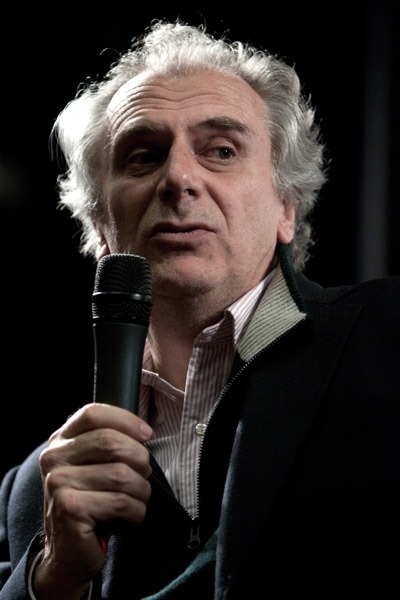
Marco Risi, born on June 4, 1951, in Milan, Italy, is a distinguished Italian film director, screenwriter, and producer. As the son of the legendary director Dino Risi, Marco was born into a cinematic lineage, which influenced his early years and eventual career in the film industry. However, Marco Risi is much more than just the son of a famous filmmaker; he has carved out his own path in Italian cinema, earning recognition for his unique style, which often blends realism with social commentary.
Early Life and Career Beginnings
Marco Risi grew up in a household where cinema was a central theme. His father, Dino Risi, was one of the most important figures in the Italian comedy genre, known for classics like “Il Sorpasso” and “Una Vita Difficile.” Marco’s exposure to the world of film from an early age provided him with a deep understanding of the medium, but it also set a high bar for him to meet or exceed.
Risi began his career in the early 1970s, working as an assistant director to his uncle Nelo Risi and Duccio Tessari, two respected figures in the Italian film industry. This experience provided him with the foundational skills necessary to direct his own films. In 1979, he made a significant contribution to Italian cinema by writing the screenplay for “Caro papà” and “Sono fotogenico,” both directed by his father, Dino Risi. These early works showcased his ability to craft compelling narratives and laid the groundwork for his future directorial efforts.
Directorial Debut and Early Comedies
Marco Risi made his directorial debut in 1982 with the film “Vado a vivere da solo,” a light-hearted comedy that resonated with young audiences in Italy. The film, which explored the life of a young man moving out of his parents’ house to live independently, captured the zeitgeist of the early 1980s and marked Risi as a director with a keen sense of humor and an eye for the complexities of youth culture.
Following the success of his debut, Risi directed two more comedies, “Un ragazzo e una ragazza” (1984) and “Colpo di fulmine” (1985), both starring popular Italian comedian Jerry Calà. These films solidified Risi’s reputation as a talented director capable of balancing humor with relatable, everyday situations. However, it was clear that Risi had a broader artistic vision that extended beyond the realm of comedy.
A Shift to Realism and Social Commentary
In the late 1980s, Marco Risi made a significant shift in his directorial style, moving away from light-hearted comedies to films with a more serious tone and a focus on social realism. This change was first evident in “Soldati – 365 all’alba” (1987), a film that offered a gritty portrayal of the compulsory military service in Italy. The movie, starring Claudio Amendola and Massimo Dapporto, was a stark departure from Risi’s earlier work, showcasing his ability to delve into the psychological and emotional experiences of his characters.
“Soldati – 365 all’alba” was well-received and marked the beginning of what some critics have termed Risi’s “neo-neorealism” phase. This period in his career is characterized by a commitment to exploring the harsh realities of life, particularly those faced by marginalized communities and individuals.
“Mery per sempre” and “Ragazzi fuori”: A Deep Dive into Social Issues
Arguably, two of Marco Risi’s most significant contributions to Italian cinema are “Mery per sempre” (1989) and its sequel “Ragazzi fuori” (1990). These films were groundbreaking in their portrayal of the lives of young people in Palermo, Sicily, particularly those caught in the cycle of poverty, crime, and violence. Risi cast non-professional actors, including real street kids, to bring authenticity to the films, which was a bold move that paid off immensely.
“Mery per sempre” tells the story of a group of juvenile delinquents in a Palermo correctional facility, focusing on their struggles, friendships, and the harsh realities they face both inside and outside the institution. The film was a critical success, praised for its unflinching depiction of the challenges faced by these youths and for its raw, realistic performances.
“Ragazzi fuori,” which continued the narrative of “Mery per sempre,” explored the lives of the same characters after their release from the correctional facility. The film offered a grim look at the limited opportunities available to these young men and the societal forces that push them back into a life of crime. For “Ragazzi fuori,” Marco Risi was awarded the David di Donatello for Best Director, one of the highest honors in Italian cinema.
These films are often cited as prime examples of Risi’s ability to blend social commentary with compelling storytelling, earning him a place among Italy’s most respected filmmakers.
“Il muro di gomma” and Political Commentary
Following the success of his socially-focused films, Marco Risi turned his attention to political themes with “Il muro di gomma” (1991). The film is a cinematic investigation into the infamous Ustica massacre, a 1980 plane crash that remains one of Italy’s most controversial and unresolved incidents. “Il muro di gomma” delves into the complexities of the Italian judicial system and the government’s attempts to cover up the true cause of the disaster, which involved the deaths of 81 people.
The film was significant not only for its subject matter but also for its investigative style, which brought a documentary-like realism to the narrative. Risi’s meticulous attention to detail and his ability to translate complex political issues into a gripping cinematic experience won him critical acclaim. “Il muro di gomma” remains a powerful example of Risi’s ability to tackle difficult and sensitive topics through the medium of film.
Exploring Different Genres: From Comedy to Noir
In the 1990s, Marco Risi continued to experiment with different genres. After his foray into political drama, he returned briefly to comedy with “Nel continente nero” (1993), starring Diego Abatantuono. The film, while lighter in tone compared to his previous works, still contained elements of social critique, particularly in its portrayal of Italy’s colonial past and the lingering effects of imperialism.
Risi then took on the challenge of adapting Andrea Carraro’s novel into the film “Il branco” (1994). This film marked a return to darker themes, focusing on a gang of young men who commit a brutal rape in a small Italian town. “Il branco” was a harrowing exploration of violence, masculinity, and societal decay, showcasing Risi’s continued interest in the darker aspects of human nature.
In 1998, Risi directed “L’ultimo capodanno,” a film noir based on a story by Niccolò Ammaniti. The film, known for its dark humor and complex narrative structure, further demonstrated Risi’s versatility as a director. He seamlessly blended elements of comedy, drama, and suspense, creating a film that was both entertaining and thought-provoking.
Later Career and International Projects
As the new millennium approached, Marco Risi continued to explore a variety of genres and themes. In 2001, he directed “Tre mogli,” a comedy-drama that focused on the lives of three women who embark on an adventure to retrieve money stolen by their husbands. The film was a departure from Risi’s more serious works, offering a lighter, yet still insightful, look at relationships and gender dynamics.
In 2007, Risi took on an ambitious international project with “Maradona – La mano de Dios,” a biographical film about the life of the legendary Argentine soccer player Diego Armando Maradona. The film, a co-production between Spain and Argentina, explored the highs and lows of Maradona’s career, from his rise to global stardom to his struggles with addiction and personal demons. While the film received mixed reviews, it was praised for its bold portrayal of one of the most iconic figures in sports history.
Risi continued to work in the late 2000s and 2010s, directing films such as “L’ultimo padrino” (2008), which focused on the life of Mafia boss Bernardo Provenzano, and “Fortapàsc” (2009), a film about the murder of journalist Giancarlo Siani by the Camorra. Both films reinforced Risi’s reputation as a director unafraid to tackle difficult and controversial subjects.
Legacy and Influence on Italian Cinema
Marco Risi’s contribution to Italian cinema is significant, not only for the films he directed but also for the way he pushed the boundaries of the medium. His willingness to explore social issues, political corruption, and human psychology set him apart from many of his contemporaries. Risi’s films are marked by their realism, strong character development, and the ability to capture the essence of the human experience, often through the lens of those living on the margins of society.
Risi’s influence can be seen in the work of younger Italian directors who have followed in his footsteps, continuing to explore the themes of social justice, political corruption, and the complexities of Italian identity. His films remain relevant today, offering insights into the challenges faced by Italy over the past few decades and continuing to resonate with audiences both in Italy and abroad.
In addition to his work as a director, Marco Risi has also contributed to the Italian film industry as a producer. In 1992, he co-founded the production company Sorpasso Film with Maurizio Tedesco. Through this company, Risi has supported the production of numerous films, helping to bring new and innovative voices to Italian cinema.
Conclusion: A Life in Film
Marco Risi’s career is a testament to his versatility, creativity, and commitment to exploring the human condition through film. From his early comedies to his later, more serious works, Risi has demonstrated a remarkable ability to adapt to different genres while maintaining a consistent focus on the social and political issues that define his work.
As a director, screenwriter, and producer, Marco Risi has left an indelible mark on Italian cinema. His films continue to be celebrated for their honesty, depth, and artistic integrity, making him one of the most important figures in contemporary Italian film. As audiences continue to discover and rediscover his work, Marco Risi’s legacy as a filmmaker who dared to confront the realities of life will undoubtedly endure.


