
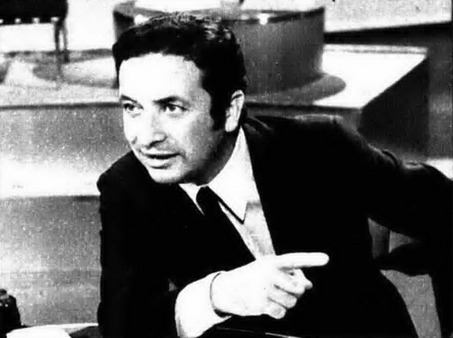
Luciano Rispoli was an influential figure in Italian television and radio, leaving an indelible mark on the country’s media landscape. Born on July 12, 1932, in Reggio Calabria, Rispoli’s career spanned several decades, during which he became synonymous with quality broadcasting, innovation, and cultural enrichment. This article delves into the life of Luciano Rispoli, exploring the key moments that defined his career, his contributions to Italian media, and his lasting legacy.
Early Life and Entry into Broadcasting
Luciano Rispoli’s journey into the world of broadcasting began in the early 1950s. After moving to Rome with his family to pursue his university studies, Rispoli entered RAI (Radiotelevisione Italiana) in 1954 after winning a competition for radiocronisti (radio reporters). This marked the beginning of a career that would see him become one of the most respected figures in Italian television and radio.
RAI, Italy’s national public broadcasting company, was in a period of growth and innovation during the 1950s and 1960s. Rispoli quickly established himself as a creative force within the organization. His early work included hosting and contributing to a variety of radio programs, where he demonstrated a knack for engaging audiences with his calm demeanor and insightful commentary.
Innovator in Italian Television
Rispoli’s influence extended beyond his role as a broadcaster; he was also a key figure in the development of Italian television. He was instrumental in the creation of several iconic programs that would become staples of Italian pop culture. One of his early successes was “Bandiera Gialla,” a television show that played a significant role in popularizing rock music in Italy. The title, which translates to “Yellow Flag,” was suggested by Rispoli and became synonymous with the rebellious spirit of youth culture during the 1960s.
Another groundbreaking program that Rispoli helped to launch was “Chiamate Roma 3131,” a radio show that allowed listeners to call in and interact with the hosts. This show was one of the first of its kind in Italy and laid the groundwork for the interactive formats that would become common in later decades. Rispoli’s ability to recognize the potential of new formats and his willingness to experiment were key factors in his success.
Discovery of New Talent
Throughout his career, Rispoli had a keen eye for talent. He was responsible for discovering and launching the careers of several prominent figures in Italian entertainment. Among those he mentored were Raffaella Carrà, Maurizio Costanzo, and Paolo Villaggio. Each of these individuals went on to achieve significant fame, and they often credited Rispoli with giving them their first big break.
Raffaella Carrà, in particular, became one of Italy’s most beloved entertainers, known for her singing, dancing, and television hosting. Maurizio Costanzo became a renowned journalist and television presenter, while Paolo Villaggio gained fame as a comedian and actor. Rispoli’s ability to identify and nurture talent was one of his most enduring contributions to Italian media.
Major Television and Radio Roles
Rispoli’s success in television and radio was not limited to his work behind the scenes. He also became a well-known television host and presenter, leading a variety of programs that showcased his versatility and depth of knowledge. In the 1970s, he proposed and hosted “L’ospite delle due,” a talk show that featured interviews with prominent figures, including international stars like Ingrid Bergman.
In 1977, Rispoli took on the role of director of the Scuole ed Educazione (Schools and Education) department at RAI, which would later become RAI Educational. In this capacity, he was responsible for overseeing a wide range of educational programming, further solidifying his reputation as a champion of cultural and educational content.
One of Rispoli’s most beloved shows was “Parola mia,” which aired from 1985 to 1988. This program focused on the Italian language, exploring its nuances, history, and usage. The show featured linguist Gian Luigi Beccaria as the in-studio expert and became a hit with viewers, leading to multiple seasons and a lasting impact on the understanding of the Italian language among the general public.
The Move to Telemontecarlo and the Success of “Tappeto Volante”
In 1990, after a long and successful career at RAI, Rispoli made a significant move to Telemontecarlo, a private Italian television network. It was here that he launched one of his most famous programs, “Tappeto Volante” (Flying Carpet). The show was a variety and talk show that quickly became a hit with viewers, running from 1993 to 2000 and airing more than 2,500 episodes.
“Tappeto Volante” was known for its warm, conversational style, with Rispoli serving as the genial host who guided discussions with a wide range of guests. The show featured interviews with over 15,000 guests throughout its run, including celebrities, politicians, and everyday people with interesting stories to tell. The show’s success was a testament to Rispoli’s ability to connect with people from all walks of life and make them feel comfortable sharing their stories.
The program was so successful that it even spawned a nighttime version, “Le mille e una notte del tappeto volante” (The Thousand and One Nights of the Flying Carpet), which aired in the late evening and featured more in-depth interviews and discussions. The show’s appeal lay in its ability to balance entertainment with thoughtful conversation, making it a unique offering in the Italian television landscape.
Later Career and Continued Influence
After leaving Telemontecarlo, Rispoli continued to host “Tappeto Volante” on various private networks, including Odeon, Rai Sat, and Canale Italia. During this time, he also returned to his roots in radio, hosting programs like “Impara l’arte” and “Il signor Buonalettura” on Radiodue. These shows allowed Rispoli to continue sharing his love of culture and language with a broad audience.
In addition to his work in broadcasting, Rispoli was also an accomplished journalist. He contributed to several publications, including “La Domenica del Corriere,” “TV Sorrisi e Canzoni,” and “Il Resto del Carlino.” His writing often focused on the media industry, providing insights and commentary on the changes and trends he observed over the years.
In 2002, Rispoli returned to RAI with “Casa Rispoli,” a talk show that he hosted from his own living room. This innovative format brought a new level of intimacy to the talk show genre, as guests were invited into Rispoli’s home for candid conversations. The following year, he revived “Parola mia” on Rai Tre, this time co-hosting with writer Chiara Gamberale and continuing the tradition of exploring the intricacies of the Italian language.
Awards and Recognition
Throughout his career, Luciano Rispoli received numerous awards and honors in recognition of his contributions to Italian media. These included the prestigious Premio Regia Televisiva (Television Direction Award), the Flaiano Prize, the Cesare Marchi Prize, and the Margherita d’Oro Prize for journalism. These accolades reflected Rispoli’s status as a respected and influential figure in the industry.
Rispoli’s work was not only recognized by the media industry but also appreciated by the public, who admired his ability to bring culture, education, and entertainment into their homes. His programs often attracted large audiences, and his influence extended across multiple generations of viewers and listeners.
Final Years and Legacy
Luciano Rispoli continued to work in broadcasting well into his later years, remaining active in the industry he loved. In 2011, he joined Roma Uno, a regional television station in Lazio, where he conducted interviews with notable figures from the world of entertainment and beyond. These interviews demonstrated that Rispoli had lost none of his charm or skill as an interviewer, and he continued to engage audiences with his thoughtful and engaging style.
Rispoli passed away in Rome on October 26, 2016, at the age of 84. His death marked the end of an era in Italian broadcasting, but his legacy lives on through the countless programs he created, the talents he discovered, and the millions of viewers and listeners he influenced throughout his career.
Conclusion: A Pioneering Force in Italian Media
Luciano Rispoli’s life and career were marked by a commitment to quality, innovation, and cultural enrichment. From his early days at RAI to his later work in private television and radio, Rispoli consistently pushed the boundaries of what was possible in broadcasting. He introduced new formats, discovered and nurtured talent, and brought important cultural and educational content to the Italian public.
Rispoli’s impact on Italian media cannot be overstated. He was a pioneering force who helped shape the industry into what it is today, and his influence continues to be felt in the programs and personalities that followed in his footsteps. For those who grew up watching or listening to his shows, Luciano Rispoli will always be remembered as a trusted and beloved figure who brought the best of Italian culture into their homes.


