
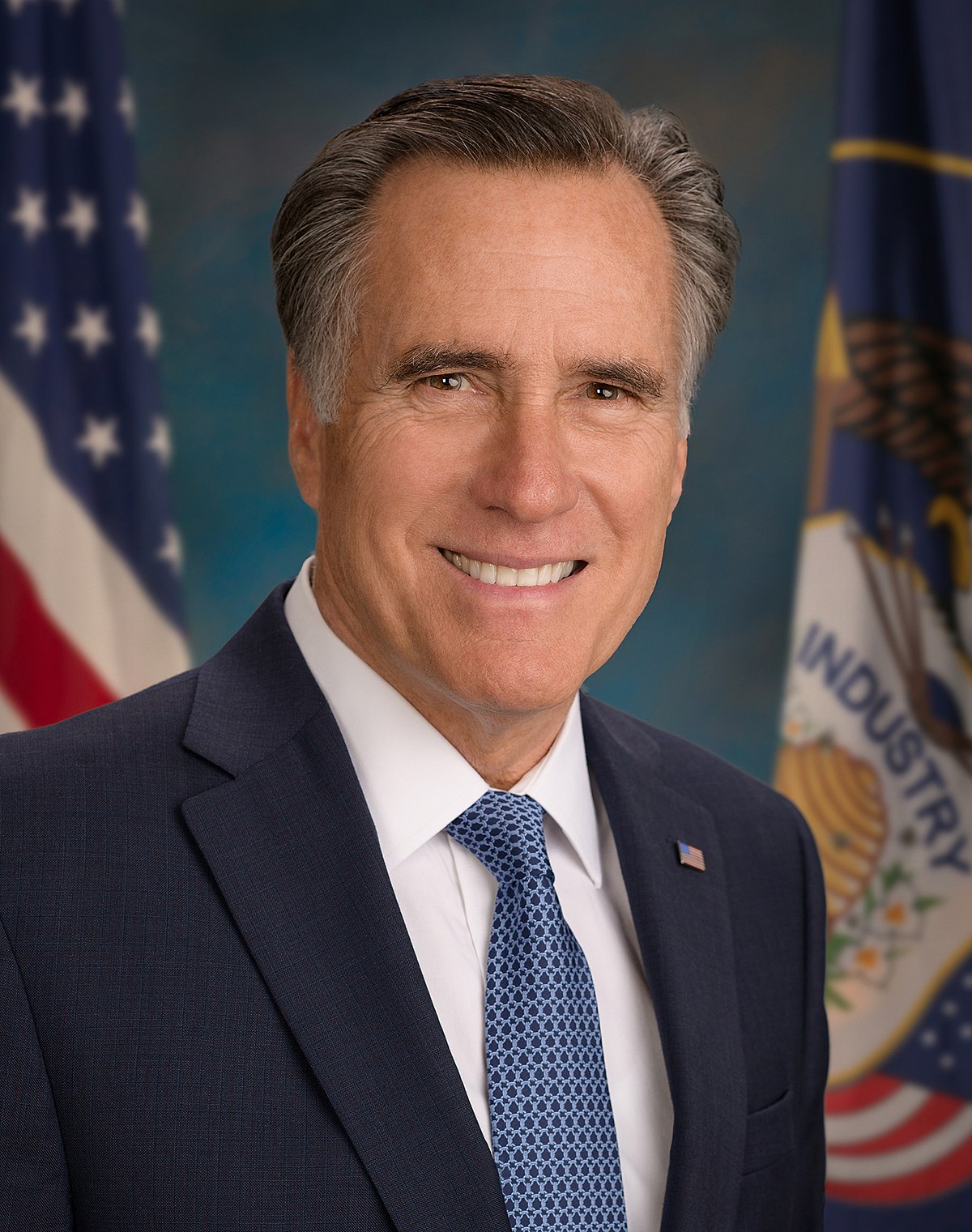
Mitt Romney is a name that resonates deeply within the landscape of American politics, known for his leadership in both the public and private sectors. As a businessman, governor, and U.S. Senator, Romney has left an indelible mark on the political and economic fabric of the United States. This article provides a comprehensive exploration of Mitt Romney’s life, examining his rise to fame, significant milestones, and the legacy he continues to build. We delve into the nuances of his career and personal life, offering detailed insights and explanations that shed light on the man behind the public persona.
Early Life and Education
Born on March 12, 1947, in Detroit, Michigan, Willard Mitt Romney was destined for a life of public service. He was raised in a family deeply embedded in American politics and business. His father, George W. Romney, was a successful businessman who served as the CEO of American Motors Corporation before becoming the Governor of Michigan and a presidential candidate. His mother, Lenore LaFount Romney, was an actress who later became a notable political figure in her own right.
Mitt Romney’s upbringing was shaped by the values of hard work, public service, and a commitment to his Mormon faith. He attended the prestigious Cranbrook School in Bloomfield Hills, Michigan, where he was known for his leadership skills and academic prowess. After high school, Romney served as a Mormon missionary in France for 30 months, an experience that profoundly impacted his worldview and reinforced his commitment to his faith.
Upon returning to the United States, Romney pursued higher education with determination. He earned a Bachelor of Arts in English from Brigham Young University, graduating with highest honors in 1971. Romney then attended Harvard University, where he simultaneously earned a Juris Doctor and a Master of Business Administration, graduating in 1975. His time at Harvard was marked by his ability to balance rigorous academic work with an active family life, as he was already married to his high school sweetheart, Ann Davies, and had started a family.
The Businessman: Bain & Company and Bain Capital
Mitt Romney’s entry into the business world was as significant as his later political career. In 1977, he joined Bain & Company, a management consulting firm based in Boston. Romney quickly distinguished himself as a talented and strategic consultant, rising through the ranks to become a partner within a few years. His work at Bain & Company involved advising major corporations on how to improve efficiency, streamline operations, and increase profitability.
In 1984, Romney co-founded Bain Capital, a private equity investment firm that would become one of the most successful of its kind. Bain Capital focused on venture capital investments and leveraged buyouts, with Romney playing a key role in identifying opportunities for investment and driving growth in portfolio companies. Under his leadership, Bain Capital invested in and helped to grow companies like Staples, Domino’s Pizza, and Sports Authority. Romney’s success at Bain Capital made him a multimillionaire and established his reputation as a savvy businessman with a keen eye for opportunity.
However, Bain Capital’s success was not without controversy. The firm’s strategy of restructuring companies often involved layoffs and cost-cutting measures that, while profitable, were sometimes criticized for their impact on workers. Romney’s time at Bain Capital became a focal point during his political campaigns, with opponents questioning the ethics of some of the firm’s practices. Despite this, Romney defended his record, arguing that Bain Capital created far more jobs than it eliminated and that its success was a testament to the power of free-market capitalism.
The Governor of Massachusetts
Mitt Romney’s transition from business to politics came in 1994 when he ran for the U.S. Senate in Massachusetts against incumbent Senator Edward M. Kennedy. Although he lost the race, Romney’s campaign was notable for its emphasis on fiscal conservatism and government reform, themes that would become central to his political career.
Romney’s first major political success came in 2002 when he was elected Governor of Massachusetts. His tenure as governor was marked by his pragmatic approach to governance and his focus on fiscal responsibility. One of his most significant achievements was the passage of healthcare reform in Massachusetts, which aimed to provide nearly universal health coverage to the state’s residents. The plan, often referred to as “Romneycare,” became a model for the Affordable Care Act, which was signed into law by President Barack Obama in 2010.
Romneycare included an individual mandate, requiring all residents to have health insurance or face a penalty. This approach was designed to reduce the number of uninsured and to spread healthcare costs more evenly across the population. While Romneycare was praised for expanding access to healthcare, it also drew criticism from conservatives who viewed the individual mandate as an overreach of government authority. Despite the controversy, Romney’s healthcare reform is widely regarded as one of his most significant accomplishments as governor.
During his tenure, Romney also worked to close a substantial budget deficit without raising taxes, instead opting for fee increases and spending cuts. His administration was marked by efforts to improve education, streamline government services, and attract businesses to Massachusetts. Romney’s pragmatic and business-like approach to governance earned him high approval ratings and positioned him as a leading figure in the Republican Party.
The Presidential Campaigns
Mitt Romney’s success as governor of Massachusetts set the stage for his presidential ambitions. He first ran for the Republican presidential nomination in 2008 but lost to Senator John McCain. However, Romney’s campaign laid the groundwork for his eventual success in securing the nomination in 2012.
The 2012 presidential campaign was a pivotal moment in Mitt Romney’s career. Running as the Republican candidate against incumbent President Barack Obama, Romney positioned himself as a champion of free-market capitalism, fiscal conservatism, and strong national defense. His campaign focused on issues such as reducing the federal deficit, repealing the Affordable Care Act, and creating jobs through tax cuts and deregulation.
Romney’s business background was both a strength and a liability during the campaign. While he touted his success at Bain Capital as evidence of his ability to turn around the economy, his opponents used his business record to paint him as out of touch with ordinary Americans. The infamous “47 percent” comment, in which Romney was caught on tape suggesting that nearly half of Americans were dependent on government and unlikely to support his candidacy, became a major controversy and damaged his image among voters.
Despite these challenges, Romney performed well in the debates, particularly in the first presidential debate, where he was widely seen as having outperformed President Obama. However, Romney ultimately lost the election, receiving 47.2% of the popular vote and 206 electoral votes compared to Obama’s 51.1% and 332 electoral votes. While the loss was a disappointment, Romney’s campaign solidified his position as a leading figure in the Republican Party and a voice for fiscal conservatism and market-based solutions.
The U.S. Senate and Continuing Influence
After the 2012 election, many speculated that Mitt Romney’s political career was over. However, in 2018, he made a surprising return to politics by running for the U.S. Senate in Utah, a state where he had strong ties due to his Mormon faith and his role in organizing the 2002 Winter Olympics in Salt Lake City. Romney won the Senate seat with a resounding victory, further establishing his influence within the Republican Party.
As a U.S. Senator, Romney has been known for his willingness to take principled stands, even when they put him at odds with his party. In 2020, Romney made headlines as the only Republican senator to vote to convict President Donald Trump during his first impeachment trial, a decision that underscored his commitment to the rule of law and constitutional principles. This vote was a bold move that drew both praise and criticism, highlighting Romney’s complex relationship with the broader Republican base.
In the Senate, Romney has focused on a range of issues, including fiscal responsibility, healthcare reform, immigration, and national security. He has also been a vocal advocate for bipartisanship, often calling for greater cooperation between Democrats and Republicans to address the nation’s most pressing challenges. Romney’s moderate and pragmatic approach has positioned him as a centrist voice within the increasingly polarized political landscape.
Personal Life and Philanthropy
Mitt Romney’s personal life has been as significant as his public career. He has been married to Ann Davies since 1969, and together they have five sons. The Romneys are known for their close-knit family, and Mitt has often spoken about the importance of family values and his Mormon faith in shaping his life and career.
Ann Romney has been a strong and supportive partner throughout Mitt’s career. She has been open about her battle with multiple sclerosis and has become an advocate for people living with the disease. The Romneys’ philanthropy has extended to various causes, including education, healthcare, and support for veterans. They have donated millions of dollars to charitable organizations through the Romney Family Foundation, reflecting their commitment to giving back to the community.
Mitt Romney’s Mormon faith has been a central aspect of his identity. He has served in various leadership roles within the Church of Jesus Christ of Latter-day Saints, including as a bishop and stake president. His faith has guided his values and decision-making throughout his life, and he has often spoken about the importance of religious freedom and tolerance.
Historical Context: Romney’s Place in American Politics
To understand Mitt Romney’s impact on American politics, it is essential to consider the historical context in which he has operated. Romney’s career spans a period of significant change in the Republican Party and the broader political landscape. His rise to prominence came during a time when the party was grappling with its identity, particularly in the wake of the Reagan Revolution and the shifts in American conservatism.
Romney’s brand of politics, which emphasizes fiscal conservatism, market-based solutions, and pragmatic governance, reflects the traditional values of the Republican establishment. However, his career has also been marked by tensions within the party, particularly as it has moved toward a more populist and nationalist orientation in recent years. Romney’s willingness to stand up to President Trump and his calls for bipartisanship have placed him at odds with some factions of the party, highlighting the ideological divides that have come to define modern American conservatism.
Legacy and Future Prospects
As of 2024, Mitt Romney continues to serve as a U.S. Senator from Utah, where he remains an influential figure in both state and national politics. His legacy is still being written, but there are several key aspects that will likely define how history remembers him.
First, Romney’s impact on healthcare reform, particularly through Romneycare, has left a lasting mark on the American healthcare system. His approach to expanding access to healthcare while promoting personal responsibility and market-based solutions has influenced policy discussions beyond Massachusetts.
Second, Romney’s role as a principled leader within the Republican Party, particularly during the Trump era, has set him apart as a figure willing to prioritize constitutional values and the rule of law over party loyalty. His vote to convict Trump during the impeachment trial will be remembered as a defining moment in his career.
Finally, Romney’s legacy as a businessman-turned-politician who successfully navigated both the private and public sectors serves as an example of how leadership skills and principles can translate across different arenas. His ability to manage complex organizations, whether in business or government, has been a hallmark of his career.
Looking ahead, Romney’s influence in the Senate and his potential role as a statesman in the post-Trump Republican Party will be critical in shaping the future of American politics. Whether he continues to seek higher office or remains focused on his Senate role, Mitt Romney’s contributions to American public life will continue to be felt for years to come.


