
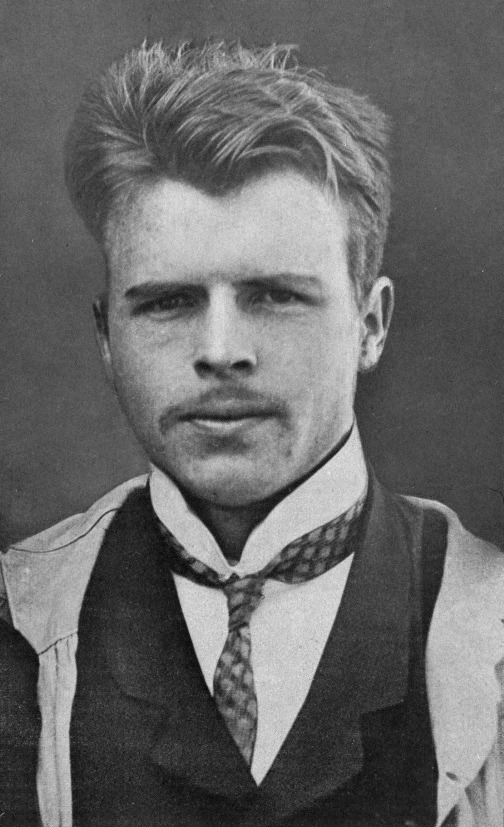
Hermann Rorschach, born on November 8, 1884, in Zurich, Switzerland, is a name synonymous with one of the most influential and enduring psychological tests in history—the Rorschach Inkblot Test. Rorschach’s contributions to psychiatry and psychology have left an indelible mark on the field, with his innovative approach to understanding personality and mental health continuing to be used and studied globally.
Early Life and Education
Hermann Rorschach was born into a family that valued education and the arts. His father, a drawing teacher, instilled in him a deep appreciation for the visual arts, a passion that would later influence his groundbreaking work. Growing up in Zurich, a city that was becoming a hub for psychiatric innovation, Rorschach was exposed to the burgeoning field of mental health at a young age.
During his school years, Rorschach developed an interest in painting and natural sciences. His fascination with visual forms and patterns would become a cornerstone of his later work. While still in high school, Rorschach became intrigued by a popular parlor game known as “Klecksography,” which involved creating inkblot patterns by folding paper on ink splashes. This seemingly trivial pastime sparked an idea that would eventually revolutionize psychological diagnostics.
After completing his early education, Rorschach faced a significant decision regarding his career path. Torn between his love for the arts and his interest in the sciences, he ultimately chose to pursue medicine. In 1909, Rorschach graduated from the University of Zurich with a degree in medicine, specializing in psychiatry. His choice of specialty was influenced by his exposure to prominent figures in the field, including Eugen Bleuler, a pioneering psychiatrist known for his work on schizophrenia.
The Birth of the Rorschach Test
Rorschach’s professional journey in psychiatry began under the mentorship of Eugen Bleuler at the Burghölzli Psychiatric Hospital in Zurich, where he was immersed in the study of mental disorders. It was here that Rorschach started to explore the potential of using visual stimuli to assess mental health. Inspired by the game of Klecksography, he began conducting experiments to see if different individuals interpreted inkblots in unique ways, which could be linked to their personality traits or psychological conditions.
Rorschach’s experiments were methodical and extensive. He systematically tested various inkblot patterns, observing how patients reacted to them and documenting their responses. His hypothesis was that the ways in which people perceived and described these ambiguous images could reveal underlying aspects of their personality, including thoughts, emotions, and potential psychological disorders.
In 1921, after years of research and experimentation, Rorschach published his findings in a book titled Psychodiagnostik. The book introduced the world to what would later be known as the Rorschach Inkblot Test. The test consisted of ten inkblots, some black and white, others colored, that were presented to patients who were asked to describe what they saw in each image. The premise was that the patient’s interpretations of these ambiguous images would provide insights into their cognitive and emotional functioning.
Initially, Psychodiagnostik received little attention, and Rorschach’s innovative test did not gain widespread recognition during his lifetime. Tragically, Rorschach’s life was cut short in 1922, just a year after the publication of his book. He died at the age of 37 from peritonitis, a condition caused by a ruptured appendix that was misdiagnosed. His untimely death meant that he never witnessed the full impact of his work on the field of psychology.
Posthumous Recognition and Influence
Despite its slow start, the Rorschach Inkblot Test eventually gained traction in the 1930s, particularly in Europe and the United States. Psychiatrists and psychologists began to recognize the test’s potential as a tool for diagnosing mental illnesses and understanding personality dynamics. The Rorschach Test became a staple in clinical psychology, used to explore the minds of patients in ways that were previously unimaginable.
The test’s rise in popularity was partly due to the growing interest in psychoanalysis and the exploration of the unconscious mind, spurred by the work of Sigmund Freud and Carl Jung. The Rorschach Test was seen as a window into the unconscious, providing a way to uncover hidden thoughts and feelings that patients might not express openly.
Throughout the 1930s and 1940s, various psychologists began developing systems to standardize the interpretation of Rorschach’s inkblots. These systems aimed to ensure consistency in how the test was administered and scored, making it a more reliable tool for psychological assessment. By the mid-20th century, the Rorschach Test had become one of the most widely used psychological tests in the world, applied in clinical settings, research, and even forensic evaluations.
The test’s influence extended beyond the clinical realm, permeating popular culture as well. The Rorschach inkblots became iconic symbols, referenced in literature, film, and art as representations of the subjective nature of perception and the complexities of the human mind. The test’s ambiguous images, open to endless interpretations, captured the imagination of the public and professionals alike.
The Rorschach Test in Modern Psychology
Today, the Rorschach Inkblot Test remains a topic of debate within the psychological community. While it continues to be used as a tool in certain clinical settings, particularly in psychoanalytic and psychodynamic approaches, it has also faced criticism. Some psychologists argue that the test lacks scientific rigor, pointing to issues with its reliability and validity. Critics suggest that the interpretations of the inkblots can be too subjective, leading to inconsistent results.
Despite these criticisms, the Rorschach Test has evolved over the decades, with new scoring systems and methodologies developed to address some of these concerns. The Comprehensive System, developed by John Exner in the 1960s and 1970s, is one of the most widely used methods for administering and interpreting the Rorschach Test today. Exner’s system introduced standardized procedures for scoring responses, making the test more reliable and allowing for the comparison of results across different populations.
Moreover, modern research continues to explore the potential applications of the Rorschach Test in various fields. It is used not only in clinical psychology but also in legal settings, where it can provide insights into the mental state of defendants in criminal cases. The test is also employed in psychological research to study perception, creativity, and cognitive processes.
Legacy and Cultural Impact
Hermann Rorschach’s legacy extends far beyond the confines of psychology. His inkblot test has become a symbol of the enigmatic and subjective nature of human perception. The test’s images, with their abstract shapes and fluid forms, have inspired artists, writers, and filmmakers, making their way into popular culture as representations of the complexity of the human mind.
The Rorschach Test has been referenced in countless works of fiction, often used to illustrate characters’ psychological depth or to depict the process of uncovering hidden truths. It has appeared in films such as Watchmen (2009), where a character named Rorschach uses the inkblots as a symbol of his own fragmented identity. The test has also been used in literature, such as in Sylvia Plath’s The Bell Jar, where the protagonist undergoes a psychological evaluation that includes the Rorschach Test.
The cultural impact of the Rorschach Test reflects its unique ability to provoke thought and introspection. The idea that individuals can see vastly different things in the same image resonates with broader themes of subjectivity and the multifaceted nature of reality. This cultural resonance ensures that Hermann Rorschach’s work continues to be relevant and influential, even as psychology as a field evolves.
Conclusion: The Enduring Influence of Hermann Rorschach
Hermann Rorschach’s contribution to psychology cannot be overstated. His development of the inkblot test provided a new way of understanding and diagnosing mental health, challenging the conventional methods of his time. Though his life was tragically short, Rorschach’s work has had a lasting impact, shaping the course of psychological assessment and opening up new avenues for exploring the human mind.
The Rorschach Inkblot Test, with its ambiguous images and endless possibilities for interpretation, remains one of the most iconic psychological tools ever created. It symbolizes the complexity of human perception, the mysteries of the unconscious, and the ongoing quest to understand the inner workings of the mind. As psychology continues to advance, Hermann Rorschach’s legacy will undoubtedly endure, reminding us of the power of creativity and innovation in the pursuit of knowledge.
In the end, Hermann Rorschach’s life and work exemplify the intersection of art and science, showing how the two can come together to create something truly transformative. His inkblots, simple yet profound, continue to captivate and challenge, ensuring that his name will be remembered for generations to come.


