
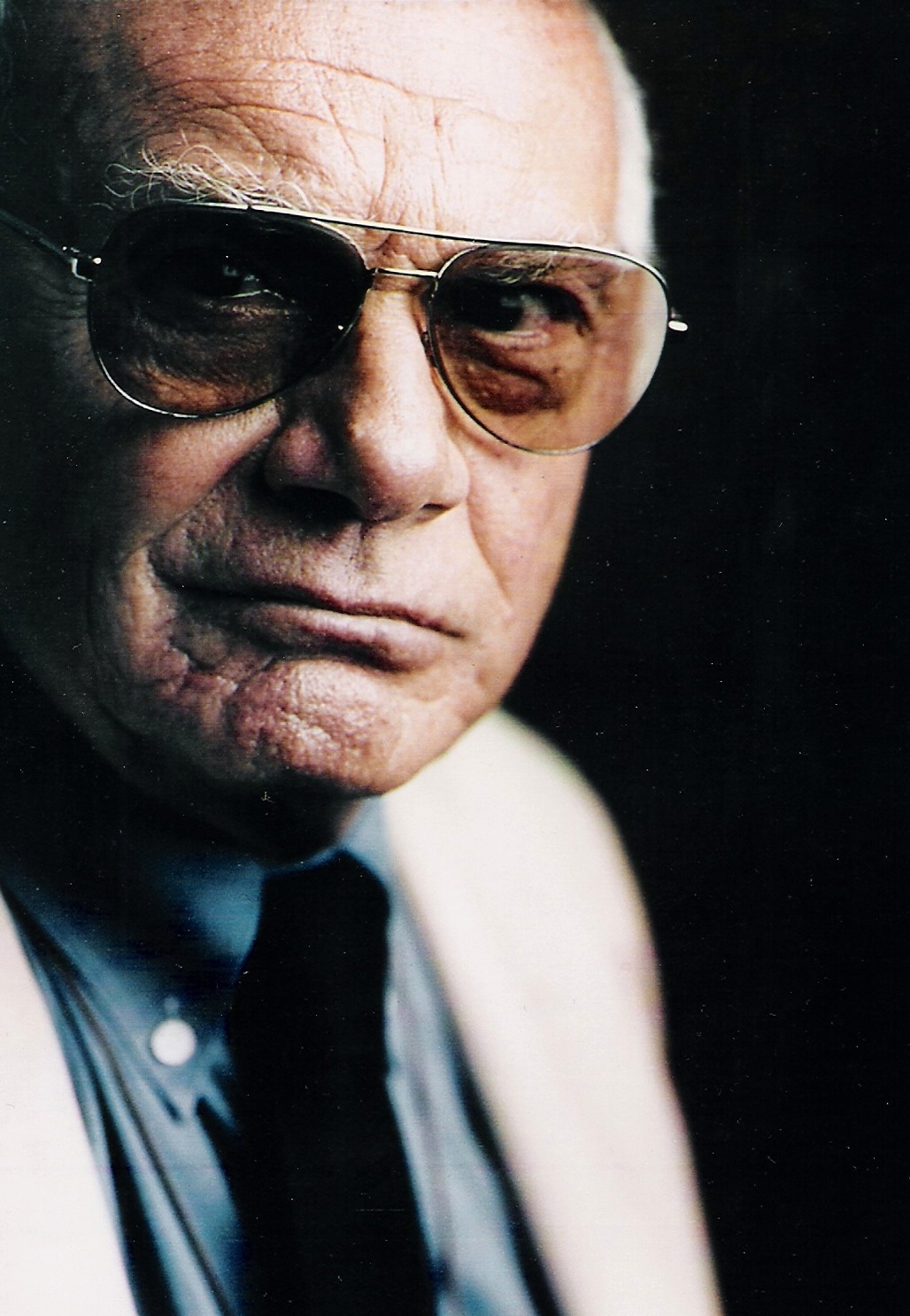
Francesco Rosi was an Italian filmmaker whose contributions to cinema are both profound and far-reaching, especially in the realms of political and social commentary. Born on November 15, 1922, in Naples, Italy, Rosi’s work is characterized by its intense focus on the intersection of politics, society, and human experience. This article explores the life, career, and legacy of Francesco Rosi, highlighting his journey through the film industry and the impact of his work on both Italian and international cinema.
Early Life and Beginnings in Cinema
Francesco Rosi was born into a world of vibrant culture and history, deeply embedded in the traditions of Naples. His early years were shaped by the tumultuous times of the Second World War, during which he studied law at the University of Naples. However, his passion for storytelling and visual arts soon drew him away from a legal career and towards the world of cinema and theater.
Rosi’s first foray into the world of entertainment came through his work as an illustrator for children’s books and as a collaborator with Radio Napoli. It was during this period that he formed lasting friendships with notable figures such as Raffaele La Capria, Aldo Giuffrè, and Giuseppe Patroni Griffi, who would become key collaborators in his later work.
His interest in theater also led him to form a significant relationship with Giorgio Napolitano, who would later become the President of Italy. These early connections laid the groundwork for Rosi’s career in the arts, providing him with valuable insights and experiences that would later inform his cinematic vision.
Breakthrough in Film: From Assistant Director to Auteur
Rosi’s formal entry into the world of cinema began in 1946 when he worked as an assistant director for Ettore Giannini on the theatrical production of ‘O voto Salvatore Di Giacomo. However, his big break came when he was only 26 years old, working as an assistant director to the legendary Luchino Visconti on the seminal film La terra trema (1948). This experience under Visconti, a master of Italian neorealism, deeply influenced Rosi’s approach to filmmaking, particularly his focus on the realities of social and political life.
Rosi quickly transitioned from assistant director to filmmaker, penning scripts for films such as Bellissima (1951) and Processo alla città (1952). His first directorial effort came with Kean (1956), co-directed with the esteemed actor Vittorio Gassman. However, it was his 1958 film La sfida that truly marked his emergence as a filmmaker of note. The film, a gripping portrayal of the Neapolitan underworld, was well-received by both critics and audiences, establishing Rosi as a rising talent in Italian cinema.
Defining the Political Cinema: “Salvatore Giuliano” and “Le mani sulla città”
The 1960s marked a significant period in Rosi’s career as he began to delve deeper into the themes of corruption, power, and social injustice that would define his work. In 1962, Rosi directed Salvatore Giuliano, a film that blended documentary and narrative techniques to explore the life and death of the infamous Sicilian bandit. The film’s innovative approach to storytelling, where the line between fact and fiction was deliberately blurred, was revolutionary and garnered critical acclaim.
Salvatore Giuliano is often considered a cornerstone of the political film genre, setting the stage for Rosi’s subsequent works. His next major project, Le mani sulla città (1963), further solidified his reputation as a filmmaker with a keen eye for political and social issues. The film, which translates to Hands Over the City, is a scathing critique of the corrupt practices surrounding urban development in Naples. It stars Rod Steiger as an unscrupulous real estate developer and exposes the deep connections between business interests and political power.
Le mani sulla città won the prestigious Golden Lion at the Venice Film Festival, marking a significant achievement in Rosi’s career. The film’s impact was not just cinematic but also social, as it sparked discussions about the responsibilities of the government and the need for reform. Rosi’s ability to weave together compelling narratives with pointed social commentary became a hallmark of his work, earning him a place among the greats of Italian cinema.
Continued Success and Exploration of Italian History
Throughout the 1970s, Rosi continued to explore Italy’s complex political and social landscape through his films. In 1971, he directed Il caso Mattei (The Mattei Affair), which investigated the mysterious death of Enrico Mattei, a powerful Italian businessman and founder of the Italian oil company ENI. The film, which starred Gian Maria Volontè in a remarkable performance, won the Palme d’Or at the Cannes Film Festival, further cementing Rosi’s status as a filmmaker of international repute.
Il caso Mattei exemplifies Rosi’s commitment to blending investigative journalism with cinematic storytelling. His films from this period are often referred to as “film-inchiesta” or investigative films, a genre that Rosi pioneered and mastered. These films were not just entertainment but also powerful critiques of the societal structures that perpetuated inequality and corruption.
Rosi’s exploration of historical figures continued with Lucky Luciano (1973), a biographical film about the infamous Italian-American mobster. The film offered a nuanced portrayal of Luciano’s life and the complex relationship between organized crime and the state. This period of Rosi’s career was marked by a focus on the intertwining of personal narratives with larger political themes, a style that became his signature.
Masterpieces of the 1970s and 1980s
The late 1970s and 1980s saw Rosi produce some of his most acclaimed works, which continued to challenge and provoke audiences. In 1976, he directed Cadaveri eccellenti (Illustrious Corpses), a chilling thriller that dealt with the murder of high-ranking officials in a corrupt state. The film, based on the novel by Leonardo Sciascia, is a powerful indictment of the pervasive influence of organized crime in Italian politics.
Rosi’s adaptation of Carlo Levi’s novel Cristo si è fermato a Eboli (Christ Stopped at Eboli) in 1979 was another significant achievement. The film, which tells the story of an anti-fascist intellectual exiled to a remote village in southern Italy, was praised for its faithful rendering of Levi’s work and its poignant commentary on the neglected and impoverished regions of Italy.
In 1981, Rosi directed Tre fratelli (Three Brothers), a film that explored the differing lives and ideologies of three siblings who reunite after the death of their mother. The film, which starred Philippe Noiret, Michele Placido, and Vittorio Mezzogiorno, was another critical success, showcasing Rosi’s ability to blend intimate personal stories with broader social themes.
Rosi also took on the challenge of adapting international literature into film. His 1984 adaptation of Georges Bizet’s opera Carmen, starring Plácido Domingo, was a visually stunning production that brought new life to the classic story. Similarly, his 1987 film Cronaca di una morte annunciata (Chronicle of a Death Foretold), based on the novel by Gabriel García Márquez, demonstrated Rosi’s skill in bringing complex literary works to the screen.
Later Work and Legacy
In the final decades of his career, Rosi continued to work on significant projects, although the frequency of his output decreased. His 1990 film Dimenticare Palermo (Forget Palermo) was a return to the themes of political corruption and organized crime, this time focusing on the relationship between Sicily and the United States.
One of Rosi’s final major works was the long-delayed adaptation of Primo Levi’s La tregua (The Truce), which he completed in 1996. The film, which chronicles Levi’s journey home after his liberation from Auschwitz, was a deeply personal project for Rosi, reflecting his lifelong interest in the impact of history on individual lives. The film was well-received, and Rosi’s direction was praised for its sensitivity and respect for Levi’s original text.
Rosi’s influence on cinema is immense, particularly in the realm of political cinema. His ability to craft films that were both artistically compelling and socially relevant set a standard for filmmakers around the world. Rosi’s work is often cited as a precursor to modern political thrillers, and his legacy is evident in the work of filmmakers who continue to explore the intersection of politics and society.
Final Thoughts
Francesco Rosi’s career is a testament to the power of cinema as a tool for social commentary and political critique. From his early work with Luchino Visconti to his later films that tackled some of Italy’s most pressing issues, Rosi consistently used his platform to challenge the status quo and provoke thought. His films remain relevant today, offering timeless insights into the complexities of power, corruption, and the human condition.
As we reflect on Rosi’s life and work, it is clear that his contributions to cinema have left an indelible mark on the industry. His legacy as a filmmaker who dared to speak truth to power continues to inspire new generations of filmmakers and audiences alike.


