
Introduction
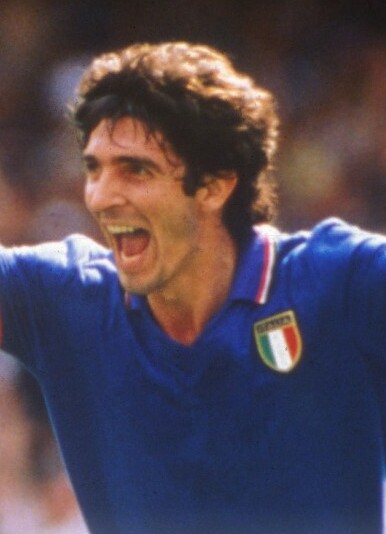
Paolo Rossi, affectionately known as “Pablito,” is a name that resonates with football fans worldwide, particularly in Italy, where he is revered as a national hero. Born on September 23, 1956, in Santa Lucia di Prato, Italy, Rossi’s life and career encapsulate the highs and lows of professional sports, culminating in his legendary performance at the 1982 FIFA World Cup in Spain. His journey from a promising young player to a global football icon is a story of resilience, triumph, and redemption. This article delves into the life of Paolo Rossi, exploring his rise to fame, his setbacks, and his enduring legacy in the world of football.
Early Life and Football Beginnings
Paolo Rossi’s early life in Santa Lucia di Prato, a small town in Tuscany, was marked by his passion for football. From a young age, Rossi displayed a natural talent for the game, which led him to join the youth ranks of Juventus, one of Italy’s most prestigious football clubs. He initially played as a right winger, a position that allowed him to showcase his speed and technical skills. However, his early career was plagued by injuries, including three knee surgeries that significantly hindered his progress.
Despite these setbacks, Rossi’s potential was undeniable. After recovering from his injuries, he was loaned out to Como, where he gained valuable experience, albeit limited playing time. It wasn’t until his move to Lanerossi Vicenza, a small club in Serie B, that Rossi’s career truly began to take off. At Vicenza, under the guidance of coach Giovan Battista Fabbri, Rossi was converted into a central striker, a role that would define his career. His ability to find space in the penalty area and his instinctive goal-scoring prowess soon earned him a reputation as one of Italy’s most promising forwards.
Rise to Prominence: The Vicenza Years
Paolo Rossi’s time at Vicenza was nothing short of transformative. In the 1976-77 season, he led the club to promotion to Serie A, the top tier of Italian football, by scoring an impressive 21 goals. The following season, Rossi became a household name in Italy as he finished as the top scorer in Serie A with 24 goals, guiding Vicenza to a remarkable second-place finish behind Juventus. His performances caught the attention of the national team coach, Enzo Bearzot, who included Rossi in Italy’s squad for the 1978 FIFA World Cup in Argentina.
At the 1978 World Cup, Rossi emerged as one of the tournament’s standout players, helping Italy to a fourth-place finish. His performances on the world stage earned him international acclaim and solidified his reputation as one of the best forwards of his generation. However, as his star was rising, Rossi’s career would soon be marred by controversy.
The Scandal and Suspension
In 1980, just two years after his World Cup heroics, Paolo Rossi was implicated in the infamous Totonero match-fixing scandal that rocked Italian football. Rossi was accused of being involved in a betting scandal during his time at Perugia, where he was on loan from Vicenza. The scandal led to Rossi being banned from football for three years, a sentence that was later reduced to two years on appeal. This suspension threatened to derail his career at a time when he was at the peak of his powers.
The suspension was a significant blow to Rossi’s career and reputation. Many doubted whether he would ever return to his previous form, especially after two years away from the game. However, Rossi remained determined to make a comeback, and his perseverance would soon pay off in spectacular fashion.
Redemption and Glory: The 1982 World Cup
Paolo Rossi’s return to football coincided with the 1982 FIFA World Cup in Spain, a tournament that would define his legacy. Despite having only a few matches under his belt after his suspension, Enzo Bearzot took a gamble by including Rossi in the Italian squad. The decision was met with skepticism by the Italian media and fans, who questioned Rossi’s fitness and form. The early stages of the tournament seemed to justify these doubts, as Rossi struggled to make an impact in the group stage.
However, everything changed in the knockout rounds. In the quarter-final against Brazil, one of the tournament favorites, Rossi delivered one of the most iconic performances in World Cup history. He scored a hat-trick to lead Italy to a 3-2 victory, eliminating the star-studded Brazilian team. Rossi followed this up with two goals in the semi-final against Poland and the opening goal in Italy’s 3-1 victory over West Germany in the final. His six goals in the knockout stage earned him the Golden Boot as the tournament’s top scorer and the Golden Ball as the best player of the tournament.
Rossi’s extraordinary turnaround from disgraced footballer to World Cup hero made him a national icon in Italy. He was also awarded the 1982 Ballon d’Or, cementing his status as one of the greatest footballers of his generation.
Post-World Cup Success and Retirement
Following his World Cup triumph, Paolo Rossi returned to Juventus, where he enjoyed further success at the club level. During his three-year stint with Juventus, Rossi won numerous trophies, including two Serie A titles, a European Cup, a Coppa Italia, and a UEFA Cup Winners’ Cup. His contributions were crucial in Juventus’ dominance of Italian and European football in the early 1980s.
Despite his successes, injuries continued to plague Rossi throughout his career. After leaving Juventus in 1985, he had brief spells with AC Milan and Hellas Verona before retiring in 1987 at the age of 31. His early retirement was largely due to the physical toll that injuries had taken on his body over the years.
Life After Football
After retiring from professional football, Paolo Rossi transitioned to a career in business and television. He settled in Vicenza, where he began a construction business with former teammate Giancarlo Salvi. Rossi also became a popular football pundit, regularly appearing on Italian television as a commentator and analyst. His insights into the game, combined with his calm and composed demeanor, made him a respected figure in the media.
In 2010, Rossi married journalist Federica Cappelletti, with whom he had two daughters, Maria Vittoria and Sofia Elena. Rossi also had a son, Alessandro, from his first marriage to Simonetta Rizzato. In his later years, Rossi remained a beloved figure in Italy, frequently participating in charitable events and football-related activities.
In 2020, Paolo Rossi published his autobiography titled “Ho fatto piangere il Brasile” (“I Made Brazil Cry”), reflecting on his life and career. The book, which was well-received, provided a personal account of his journey, from his early days in Tuscany to his World Cup triumph and beyond.
Legacy and Impact on Italian Football
Paolo Rossi’s legacy in Italian football is unmatched. His performances at the 1982 World Cup are etched in the memories of football fans around the world. Rossi’s story is one of redemption, resilience, and the power of sport to change lives. He is often cited as one of the greatest strikers in the history of Italian football, and his influence extends beyond his achievements on the pitch.
Rossi’s style of play was characterized by his intelligence, positioning, and finishing ability. He was not the most physically imposing striker, but his sharp instincts and quick thinking made him a lethal finisher. Rossi’s ability to score goals in crucial moments, particularly in the 1982 World Cup, has inspired generations of young footballers in Italy and beyond.
Moreover, Rossi’s redemption arc, from being banned from football to becoming a World Cup hero, serves as a powerful narrative about overcoming adversity. His story is a reminder that success in sport, as in life, often comes down to perseverance and the ability to seize opportunities when they arise.
Conclusion
Paolo Rossi passed away on December 9, 2020, at the age of 64, after a battle with lung cancer. His death was a profound loss for the football world, particularly in Italy, where he is remembered as a national treasure. Rossi’s contributions to football, both on and off the pitch, have left an indelible mark on the sport.
As we reflect on the life and career of Paolo Rossi, it is clear that he was more than just a footballer; he was a symbol of hope, resilience, and the enduring spirit of competition. His legacy will continue to inspire future generations, ensuring that the name “Pablito” remains synonymous with greatness in the world of football.


