
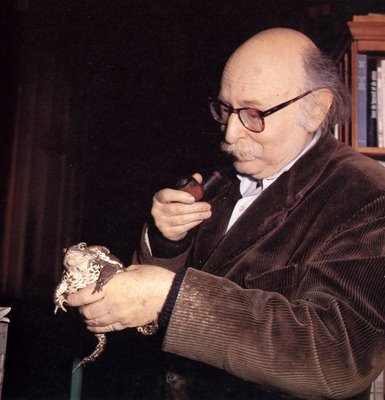
Jean Rostand, born on October 30, 1894, in Paris, France, is a name that resonates in the realms of both science and philosophy. As a renowned biologist, philosopher, and author, Rostand made significant contributions to the fields of genetics, embryology, and the broader philosophical discussions on ethics, science, and humanity. His life and work are a testament to the power of intellectual curiosity and the importance of ethical considerations in scientific endeavors. This article delves into the life of Jean Rostand, exploring his rise to fame, his most significant contributions, and the legacy he left behind.
Early Life and Influences
Jean Rostand was born into a family deeply rooted in the arts and literature. His father, Edmond Rostand, was a famous poet and playwright, best known for his romantic play Cyrano de Bergerac. His mother, Rosemonde Gérard, was also a poet, though less renowned than her husband. Growing up in such an intellectually stimulating environment, Jean Rostand was exposed to a world of creativity and thought from an early age. However, unlike his father and brother, Maurice Rostand, who followed literary paths, Jean was drawn to the sciences, particularly biology.
From a young age, Rostand was fascinated by the natural world. He was particularly inspired by the works of Jean-Henri Fabre, a French naturalist often referred to as the father of modern entomology. Fabre’s detailed observations and writings on insects sparked Rostand’s interest in the biological sciences, leading him to pursue a career in this field.
Academic Pursuits and Early Career
Jean Rostand completed his formal education at the University of Paris, where he studied science, focusing on biology and genetics. In 1920, he married Andrée Mante, and the following year, they had their only child, François. After his father’s death in 1918, Rostand moved to Ville-d’Avray, a peaceful suburb of Paris, where he set up a small laboratory near his home. It was in this modest setting that he conducted much of his pioneering research.
Rostand’s early work was not limited to scientific research alone; he was also deeply engaged in philosophical and moral inquiries. His initial publications, such as La Loi des Riches (The Law of the Rich) in 1920 and De la vanité et autres sujets (On Vanity and Other Subjects) in 1925, were philosophical treatises that explored human nature and societal issues. These works highlighted Rostand’s early inclination towards ethical and moral questions, themes that would continue to permeate his scientific work throughout his life.
Contributions to Genetics and Embryology
Jean Rostand’s first major scientific publication came in 1929 with the release of Les Chromosomes, artisans de l’hérédité et du sexe (Chromosomes, Craftsmen of Heredity and Sex). This groundbreaking work focused on the role of chromosomes in determining hereditary traits and sex, a topic that was still in its early stages of exploration at the time. Rostand’s research provided significant insights into the mechanisms of genetic inheritance and the biological processes that govern sexual differentiation.
Throughout the 1930s and 1940s, Rostand continued to make significant contributions to the field of biology, particularly in the study of amphibians and the processes of parthenogenesis (asexual reproduction) and teratogenesis (the study of abnormalities in physiological development). His works during this period, including Dalla mosca all’uomo (From the Fly to Man) in 1930 and La vie des libellules (The Life of Dragonflies) in 1935, reflect his deep interest in the diversity of life and the complex mechanisms that drive biological development.
Rostand’s research on parthenogenesis, in particular, was pioneering. His studies on the phenomenon, which allows some species to reproduce without fertilization, provided valuable insights into the potential for asexual reproduction in higher organisms, including the possibility of its application in human reproduction. His work in this area culminated in the publication of La Parthénogenèse (Parthenogenesis) in 1949, a comprehensive study that remains a reference in the field.
Philosophical and Ethical Contributions
In addition to his scientific research, Jean Rostand was a prolific writer and thinker who engaged deeply with the ethical implications of scientific progress. He believed that science and ethics were inseparable, and that scientific advancements should always be tempered with a consideration of their impact on humanity and the environment.
Rostand’s philosophical and ethical concerns were evident in his writings on the future of humanity and the responsibilities of scientists. In Science et génération (Science and Generation) published in 1940, he explored the implications of genetic research and the potential consequences of manipulating life at the genetic level. This work was a precursor to the debates on genetic engineering and bioethics that would emerge in the latter half of the 20th century.
One of Rostand’s most significant contributions to ethical discourse was his strong opposition to the use of nuclear weapons. As a committed pacifist, he was vocal about the dangers of atomic warfare and the moral responsibility of scientists in the nuclear age. His stance against nuclear proliferation was part of a broader concern about the ethical dimensions of scientific research, particularly in areas that could have devastating consequences for humanity.
Public Engagement and Recognition
Jean Rostand was not only a scientist and philosopher but also a dedicated public intellectual who believed in the importance of making scientific knowledge accessible to the general public. He was a prolific author, writing extensively for both academic and popular audiences. His works aimed to bridge the gap between complex scientific concepts and the general public’s understanding, making him one of the most influential science communicators of his time.
Rostand’s efforts in science communication were recognized in 1954 when he was elected to the prestigious Académie française, one of the highest honors in French intellectual and cultural life. His election to the Académie was a testament to his impact on both science and the broader cultural landscape.
In 1960, Rostand received the Kalinga Prize from UNESCO for his exceptional contributions to the popularization of science. This award, established to recognize those who have helped interpret science, research, and technology to the public, highlighted Rostand’s role in shaping public understanding of science and its ethical implications.
Legacy and Lasting Impact
Jean Rostand’s legacy is multifaceted, encompassing his contributions to biology, his ethical reflections on science, and his efforts to make scientific knowledge accessible to the public. His work in genetics and embryology laid the groundwork for many of the advancements in these fields in the decades that followed. His writings on ethics and science continue to resonate in contemporary discussions on bioethics, environmental responsibility, and the role of science in society.
Rostand’s life and work also serve as a reminder of the importance of integrating ethical considerations into scientific research. In an era where scientific and technological advancements are rapidly changing the world, Rostand’s insistence on the moral responsibilities of scientists is more relevant than ever. His belief that science should serve humanity, rather than dominate it, is a guiding principle that continues to inspire scientists, ethicists, and thinkers today.
Rostand passed away on September 3, 1977, in Ville-d’Avray, where he had lived and worked for much of his life. He was 82 years old. Despite his passing, the ideas he championed and the questions he raised about the role of science in society remain vital to ongoing discussions in both the scientific and philosophical communities.
Conclusion
Jean Rostand was a pioneering biologist, a thoughtful philosopher, and an influential public intellectual who left an indelible mark on the world. His contributions to genetics and embryology advanced our understanding of life, while his ethical reflections on science provided a crucial counterbalance to the unbridled pursuit of knowledge. Rostand’s work reminds us that science is not just about discovery, but also about responsibility, ethics, and the broader impact on humanity.
As we continue to navigate the complexities of modern science and technology, Jean Rostand’s legacy serves as a beacon, guiding us towards a more thoughtful and humane application of scientific knowledge. His life is a testament to the power of intellect, curiosity, and the enduring importance of ethical reflection in the pursuit of progress.


