
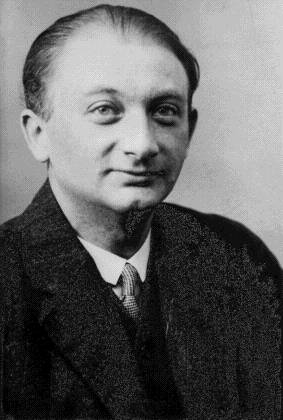
Joseph Roth is a figure whose life and work offer a vivid tapestry of European history in the early 20th century. Born on September 2, 1894, in Brody, a town on the far edge of the Austro-Hungarian Empire, Roth’s life was marked by the sweeping changes and turbulent times that defined the period. His experiences, shaped by the complex socio-political landscape of Eastern Europe, profoundly influenced his writing, making him one of the most significant literary voices of his time.
Early Life and Education
Joseph Roth was born into a Jewish family, with his mother Maria coming from a lineage of textile merchants, while his father Nachum dealt in grain trading. The Roth family, though not wealthy, ensured that Joseph received a decent education. His early years, however, were shadowed by tragedy when his father, during a business trip to Hamburg, was committed to a mental institution and soon lost all capacity to communicate. This event was kept from Joseph, who was led to believe that his father had died by suicide.
Despite these hardships, Roth’s childhood was not entirely bleak. He learned to play the violin and attended a gymnasium after studying at a commercial school founded by the Jewish magnate, Baron Maurice de Hirsch. His relationship with his mother was strained, largely due to her reclusive nature and single-minded focus on his education. This environment, combined with the loss of his father, contributed to Roth’s complex emotional world, which would later permeate his literary work.
University Years and Early Career
Roth moved to Vienna for his university studies, where he developed a deep passion for German literature. His time at the university was short-lived, however, as the outbreak of World War I disrupted his academic pursuits. Initially a pacifist, Roth later changed his stance and enlisted as a volunteer in the 21st Infantry Battalion. His military service included participation in the funeral cortege of Emperor Franz Joseph, a symbol of the crumbling Austro-Hungarian Empire.
After the war, Roth’s life was marked by a series of relocations. He returned to Brody, but the ongoing conflicts between Ukrainian, Czechoslovak, and Polish forces made life in the region untenable. Roth then moved back to Vienna before settling in Berlin, where he began his career as a journalist. His early work for “Der Neue Tag” and other publications marked the beginning of his reputation as a sharp and insightful observer of the political and social dynamics of the time.
Literary Career and Political Views
Roth’s literary career took off in the 1920s with the publication of his first novel, The Spider’s Web, serialized in the “Arbeiter-Zeitung.” Although the novel remained incomplete, it established Roth as a formidable literary talent. He continued to write prolifically, publishing works such as Hotel Savoy (1924), Rebellion (1924), Flight Without End (1927), and Zipper and His Father (1928). These novels explored themes of disillusionment, displacement, and the search for identity in a rapidly changing world.
In the mid-1920s, Roth underwent a significant political transformation. Initially a supporter of socialism, he became disillusioned with the movement and shifted his allegiance to monarchism, specifically idealizing the Habsburg monarchy. This change in perspective was reflected in his later works, where he nostalgically portrayed the Austro-Hungarian Empire as a lost world of order and stability, albeit acknowledging its flaws.
Roth’s personal life during this period was tumultuous. He married Friederike Reichler in 1922, but the marriage was fraught with difficulties, largely due to Friederike’s deteriorating mental health. Her condition, marked by pathological jealousy and erratic behavior, led to her institutionalization. Roth, deeply affected by his wife’s illness, turned to alcohol as a coping mechanism, which further strained his health and finances.
Later Years and Legacy
The 1930s were a challenging decade for Roth, both personally and professionally. Despite his declining health and worsening financial situation, he continued to produce some of his most significant work. His novels from this period, including Job (1930), The Radetzky March (1932), Tarabas (1934), The Antichrist (1934), and The Emperor’s Tomb (1938), solidified his reputation as a leading chronicler of the decline of the Austro-Hungarian Empire and the rise of totalitarianism in Europe.
Roth’s political views became increasingly conservative as he grew older. He saw the Catholic Church and the monarchy as the last bulwarks against the rising tide of Nazism. His disillusionment with modernity and his longing for the stability of the past were themes that ran through his later work. Roth sought to align himself with monarchist circles, even attempting to establish contacts with legitimist groups supporting Otto von Habsburg, the pretender to the Austrian throne.
Roth’s personal life continued to be turbulent. He had several relationships, including a brief but intense affair with the Cuban-German journalist Andrea Manga Bell, and later, a more enduring relationship with the German writer Irmgard Keun. However, his deepening alcoholism and financial troubles overshadowed these relationships.
By the late 1930s, Roth’s situation had become dire. His health was in steep decline, and he was living in poverty. On May 23, 1939, Roth was admitted to a poorhouse in Paris, where he died four days later from pneumonia, exacerbated by delirium tremens. He was buried in the Thiais cemetery, south of Paris, leaving behind a legacy as one of the foremost chroniclers of the decline of Central European civilization.
The Legacy of Joseph Roth
Joseph Roth’s work has left an indelible mark on 20th-century literature. His novels and essays offer a poignant exploration of identity, exile, and the collapse of old world orders. Roth’s deep ambivalence towards modernity, his critique of nationalism, and his longing for a lost imperial past resonate in a world still grappling with the consequences of those same historical forces.
Roth’s most famous novel, The Radetzky March, is often regarded as his masterpiece. It chronicles the decline of the Austro-Hungarian Empire through the fortunes of the Trotta family, reflecting Roth’s own despair over the fragmentation of the empire that had once united diverse cultures, languages, and religions. The novel remains a powerful meditation on the nature of history, memory, and the passage of time.
Despite his relatively short life, Roth’s body of work is extensive. His writings not only provide a window into the tumultuous history of Europe in the first half of the 20th century but also offer timeless insights into the human condition. Roth’s ability to capture the sense of loss and displacement experienced by individuals in the face of massive social and political upheaval continues to resonate with readers today.
Conclusion
Joseph Roth was a writer whose life and work were deeply intertwined with the historical forces of his time. From his early years in the Austro-Hungarian Empire to his later life as an exile in Paris, Roth’s experiences shaped his literary output in profound ways. His novels, essays, and journalism provide a unique perspective on the decline of Central Europe and the rise of totalitarianism, making him one of the most important literary figures of the 20th century.
His work remains relevant today, not only as a historical record but also as a commentary on the enduring issues of identity, displacement, and the search for meaning in a rapidly changing world. Joseph Roth’s life may have been marked by tragedy and struggle, but his literary legacy continues to inspire and challenge readers around the world.


