
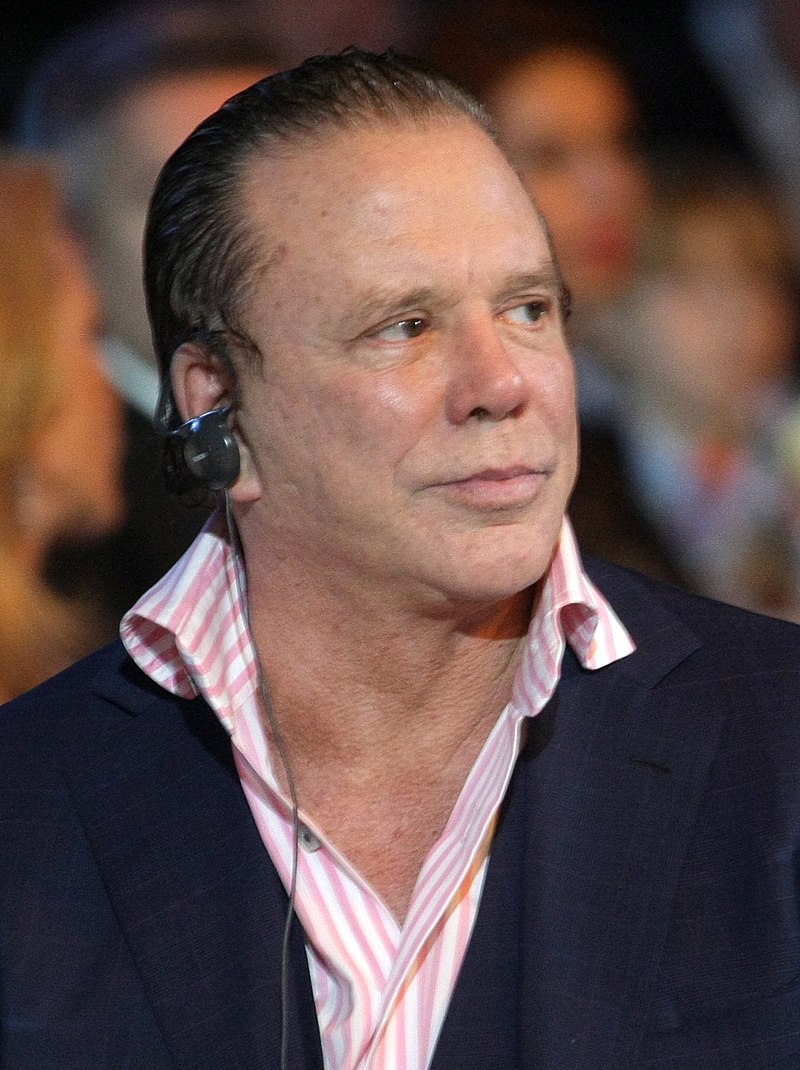
Mickey Rourke, born Philip André Rourke Jr. on September 16, 1952, in Schenectady, New York, is a name that resonates deeply within the realms of both Hollywood and the boxing ring. This multifaceted American actor and former professional boxer has led a life characterized by dramatic highs and lows, with his career mirroring the turbulent yet enthralling narrative of a classic Hollywood story.
Early Life and Beginnings
Mickey Rourke’s early life was far from the glitz and glamor of the silver screen. Born into a working-class family, Rourke grew up in Miami, Florida, where he developed an interest in sports, particularly boxing. This early fascination with boxing would later play a significant role in his life, both professionally and personally. However, before the boxing gloves became a permanent fixture, Rourke’s path led him to the world of acting.
Rise to Fame: The 1980s
The 1980s marked the beginning of Mickey Rourke’s ascent in Hollywood. He burst onto the scene with his role in “Body Heat” (1981), a neo-noir film that showcased his raw talent and undeniable screen presence. This role, though relatively small, caught the attention of critics and audiences alike, setting the stage for his future in the industry.
Rourke’s unique blend of intensity and vulnerability made him a standout in a decade filled with rising stars. His performances in films such as “Diner” (1982) and “Rumble Fish” (1983) solidified his status as a serious actor with a promising future. But it was his role in “9½ Weeks” (1986), opposite Kim Basinger, that catapulted him to international fame. The film, though controversial for its explicit content, turned Rourke into a sex symbol and a household name.
The Boxer in Hollywood: A Career of Highs and Lows
Rourke’s love for boxing never waned, even as his acting career flourished. In the 1990s, at the height of his fame, Rourke made the unexpected decision to leave Hollywood and pursue a career in professional boxing. This decision, while courageous, came with significant consequences. The physical toll of boxing was evident, as Rourke sustained numerous injuries that would later require extensive reconstructive surgery. These surgeries, combined with the harsh realities of the sport, altered his once-famous visage, making his return to Hollywood all the more challenging.
His boxing career, although brief, was marked by a commendable record. However, the damage to his career and appearance was undeniable. The once-celebrated actor found himself struggling to reclaim his former glory upon his return to the film industry.
Return to Hollywood: The Wrestler and Resurgence
The early 2000s saw Mickey Rourke’s return to Hollywood, but it wasn’t until 2008 that he truly made his comeback with the film “The Wrestler.” Directed by Darren Aronofsky, the film tells the story of an aging professional wrestler, Randy “The Ram” Robinson, who grapples with the physical and emotional toll of his career. Rourke’s portrayal was deeply personal, drawing from his own experiences in the boxing ring and his struggles in Hollywood.
“The Wrestler” was a critical and commercial success, earning Rourke a Golden Globe Award and an Academy Award nomination for Best Actor. His performance was hailed as a remarkable comeback, with many critics noting the parallels between Rourke’s character and his own life. The role not only revived his career but also earned him the respect and admiration of his peers.
Mickey Rourke: A Life of Contrasts
Mickey Rourke’s life and career are marked by contrasts. He has been both the Hollywood heartthrob and the battered boxer, the celebrated actor and the fallen star. His journey is a testament to his resilience and determination to forge his own path, no matter how unconventional it may be.
Rourke’s personal life has been equally tumultuous. Known for his rebellious nature and refusal to conform to Hollywood norms, Rourke has often been at odds with the industry. His relationships, too, have been the subject of much media scrutiny. Despite these challenges, Rourke has remained unapologetically himself, a trait that has endeared him to his fans.
Legacy and Impact
Mickey Rourke’s impact on Hollywood is undeniable. His performances in films like “Angel Heart” (1987) and “Sin City” (2005) are etched in cinematic history. Rourke’s ability to portray complex, often tortured characters has set him apart from his contemporaries. He is an actor who has never shied away from taking risks, both in his roles and in his life.
Beyond the screen, Rourke’s story serves as an inspiration to those who face adversity. His journey from Hollywood stardom to the boxing ring and back again is a narrative of resilience, proving that it’s never too late to make a comeback.
The Unyielding Spirit of Mickey Rourke
As of today, Mickey Rourke continues to act, taking on roles that challenge and push the boundaries of his craft. His career, much like his life, is a rollercoaster of highs and lows, but through it all, Rourke’s spirit remains unbroken. He is a man who has lived many lives in one, each chapter more compelling than the last.
In a world that often demands conformity, Mickey Rourke stands out as a figure of defiance and individuality. His story is not just one of fame and fortune, but of struggle, redemption, and the relentless pursuit of passion.


