
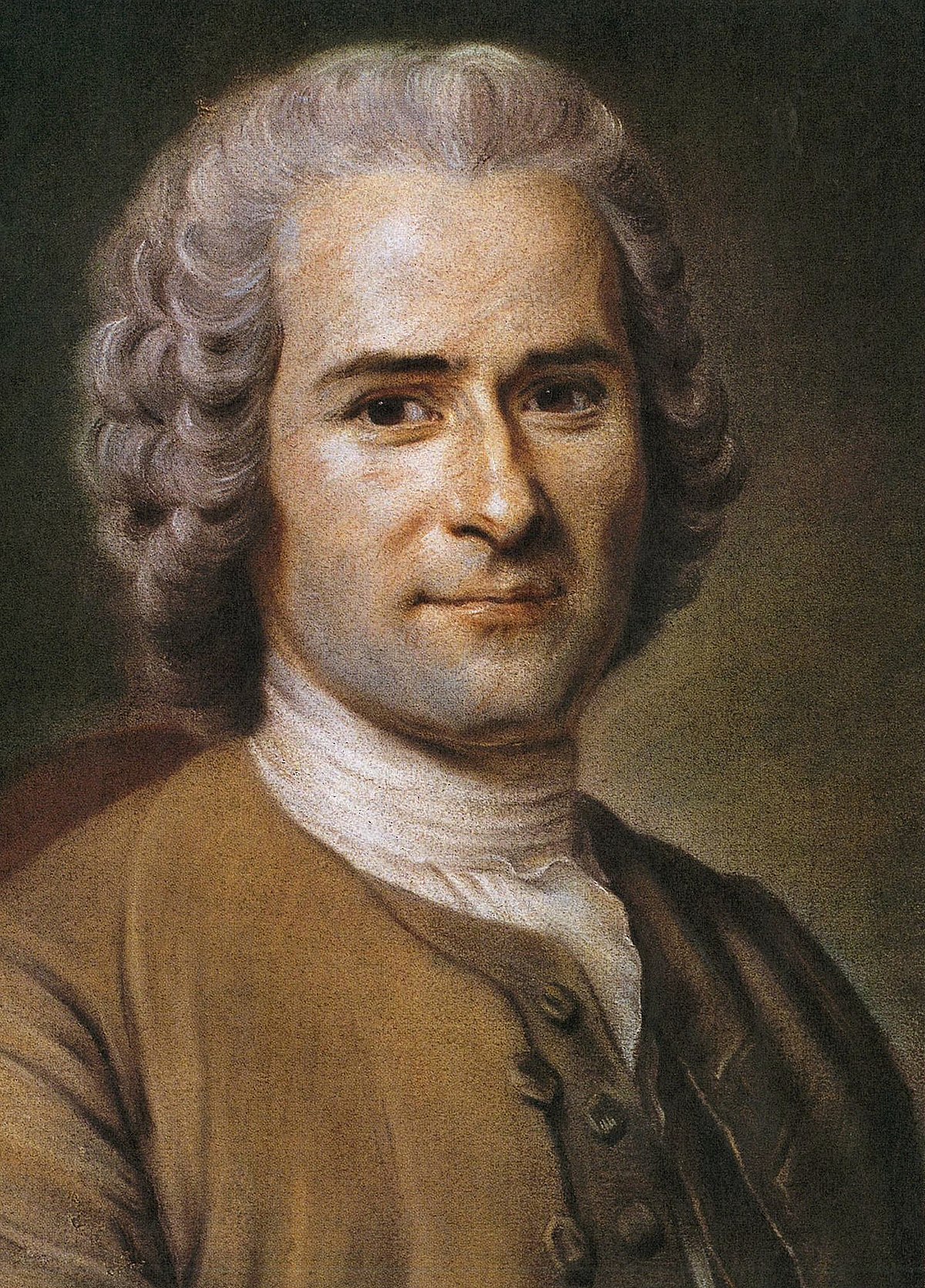
Jean-Jacques Rousseau stands as one of the most influential philosophers and pedagogists of the 18th century, a towering figure in the Enlightenment era whose ideas profoundly shaped modern thought, politics, and education. Born on June 28, 1712, in Geneva, Switzerland, Rousseau’s life and work left an indelible mark on the intellectual landscape of his time and continue to resonate today.
Early Life and Education
Rousseau’s early life was marked by hardship and instability. He was the son of a Calvinist watchmaker, and his mother died just a few days after his birth. The absence of a stable family structure and a regular education deeply influenced Rousseau’s formative years. At the age of ten, he lost the support of his father, who fled Geneva after a legal dispute. Rousseau was left in the care of various guardians and mentors, each contributing to his eclectic and largely self-directed education.
Rousseau’s early experiences of abandonment and isolation likely influenced his later philosophical explorations of human nature and society. His early exposure to literature and moral teachings, coupled with his irregular education, fostered a deep introspection that would later characterize his writings.
The Turning Point: Escape to Savoy and Conversion to Catholicism
Rousseau’s life took a dramatic turn when, as a teenager, he fled Geneva after being locked out of the city gates one night. His wandering led him to Savoy, where he sought refuge with a local priest. The priest directed him to Annecy, where he met Madame de Warens, a young woman who had recently converted to Catholicism. She played a pivotal role in Rousseau’s life, convincing him to convert to Catholicism and providing him with both intellectual and emotional support.
The relationship between Rousseau and Madame de Warens was complex and evolved over time. Initially, she was a maternal figure and mentor to Rousseau, but their relationship eventually became romantic. This period of Rousseau’s life was marked by a mixture of intellectual growth, emotional turmoil, and a constant search for belonging and stability.
Rousseau’s Intellectual Development and Contributions to Music
In his early twenties, Rousseau moved to Turin, where he officially converted to Catholicism. This decision was motivated more by necessity and the promise of social advancement than by genuine religious conviction, as Rousseau would later reconvert to Calvinism. After his conversion, Rousseau returned to Annecy, where he continued his studies in music and singing, an interest that would later lead to significant contributions to the field of music.
Rousseau’s fascination with music was not merely a hobby but a serious intellectual pursuit. He developed a new system of musical notation, which he presented to the Académie des Sciences in Paris in 1742. Although the system was rejected, it marked Rousseau’s entry into the intellectual circles of Paris, where he would soon become a prominent figure.
Paris and the Enlightenment Circle
In Paris, Rousseau quickly became involved with the leading intellectuals of the Enlightenment, including Denis Diderot, Jean-Baptiste le Rond d’Alembert, and Voltaire. His friendships and eventual conflicts with these figures would shape much of his later life and work. During this period, Rousseau contributed articles on music to Diderot’s Encyclopédie and began developing the ideas that would later form the basis of his most important works.
Rousseau’s relationship with Diderot was particularly significant. The two shared a deep intellectual bond, but their friendship was fraught with tension and eventually ended in a bitter dispute. Rousseau’s increasingly critical views of the Enlightenment’s emphasis on reason and progress alienated him from many of his former allies, including Voltaire, with whom he had a famously acrimonious relationship.
Major Works and Philosophical Contributions
Rousseau’s most significant contributions to philosophy and political theory are encapsulated in his major works, including The Discourse on the Origin and Basis of Inequality Among Men (1755), The Social Contract (1762), and Émile, or On Education (1762). These works explore themes of human nature, the corrupting influence of society, and the possibilities for education and political organization to return humanity to a more natural and just state.
In The Social Contract, Rousseau famously argued that “Man is born free, and everywhere he is in chains.” This work posits that legitimate political authority rests on a social contract agreed upon by all citizens, which guarantees their freedom and equality. Rousseau’s ideas on direct democracy and popular sovereignty had a profound influence on the development of modern political thought and were instrumental in shaping the ideological foundations of the French Revolution.
Émile, on the other hand, is a treatise on education that emphasizes the importance of nurturing a child’s natural instincts and curiosity rather than imposing strict discipline and rote learning. Rousseau’s educational philosophy, which advocates for learning through experience and the development of moral and emotional intelligence, has had a lasting impact on modern pedagogy.
Personal Struggles and Later Life
Despite his intellectual achievements, Rousseau’s personal life was marked by significant struggles. He suffered from various health issues, including hypochondria and kidney stones, which he believed would lead to his early death. His relationships with women were also turbulent, characterized by intense passion followed by inevitable disappointment.
Rousseau’s inability to maintain stable friendships and relationships extended to his interactions with his intellectual peers. He quarreled with Diderot, Voltaire, and d’Alembert, eventually isolating himself from the very circles that had once embraced him. His paranoia and belief that he was the target of conspiracies further alienated him from society.
In 1762, after the publication of Émile, Rousseau was forced to flee France due to the book’s controversial content, which was condemned as heretical. He sought refuge in various countries, including Switzerland and England, where he was briefly hosted by the philosopher David Hume. However, Rousseau’s paranoia strained their relationship, and he soon returned to France, where he lived in relative obscurity.
Final Years and Legacy
Rousseau’s final years were spent in a state of relative peace, though his mind remained troubled. He continued to write, producing works such as The Confessions and Reveries of a Solitary Walker, which offer deep insights into his personal life and philosophy. These autobiographical works reveal a man who was acutely aware of his contradictions and deeply reflective about his life choices.
Rousseau died on July 2, 1778, at the age of 66, in Ermenonville, France, where he was staying as a guest of the Marquis de Girardin. His death marked the end of a tumultuous life, but his ideas continued to influence generations of thinkers, revolutionaries, and educators.
Today, Rousseau is remembered as a pivotal figure in the history of Western thought. His critiques of modern society, emphasis on the natural state of humanity, and ideas on education and political philosophy have made him a central figure in the canon of Enlightenment philosophy. Rousseau’s work remains relevant, offering insights into the human condition, the complexities of social organization, and the challenges of living authentically in a world dominated by social conventions.
Historical Context and Influence
Understanding Rousseau’s impact requires situating him within the broader historical context of the Enlightenment and the intellectual currents of the 18th century. The Enlightenment was a period characterized by an emphasis on reason, science, and the belief in progress. Philosophers like Voltaire, Diderot, and Hume championed these ideals, advocating for the power of human reason to improve society.
Rousseau, however, was a more complex figure within this movement. While he shared the Enlightenment’s commitment to human freedom and the critique of traditional authority, he also offered a profound critique of the very ideals that defined the era. Rousseau argued that the progress of civilization had led to the corruption of human nature and the erosion of genuine freedom. His idealization of the “noble savage” and the state of nature stood in stark contrast to the Enlightenment’s celebration of progress and reason.
Rousseau’s influence extended far beyond his lifetime, playing a crucial role in the development of Romanticism, a movement that reacted against the Enlightenment’s rationalism and emphasized emotion, nature, and individualism. His ideas also laid the groundwork for modern political ideologies, including socialism and nationalism. The French Revolution, in particular, drew heavily on Rousseau’s concepts of popular sovereignty and the general will.
In education, Rousseau’s ideas have had a lasting impact, influencing the development of progressive education and child-centered learning. His emphasis on the importance of developing the whole person—emotionally, morally, and intellectually—remains a cornerstone of modern educational theory.
Conclusion
Jean-Jacques Rousseau was a complex and often contradictory figure, whose life and work continue to inspire and challenge us. His critique of modernity, emphasis on the natural state, and vision of a just society based on freedom and equality resonate with contemporary concerns about the environment, social justice, and the meaning of authentic living. Rousseau’s legacy is a testament to the enduring power of ideas to shape the world we live in, reminding us of the importance of questioning the status quo and striving for a better, more just society.


