
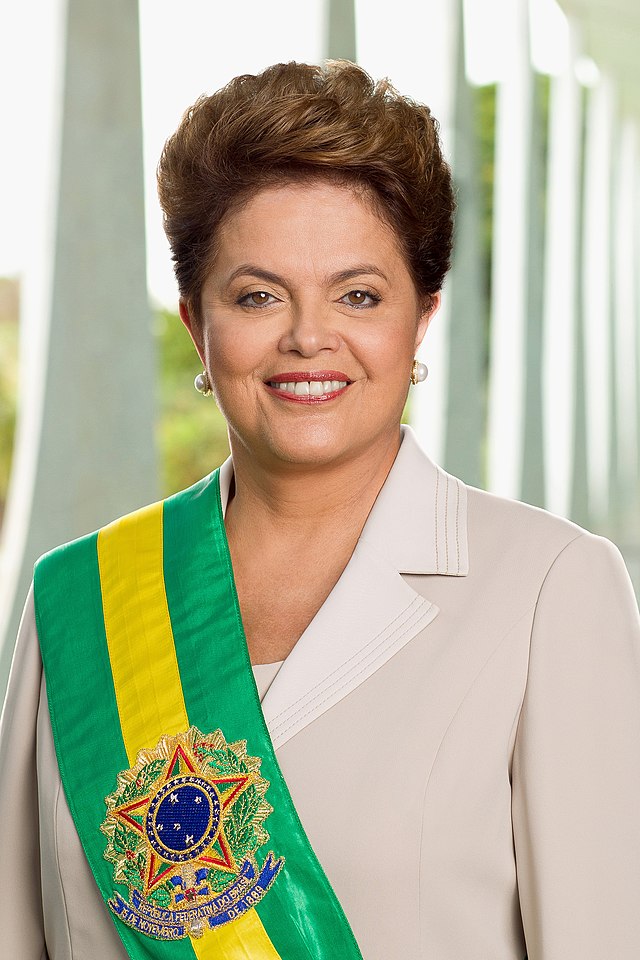
Early Life and Political Awakening
Dilma Vana Rousseff, born on December 14, 1947, in Belo Horizonte, Brazil, is a prominent figure in Latin American politics. Her early life was marked by a blend of cultural influences and socio-political awareness. Born to a Bulgarian immigrant father and a Brazilian mother, Rousseff was raised in a middle-class household that valued education and intellectual curiosity. From a young age, she was exposed to discussions about politics and social justice, which would later fuel her activism and political career.
Rousseff’s political awakening began in her teenage years during the 1960s, a period of significant political turmoil in Brazil. The country was under the shadow of a military dictatorship that had taken power in 1964, leading to widespread repression of political dissidents. It was during this time that Rousseff, influenced by Marxist ideals, became involved in socialist and revolutionary movements aimed at resisting the authoritarian regime.
The Revolutionary Years and Imprisonment
Rousseff’s commitment to her political beliefs led her to join several leftist organizations that opposed the military dictatorship, including the Comando de Libertação Nacional (COLINA) and later the Vanguarda Armada Revolucionária Palmares (VAR Palmares). These groups engaged in guerrilla activities and were part of a broader resistance movement that sought to challenge the oppressive government through armed struggle.
In 1970, Rousseff was arrested by the military regime and was subjected to torture during her imprisonment, an experience that left a lasting impact on her. She spent nearly three years in prison, from 1970 to 1972, during which she endured physical and psychological abuse. Despite these hardships, Rousseff remained committed to her cause, emerging from prison with a renewed determination to fight for democracy and social justice in Brazil.
Rebuilding a Political Career
Following her release from prison, Dilma Rousseff moved to Rio Grande do Sul, where she began to rebuild her life and political career. It was here that she met Carlos Araújo, a fellow activist and lawyer, with whom she would share a personal and professional partnership for over three decades. Together, they were instrumental in founding the Partido Democrático Trabalhista (PDT), a political party that espoused labor rights and social democracy.
Rousseff’s early political career was marked by her involvement in various campaigns and her role in local government. She served as the Secretary of the Treasury for the city of Porto Alegre, and later as the State Secretary for Mines and Energy in Rio Grande do Sul. These positions allowed her to gain valuable experience in public administration and policy-making, particularly in the energy sector, which would become a key focus of her later work.
Rise to National Prominence
Rousseff’s entry into national politics began in earnest when she joined the Partido dos Trabalhadores (PT), the Workers’ Party, in 2001. The PT, founded by Luiz Inácio Lula da Silva, was a leftist party that represented the interests of Brazil’s working class and advocated for social and economic reforms. Rousseff quickly became an influential figure within the party, known for her technical expertise and her commitment to the party’s progressive agenda.
In 2002, Rousseff played a crucial role in Lula’s successful presidential campaign, serving on the team that developed his energy policy. Following Lula’s victory, she was appointed Minister of Mines and Energy, a position that allowed her to implement reforms aimed at modernizing Brazil’s energy sector and promoting sustainable development.
Rousseff’s performance as Minister of Mines and Energy earned her a reputation as a competent and effective administrator, and in 2005, she was appointed Chief of Staff, one of the most powerful positions in the Brazilian government. As Chief of Staff, Rousseff was responsible for coordinating the administration’s policies and ensuring their implementation across various ministries.
The First Female President of Brazil
Dilma Rousseff’s ascent to the presidency was a historic moment for Brazil. In 2010, she was chosen by Lula as his successor and became the PT’s candidate for the presidency. Rousseff campaigned on a platform of continuity, promising to build on Lula’s achievements in reducing poverty, expanding social programs, and driving economic growth.
In the 2010 presidential election, Rousseff won a decisive victory, becoming the first woman to hold the office of President in Brazil’s history. Her election was seen as a significant step forward for gender equality in the country, and she was widely regarded as a symbol of progress and change.
Achievements and Challenges in Office
Rousseff’s presidency was marked by both significant achievements and considerable challenges. During her first term, she continued many of the social and economic policies initiated by Lula, including the expansion of social welfare programs like Bolsa Família, which provided financial assistance to low-income families. Under her leadership, Brazil’s economy initially continued to grow, and the country played an increasingly prominent role on the global stage.
However, Rousseff’s administration also faced mounting challenges. By the end of her first term, Brazil’s economy was slowing down, and the country was grappling with rising inflation, unemployment, and public debt. These economic difficulties were compounded by widespread corruption scandals, many of which implicated members of the PT and other political figures.
Despite these challenges, Rousseff was re-elected in 2014 after a hard-fought campaign. However, her second term was marred by worsening economic conditions and growing political instability. The global drop in commodity prices, coupled with domestic economic mismanagement, led to a severe recession in Brazil, which eroded public support for her government.
Impeachment and Political Downfall
The combination of economic woes and political scandal culminated in a crisis that ultimately led to Rousseff’s impeachment. In 2016, she was accused of manipulating the federal budget to conceal the extent of Brazil’s fiscal problems, a practice known as “fiscal pedaling.” While Rousseff and her supporters argued that these actions did not constitute an impeachable offense, her opponents seized on the issue to push for her removal from office.
On May 12, 2016, the Brazilian Senate voted to suspend Rousseff from the presidency, pending an impeachment trial. Vice President Michel Temer assumed the role of interim president during this period. Despite her vigorous defense, the Senate voted on August 31, 2016, to impeach Rousseff, effectively ending her presidency. Temer succeeded her as President of Brazil.
Rousseff’s impeachment was a deeply polarizing event in Brazil. Her supporters viewed it as a politically motivated coup orchestrated by her opponents to seize power, while her detractors argued that it was a necessary step to restore confidence in Brazil’s political and economic systems.
Historical Context and Legacy
Dilma Rousseff’s presidency and subsequent impeachment must be understood within the broader historical and political context of Brazil. Her rise to power came at a time when Brazil was experiencing rapid economic growth and social progress, thanks in large part to the policies implemented by Lula’s administration. However, her tenure also coincided with the end of the commodity boom that had fueled Brazil’s economic expansion, leading to a period of economic stagnation and decline.
Rousseff’s impeachment, while officially based on accusations of fiscal mismanagement, was also a reflection of the deep political divisions within Brazil. The country was (and remains) divided along lines of class, race, and ideology, and Rousseff’s presidency brought many of these tensions to the fore. Her removal from office was as much about these underlying social and political dynamics as it was about her specific actions as president.
Personal Life and Continued Influence
Despite the challenges and controversies of her presidency, Dilma Rousseff remains an influential figure in Brazilian politics. After her impeachment, she continued to be active in public life, speaking out on issues related to democracy, social justice, and women’s rights. She has also been involved in efforts to document and address the human rights abuses that occurred during Brazil’s military dictatorship, drawing on her own experiences as a political prisoner.
Rousseff’s personal life has also been a subject of public interest. Her long-term partnership with Carlos Araújo, with whom she had a daughter, Paula, was emblematic of her commitment to both her family and her political ideals. Despite their eventual separation, Rousseff and Araújo remained close collaborators and friends.
Conclusion
Dilma Rousseff’s life and career are emblematic of the turbulent political history of Brazil in the 20th and 21st centuries. From her early involvement in revolutionary movements against the military dictatorship to her historic election as Brazil’s first female president, Rousseff’s story is one of resilience, determination, and a steadfast commitment to her ideals.
Her presidency, marked by significant achievements in social policy but also marred by economic difficulties and political scandal, reflects the complexities and challenges of governing a diverse and rapidly changing country like Brazil. While her impeachment was a controversial and polarizing event, it is clear that Rousseff’s impact on Brazilian politics and society will be felt for many years to come.
As Brazil continues to navigate its own political and economic challenges, the legacy of Dilma Rousseff serves as a reminder of the importance of democratic governance, social justice, and the ongoing struggle for equality and human rights in the country.


