
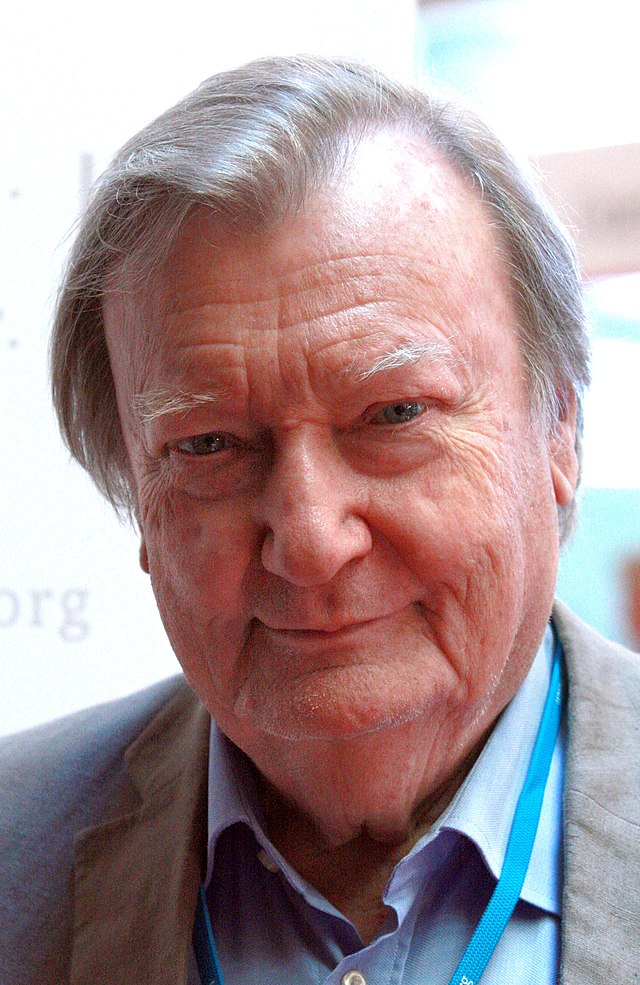
Carlo Rubbia is a name that resonates within the realms of science, particularly in the field of physics. Born on March 31, 1934, in Gorizia, Italy, Rubbia’s contributions to particle physics have not only earned him the Nobel Prize but also cemented his status as one of the most influential scientists of the 20th century. His work at CERN, along with his groundbreaking research, has had a profound impact on our understanding of the fundamental forces of nature. In this article, we delve into the life of Carlo Rubbia, exploring his rise to fame, his significant contributions to science, and the legacy he continues to build.
Early Life and Academic Beginnings
Carlo Rubbia was born into a family that valued education and intellectual pursuit. His father was an electronic engineer, and his mother was an elementary school teacher. This academic environment nurtured Rubbia’s curiosity from a young age. After completing his early education, Rubbia faced a significant challenge when he applied to the prestigious Scuola Normale Superiore di Pisa. Despite his best efforts, he did not initially secure a place. However, his determination and passion for science led him to enroll in the Faculty of Engineering at the University of Milan. Fate intervened when a spot opened up at the Scuola Normale Superiore, allowing Rubbia to pursue his true passion: physics.
At Pisa, Rubbia excelled in his studies, eventually graduating with a thesis on cosmic ray experiments in 1957. His early work focused on the detection of cosmic particles, which laid the foundation for his future contributions to particle physics. Under the guidance of Professor Marcello Conversi, Rubbia developed the first gas-based particle detector, a significant achievement that demonstrated his innovative approach to scientific problems.
Expanding Horizons: Columbia University and CERN
In 1958, Rubbia’s burgeoning career took him to Columbia University in New York, where he deepened his knowledge of particle accelerators. This period was crucial in shaping his future endeavors, as he gained valuable insights into the cutting-edge technologies that would later define his work.
Rubbia’s association with CERN (the European Organization for Nuclear Research) began in 1960, marking the start of a long and fruitful relationship. At CERN, he was involved in pioneering research on elementary particles, specifically focusing on the decay and nuclear capture of mesons. His work during this period was characterized by his ability to think beyond conventional approaches, promoting experiments that pushed the boundaries of existing scientific knowledge.
One of Rubbia’s most significant contributions at CERN was his involvement in modifying the Super Proton Synchrotron (SPS) in 1976. This modification allowed for proton-antiproton collisions, a breakthrough that increased the energy produced in particle collisions and paved the way for the discovery of the W and Z bosons. These particles are responsible for mediating the weak force, one of the four fundamental forces of nature. The discovery of the W and Z bosons in 1983 was a monumental achievement in the field of particle physics and earned Rubbia and his colleague Simon van der Meer the Nobel Prize in Physics in 1984.
The Nobel Prize and Beyond
The Nobel Prize in Physics awarded to Carlo Rubbia and Simon van der Meer in 1984 was a recognition of their groundbreaking work at CERN. The discovery of the W and Z bosons not only confirmed the electroweak theory, which unifies the weak force and electromagnetism, but also marked a significant milestone in our understanding of the universe’s fundamental structure.
Following this achievement, Rubbia continued to be a driving force in the scientific community. He was instrumental in the development of the Large Electron-Positron Collider (LEP) at CERN, an immense particle accelerator designed to explore the properties of the Z boson and other fundamental particles. The LEP was one of the most ambitious projects in the history of particle physics, and its success further solidified Rubbia’s reputation as a visionary in the field.
Academic and Leadership Roles
Carlo Rubbia’s influence extended beyond his research. From 1971 to 1988, he served as a professor of physics at Harvard University, one of the most prestigious institutions in the world. During his tenure at Harvard, Rubbia inspired a generation of young physicists, imparting his knowledge and passion for the subject.
In 1989, Rubbia took on the role of Director-General at CERN, a position he held until 1993. His leadership at CERN was marked by a period of significant scientific achievements and advancements. Under his guidance, CERN continued to push the boundaries of what was possible in particle physics, setting the stage for future discoveries that would further our understanding of the universe.
After his tenure at CERN, Rubbia continued to contribute to the global scientific community. In 1994, he became the director of the International Center for Theoretical Physics in Trieste, Italy. This institution, dedicated to the advancement of theoretical physics, provided Rubbia with a platform to promote research and collaboration among scientists from around the world. During his time in Trieste, Rubbia also established the Sincrotrone Light Laboratory, which utilized particle beams to study the structure of materials, viruses, and proteins at a sub-microscopic level.
Contributions to Renewable Energy and Environmental Advocacy
Carlo Rubbia’s contributions to science are not limited to particle physics. In the late 1990s, he turned his attention to the pressing issue of renewable energy. Recognizing the need for sustainable energy sources, Rubbia became a strong advocate for solar thermodynamic energy, an alternative to traditional photovoltaic systems.
In 1999, he was appointed President of ENEA (Italian National Agency for New Technologies, Energy, and Sustainable Economic Development), a position he held until 2005. During his tenure, Rubbia focused on promoting research and development in renewable energy technologies, particularly solar power. His work in this area culminated in the development of the “Archimede Project,” which aimed to harness solar energy more efficiently through the use of thermodynamic principles.
Rubbia’s commitment to environmental issues extended beyond his work at ENEA. In 2006, he became an advisor on renewable energy to the Italian Minister of the Environment, furthering his advocacy for sustainable energy solutions. His efforts in this field underscore his belief in the importance of science not just for advancing human knowledge, but also for addressing the global challenges facing humanity.
Honors and Legacy
Carlo Rubbia’s contributions to science and society have been recognized through numerous awards and honors. In 2013, he was appointed a Senator for Life by the President of the Italian Republic, Giorgio Napolitano. This prestigious title is a testament to Rubbia’s lifelong dedication to science and his impact on the world.
Rubbia’s legacy is not only defined by his scientific achievements but also by his role as a mentor and leader. His ability to inspire others, whether through his teaching at Harvard or his leadership at CERN, has left a lasting mark on the scientific community. His work continues to influence new generations of physicists, who build on the foundations he helped establish.
Conclusion
Carlo Rubbia’s life and career are a testament to the power of curiosity, determination, and innovation. From his early days as a student in Pisa to his groundbreaking work at CERN and beyond, Rubbia has consistently pushed the boundaries of scientific knowledge. His contributions to particle physics, particularly the discovery of the W and Z bosons, have had a profound impact on our understanding of the universe.
But Rubbia’s influence extends far beyond the laboratory. His commitment to renewable energy and his advocacy for sustainable solutions demonstrate his dedication to using science for the betterment of humanity. As a teacher, leader, and mentor, Rubbia has inspired countless individuals to pursue their passions and contribute to the global scientific community.
As we look to the future, Carlo Rubbia’s legacy serves as a reminder of the importance of scientific inquiry and the need to continually seek out new knowledge. His life is a shining example of what can be achieved through hard work, perseverance, and a relentless pursuit of excellence.


