
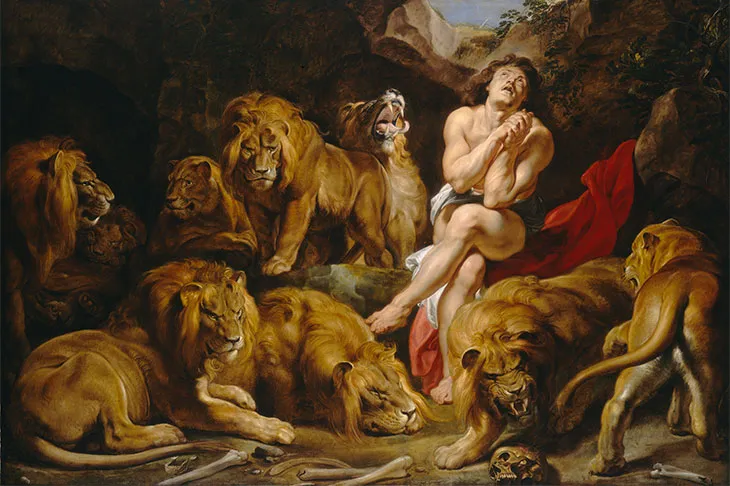
Peter Paul Rubens, born on June 28, 1577, in Siegen, Westphalia, is one of the most influential figures in the history of art. Renowned for his vibrant and dynamic paintings, Rubens’ work encapsulates the Baroque style with its emphasis on movement, color, and sensuality. His legacy as a master painter, diplomat, and cultural figure extends far beyond his native Flanders, making him a central figure in European art history. This article explores Rubens’ life, his rise to fame, and the key highlights that define his career.
Early Life and Education
Rubens was born into a family of intellectuals and professionals. His father, Jan Rubens, was a lawyer who had fled the Spanish persecution of Protestants, taking refuge in Cologne. After Jan Rubens’ death, the family returned to Antwerp, where Peter Paul was raised in the Catholic faith. This religious background would deeply influence his work, which often depicted biblical scenes and Christian iconography.
Rubens received a comprehensive education that included classical studies, Latin, and an introduction to the arts. At the age of twelve, he began his artistic training under Tobias Verhaeght, a relatively obscure painter of landscapes. However, it was his subsequent apprenticeships with Adam van Noort and Otto van Veen, two leading painters of the time, that truly shaped Rubens’ development. Van Veen, in particular, was a significant influence, instilling in Rubens a deep appreciation for classical art and the techniques of the Old Masters.
The Italian Period: A Journey of Artistic Discovery
In 1600, Rubens traveled to Italy, a pivotal moment in his life and career. Italy was the epicenter of the Renaissance, and for Rubens, it was an opportunity to immerse himself in the works of the great Italian masters. He spent time in Venice, where he studied the works of Titian, Veronese, and Tintoretto, whose vibrant use of color and dramatic compositions left a lasting impression on him.
Rubens’ talent did not go unnoticed, and he soon found patronage under Vincenzo I Gonzaga, the Duke of Mantua. As the court painter, Rubens was exposed to the opulence and grandeur of the Italian courts, which influenced the lavish style that would become his trademark. During his time in Italy, Rubens also traveled extensively, visiting Rome, Genoa, and Florence. In Rome, he studied the works of Raphael and Michelangelo, absorbing their mastery of anatomy and dynamic compositions.
One of the significant works from his Italian period is “The Elevation of the Cross,” which showcases Rubens’ ability to combine the Italian Renaissance’s grandeur with the emotional intensity characteristic of the Baroque style. This painting, along with others like “The Incredulity of Saint Thomas” and “The Descent from the Cross,” reflects his deep understanding of light, shadow, and human anatomy, elements that would define his mature style.
Return to Antwerp: Fame and Success
Rubens returned to Antwerp in 1608, a city that had become a hub of commerce and culture after the turmoil of the Eighty Years’ War. His return coincided with the Counter-Reformation, a period of Catholic revival that sought to reaffirm the Church’s power and influence through art. Rubens became the leading artist of the Counter-Reformation in Flanders, producing works that were both religious and political in nature.
His reputation quickly grew, and he received numerous commissions from the Church, nobility, and foreign courts. One of his most famous works from this period is the “Descent from the Cross,” painted for the Cathedral of Our Lady in Antwerp. This piece, with its dramatic composition and emotional intensity, exemplifies Rubens’ ability to convey deep religious sentiment while also showcasing his technical brilliance.
Rubens’ workshop in Antwerp became one of the most productive in Europe, employing numerous assistants and apprentices. He developed a system of collaborative painting, where he would create the initial design or sketch, and his assistants would complete the work under his supervision. This allowed Rubens to meet the high demand for his art while maintaining a consistent quality across his vast output.
Diplomatic Career: The Artist as a Statesman
Beyond his achievements as a painter, Rubens also played a significant role as a diplomat. His connections with the European courts, coupled with his personal charm and intelligence, made him an ideal envoy for the Spanish Habsburgs, who ruled over the Southern Netherlands at the time. His diplomatic missions took him to Spain, England, and France, where he negotiated on behalf of the Spanish crown.
Rubens’ most significant diplomatic achievement came during his time in England, where he helped to broker peace between Spain and England in 1630. His relationship with King Charles I of England was particularly fruitful, leading to numerous commissions, including the decoration of the Banqueting House at Whitehall. The ceiling paintings Rubens created for this space, celebrating the reign of James I, are among his most famous works and a testament to his ability to blend art with political propaganda.
The Medici Cycle: A Masterpiece of Baroque Art
One of the most ambitious projects of Rubens’ career was the Medici Cycle, a series of 24 monumental paintings commissioned by Marie de’ Medici, the widow of King Henry IV of France. The cycle was intended to decorate the Luxembourg Palace in Paris and to glorify the life and reign of Marie de’ Medici.
The Medici Cycle is a masterpiece of Baroque art, combining allegory, portraiture, and history painting into a cohesive narrative. Rubens’ ability to weave together the personal and the political, the real and the symbolic, is on full display in this series. Each painting is rich with detail, showcasing Rubens’ mastery of color, composition, and storytelling.
The Medici Cycle not only solidified Rubens’ reputation as the leading painter of his time but also demonstrated his understanding of art as a tool for political and personal expression. Through these paintings, Marie de’ Medici sought to legitimize her regency and her son’s reign, using Rubens’ art to craft a narrative of power and divine right.
Later Years: The Pinnacle of Success
In the later years of his life, Rubens continued to produce works of extraordinary quality and scale. He purchased a country estate, the Château de Steen, where he spent his final years. This period of his life was marked by a turn towards more personal and introspective themes, as seen in his landscapes and portraits.
One of his last major commissions was for the Spanish king, Philip IV, for whom he decorated the Torre de la Parada, a hunting lodge near Madrid. These works, which included mythological scenes such as “The Judgment of Paris,” reflect Rubens’ continued engagement with classical themes and his ability to convey complex narratives through his art.
Rubens’ health began to decline in the late 1630s, and he passed away on May 30, 1640, in Antwerp. He was buried in the Church of St. James in Antwerp, where his grave is marked by a monument of his design, featuring a Madonna and Child flanked by saints, a fitting tribute to a man whose art was so deeply intertwined with his faith.
Legacy: The Impact of Rubens’ Work
Peter Paul Rubens left an indelible mark on the art world. His influence extended beyond his immediate circle of students and apprentices, shaping the development of Baroque art across Europe. Artists like Anthony van Dyck, Jacob Jordaens, and Frans Snyders were all deeply influenced by Rubens, carrying forward his dynamic style and grand vision.
Rubens’ impact was not limited to his contemporaries; his work has continued to inspire artists across centuries. The richness of his color palette, the fluidity of his compositions, and his ability to convey human emotion with such immediacy have made his paintings timeless. His work is housed in major museums around the world, from the Prado in Madrid to the Louvre in Paris, the National Gallery in London, and the Metropolitan Museum of Art in New York.
Historical Context: The Baroque Movement
Rubens’ work must be understood within the broader context of the Baroque movement, which emerged in Europe in the late 16th century and reached its height in the 17th century. The Baroque style is characterized by its emphasis on drama, movement, and tension, often expressed through rich colors, contrasts of light and dark, and dynamic compositions.
This style was particularly suited to the Counter-Reformation, as the Catholic Church sought to use art as a means of inspiring faith and devotion among the masses. Rubens’ work, with its emotional intensity and grandeur, epitomized the Baroque ideal, making him a central figure in the artistic response to the religious and political upheavals of his time.
Conclusion
Peter Paul Rubens was more than just a painter; he was a cultural icon whose influence permeated the realms of art, politics, and society. His ability to navigate the complexities of his time, both as an artist and as a diplomat, set him apart from his peers. Rubens’ work continues to captivate audiences today, a testament to his genius and the timeless quality of his art.
As one of the leading figures of the Baroque era, Rubens’ legacy is secure. His paintings, with their vibrant energy and emotional depth, remain as powerful today as they were four centuries ago, ensuring that his place in the pantheon of great artists will endure for generations to come.


