
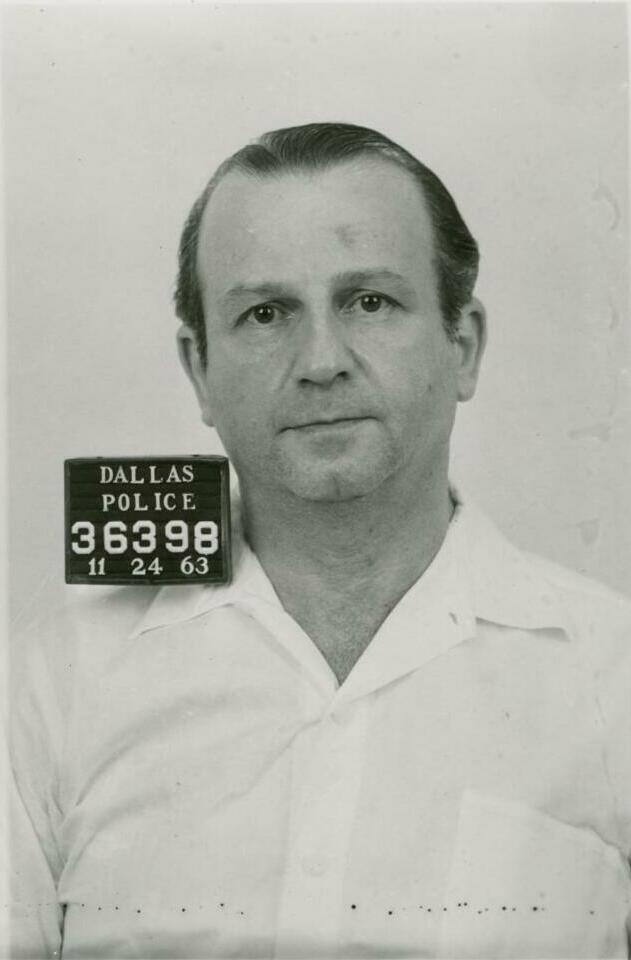
Jack Ruby is a name that will forever be etched into the annals of American history, largely due to one fateful act that took place on November 24, 1963, in Dallas, Texas. Ruby, born Jacob Rubenstein on March 25, 1911, in Chicago, Illinois, is best known for his assassination of Lee Harvey Oswald, the man accused of killing President John F. Kennedy. This article delves into the life of Jack Ruby, exploring his early years, his rise to notoriety, the circumstances leading to his infamous act, and the lasting impact on American culture and history.
Early Life: From Chicago’s Streets to Dallas
Jack Ruby was born into a Polish-Jewish immigrant family in the tough neighborhoods of Chicago. His father, Joseph Rubenstein, was a carpenter, and his mother, Fanny, hailed from Warsaw. The family struggled with poverty, and Ruby’s upbringing was far from stable. His parents’ tumultuous marriage, marred by frequent separations and reconciliations, created a chaotic environment for Ruby and his siblings.
Growing up in the gritty streets of Chicago, Ruby quickly learned to fend for himself. He was known for his quick temper and willingness to use his fists to solve disputes. These traits would follow him throughout his life, contributing to his reputation as a man who often resorted to violence.
Ruby’s early years were marked by a series of petty crimes and brushes with the law. He spent some time in juvenile detention and was known to associate with gangsters in the Chicago area. However, Ruby’s life began to change after the end of World War II. Seeking a fresh start, he moved to Dallas, Texas, in the 1940s, where he attempted to reinvent himself as a businessman.
Life in Dallas: From Nightclub Owner to Notoriety
In Dallas, Ruby found work in various jobs, from selling novelties to running small-time gambling operations. Eventually, he opened the “Carousel Club,” a downtown Dallas nightclub known for its burlesque shows and somewhat seedy clientele. The club attracted a mix of patrons, including local politicians, police officers, and members of the criminal underworld.
Ruby was a familiar figure in the Dallas nightlife scene. He was known for his brash personality and his efforts to curry favor with law enforcement by offering free drinks and entertainment at his club. Ruby’s connections with local police officers and his involvement in the city’s underworld gave him a sense of importance, though he was far from a major player.
Despite his efforts to present himself as a legitimate businessman, Ruby’s life was marked by financial struggles and failed business ventures. His temper and tendency to solve problems with violence often got him into trouble, but he managed to avoid serious legal consequences thanks to his connections and his ability to navigate the murky waters of Dallas’s social scene.
The Assassination of John F. Kennedy: A Turning Point
The trajectory of Jack Ruby’s life changed dramatically on November 22, 1963, when President John F. Kennedy was assassinated in Dallas. The shocking event sent waves of grief and outrage across the nation. Just two days later, on November 24, 1963, Ruby made history by shooting and killing Lee Harvey Oswald, the man accused of assassinating President Kennedy, in the basement of the Dallas Police Department.
The assassination of Oswald was broadcast live on television, and millions of Americans witnessed the shocking moment as it happened. Ruby approached Oswald as he was being transferred from the city jail to the county jail and fired a single fatal shot into Oswald’s abdomen, uttering the words, “You killed my President, you rat!” Ruby was immediately subdued by the police and taken into custody.
The killing of Oswald by Ruby added another layer of mystery and intrigue to the Kennedy assassination, sparking countless conspiracy theories. Many questioned Ruby’s motives—was he acting out of a sense of patriotic anger, or was there a more sinister conspiracy at play?
The Motives Behind the Act
Understanding Ruby’s motives for killing Oswald has been the subject of much speculation and debate. Ruby himself claimed that he was overcome with grief and rage over the assassination of President Kennedy, whom he admired. He saw the act as a way to avenge Kennedy’s death and spare Jacqueline Kennedy, the President’s widow, the ordeal of Oswald’s trial.
However, others have speculated that Ruby’s actions were not as spontaneous as they appeared. Given Ruby’s connections with the Dallas underworld and his familiarity with law enforcement, some have suggested that he was acting on behalf of a larger conspiracy. These theories have been fueled by the fact that Ruby had inexplicably found his way into the secure basement of the Dallas Police Department, where Oswald was being held.
Ruby’s own explanations for his actions were inconsistent and, at times, incoherent. He claimed that he had not planned to kill Oswald but was driven by a sudden impulse. Yet, the fact that he was carrying a loaded gun and had positioned himself in the perfect spot to carry out the assassination suggests a degree of premeditation.
The Warren Commission, which was established to investigate the assassination of President Kennedy, concluded that Ruby acted alone and that there was no evidence of a conspiracy. However, doubts have persisted, and Ruby’s actions have remained one of the most perplexing aspects of the Kennedy assassination.
The Trial and Imprisonment of Jack Ruby
After killing Oswald, Ruby was arrested and charged with murder. His trial in 1964 was a media sensation, with Ruby’s defense team arguing that he was temporarily insane at the time of the shooting due to the overwhelming emotional strain caused by Kennedy’s assassination. Despite these arguments, Ruby was found guilty of murder with malice and sentenced to death.
Ruby’s conviction did little to quell the speculation surrounding his motives. During his time in prison, Ruby’s health began to deteriorate, and he continued to offer conflicting accounts of his reasons for killing Oswald. At one point, he suggested that his actions were part of a broader conspiracy, though he offered no concrete evidence to support these claims.
In 1966, Ruby’s conviction was overturned on appeal, with the court ruling that he had not received a fair trial due to the intense media coverage and the failure to grant a change of venue. A new trial was scheduled, but Ruby’s health took a turn for the worse before it could take place.
Death and Legacy: The End of a Controversial Figure
Jack Ruby died on January 3, 1967, at the Parkland Memorial Hospital in Dallas, the same hospital where President Kennedy and Lee Harvey Oswald had been pronounced dead. Ruby’s death was attributed to a pulmonary embolism, a complication of the lung cancer that had been diagnosed just a few months earlier.
Ruby’s death marked the end of a life that had been as turbulent and controversial as the events in which he became embroiled. To this day, Jack Ruby remains a figure of intrigue and mystery, his motives and actions scrutinized by historians, conspiracy theorists, and the general public alike.
Ruby’s life and his role in the assassination of Oswald have been depicted in numerous books, films, and documentaries. Perhaps the most famous portrayal of Ruby came in Oliver Stone’s 1991 film JFK, where he was depicted as a somewhat tragic figure caught up in events beyond his control. This portrayal, like many others, reflects the ongoing fascination with Ruby and the broader narrative of the Kennedy assassination.
The Conspiracy Theories: Jack Ruby and the Kennedy Assassination
The assassination of President John F. Kennedy has been the subject of countless conspiracy theories, and Jack Ruby’s role in the events has fueled many of them. Some theories suggest that Ruby was part of a mafia plot to silence Oswald before he could reveal the truth about the assassination. Others speculate that Ruby was acting on orders from high-ranking government officials or that he was influenced by the CIA or FBI.
While the Warren Commission concluded that Ruby acted alone, the commission’s findings have been questioned by many, including members of Congress, journalists, and independent investigators. The House Select Committee on Assassinations, which conducted a re-investigation of the Kennedy and Martin Luther King Jr. assassinations in the late 1970s, concluded that there was a “high probability” that Kennedy’s assassination was the result of a conspiracy but did not implicate Ruby in any such plot.
The lack of clear answers and Ruby’s own inconsistent statements have only served to deepen the mystery. Ruby’s connections with the criminal underworld and his actions on that fateful day continue to be analyzed and debated, with new theories emerging as more information becomes available.
Jack Ruby’s Impact on American Culture and History
Jack Ruby’s act of killing Lee Harvey Oswald has had a lasting impact on American culture and history. It added a dramatic and unexpected twist to an already shocking event, reinforcing the sense of confusion and disbelief that surrounded the Kennedy assassination. Ruby’s actions also contributed to the rise of conspiracy theories, as many Americans struggled to make sense of the rapid succession of violent events.
Ruby’s life and the questions surrounding his motives have been the subject of numerous cultural depictions. He has been portrayed as both a tragic figure and a sinister one, with interpretations varying widely depending on the perspective of the storyteller. The character of Jack Ruby has appeared in films, television shows, and books, each adding to the complex tapestry of his legacy.
In the broader context of American history, Ruby’s actions serve as a reminder of the unpredictable and often chaotic nature of history. His life story, from a troubled upbringing in Chicago to his final days in Dallas, encapsulates many of the themes that define the American experience: the pursuit of success, the struggle with personal demons, and the impact of individual actions on the course of history.
Conclusion: The Enigma of Jack Ruby
Jack Ruby remains one of the most enigmatic figures in American history. His life, marked by violence, ambition, and ultimately tragedy, is a testament to the complex and often contradictory nature of human behavior. Ruby’s assassination of Lee Harvey Oswald ensured his place in history, but it also left behind a legacy of unanswered questions and unresolved mysteries.
As historians and the public continue to explore the events of November 1963, Jack Ruby’s role in the Kennedy assassination will undoubtedly remain a topic of fascination and debate. Whether seen as a hero, a villain, or a pawn in a larger conspiracy, Ruby’s story is an integral part of the narrative of one of America’s most tumultuous periods.
In the end, Jack Ruby’s legacy is a reflection of the uncertainties and complexities of the time in which he lived—a time when the lines between right and wrong, truth and fiction, were often blurred, and the actions of individuals could alter the course of history.


