
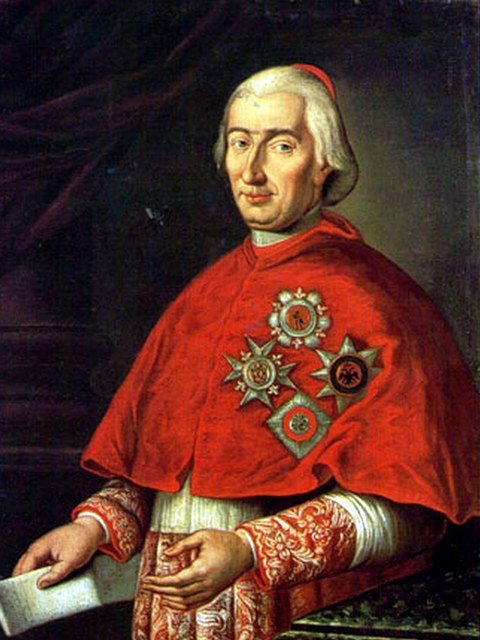
Fabrizio Ruffo, a name synonymous with intrigue, strategy, and the tumultuous history of the late 18th and early 19th centuries in Italy, remains a fascinating figure whose life reflects the complexities of the era. Born on September 16, 1744, in San Lucido, Calabria, Ruffo’s life was one of contrasts—both a cardinal and a military leader, he played a crucial role in the restoration of the Bourbon monarchy in Naples during a time of revolutionary upheaval. This article delves into the life, fame, and significant achievements of Fabrizio Ruffo, providing a comprehensive understanding of his influence on Italian history.
Early Life and Background
Fabrizio Ruffo was born into an illustrious family with deep roots in Italian nobility. He was a descendant of the powerful Ruffo family, the Dukes of Baranello and Bagnara, and through his mother, he was also connected to the Colonna family, another noble lineage. This aristocratic background provided Ruffo with opportunities and connections that would shape his future endeavors.
From a young age, Ruffo was groomed for a life of religious and political significance. His uncle, Cardinal Tommaso Ruffo, recognized his potential and took him under his wing. Ruffo was sent to Rome to pursue religious studies, where he quickly distinguished himself. His education was not merely theological; it was also steeped in the practicalities of governance, particularly in the context of the Catholic Church’s influence over political matters.
Rise to Prominence in the Catholic Church
Ruffo’s rise within the Catholic Church was swift and marked by significant responsibilities. Under the guidance of his uncle and later Giovanni Braschi, who would become Pope Pius VI, Ruffo was appointed to various influential positions. He served as a cleric of the Apostolic Camera, which functioned similarly to a modern-day ministry, managing the financial and administrative affairs of the Papal States.
In this role, Ruffo became known for his reformist ideas, particularly his support for economic liberalization and land reclamation projects, such as the drainage of the Pontine Marshes. These initiatives were bold for their time, as they challenged the entrenched interests of feudal lords and the old aristocracy. However, these reforms also made Ruffo many enemies among those who feared the disruption of the existing social and economic order.
In 1794, Pope Pius VI appointed Ruffo as a cardinal, recognizing his talents and contributions to the Church. However, this promotion also served to remove him from the increasingly contentious role of Treasurer General of the Apostolic Camera, a position that had placed him at odds with many powerful figures in the Papal States. Disillusioned and seeking new challenges, Ruffo moved to Naples, where he became a close advisor to King Ferdinand IV.
The Sanfedisti and the Reconquest of Naples
Fabrizio Ruffo’s most famous and controversial role came during the turbulent period of the Napoleonic Wars, specifically during the French invasion of Italy and the establishment of the Parthenopean Republic in Naples. In January 1799, the French, alongside local revolutionaries, overthrew the Bourbon monarchy in Naples and established a republic modeled after the French Revolution’s ideals of liberty, equality, and fraternity.
King Ferdinand IV and his court fled to Palermo, leaving Naples under the control of the new republic. However, the republic’s hold on power was tenuous, and many in the kingdom remained loyal to the monarchy. It was in this context that Ruffo proposed a daring plan to the exiled king: he would raise an army and lead a counter-revolution to restore Bourbon rule.
With Ferdinand’s support, Ruffo returned to Calabria and began assembling an army. His forces, known as the Sanfedisti (Army of the Holy Faith), were a diverse and often unruly mix of anti-French insurgents, peasants, and even notorious brigands like Fra’ Diavolo. Despite their motley nature, Ruffo’s charisma and leadership quickly transformed this group into a formidable force.
Ruffo’s campaign was as much a religious crusade as it was a military endeavor. He used the Church’s extensive network of parishes and clergy to rally support, framing the conflict as a holy war against the godless republicans and their French allies. The Sanfedisti swept through Calabria and Basilicata, gaining momentum as they moved northward toward Naples.
By June 1799, Ruffo’s forces had encircled Naples. Despite facing strong resistance from the republicans, Ruffo’s army captured the city. The fall of Naples marked the end of the Parthenopean Republic and the restoration of the Bourbon monarchy. However, the victory was marred by controversy and brutality.
The Aftermath: Controversy and Conflict
Following the recapture of Naples, Ruffo found himself at the center of a political and moral dilemma. He had promised the republicans and their supporters safe passage if they surrendered, a move aimed at preventing further bloodshed and stabilizing the city. However, this agreement was undermined by external forces.
The British Admiral Horatio Nelson, an ally of the Bourbons, arrived in Naples shortly after the city’s fall. Nelson, with the backing of King Ferdinand IV, refused to honor Ruffo’s terms of surrender. Instead, he initiated a brutal crackdown on the republicans and their sympathizers, leading to a wave of arrests, executions, and reprisals.
Ruffo was deeply troubled by these events. He had sought to avoid a bloodbath and believed that the monarchy’s return to power should be accompanied by mercy and reconciliation. His attempts to intervene and moderate the violence were largely ignored, leaving him disillusioned with both the Bourbon monarchy and its British allies.
The historian Pietro Colletta, in his “Storia del Reame di Napoli,” vividly describes the chaos and carnage that followed the fall of Naples, painting a grim picture of a city plunged into anarchy and terror. Ruffo, who had hoped to restore order and stability, instead witnessed the descent into brutality and revenge that followed his military triumph.
Later Life and Legacy
Disheartened by the events in Naples, Fabrizio Ruffo withdrew from public life in October 1799. He spent the remaining years of his life in relative obscurity, focusing on his studies and personal pursuits. Ruffo returned to Naples in 1814, after the final defeat of Napoleon and the restoration of the Bourbon monarchy across much of Europe. However, he played no further significant role in public affairs.
Fabrizio Ruffo died on December 13, 1827, at the age of 83. His legacy is a complex one, marked by both his successes and his failures. He is remembered as a capable and charismatic leader who played a key role in the restoration of Bourbon rule in Naples. However, his inability to prevent the atrocities that followed the city’s capture remains a stain on his record.
Ruffo’s life reflects the broader challenges and contradictions of his time. He was a man of faith and principle, yet he operated in a world where power and politics often overshadowed morality. His efforts to balance these competing demands make him a compelling figure in the history of Italy.
Historical Context and Significance
Fabrizio Ruffo’s life and actions must be understood within the broader context of the late 18th and early 19th centuries, a period of significant upheaval in Europe. The French Revolution, which began in 1789, had a profound impact on the continent, spreading revolutionary ideals and leading to the rise of Napoleon Bonaparte.
The Napoleonic Wars, which raged from 1803 to 1815, further destabilized Europe, as Napoleon sought to expand his empire and spread the principles of the revolution. In Italy, these events led to the collapse of traditional monarchies and the establishment of republican regimes, often backed by French military power.
Ruffo’s role in the reconquest of Naples was part of a broader counter-revolutionary movement that sought to restore the old order and suppress the spread of revolutionary ideas. His use of religious symbolism and appeals to faith were typical of the era, as conservative forces sought to rally popular support against the perceived threats of secularism and republicanism.
However, Ruffo’s story also highlights the limitations of such movements. While he was successful in restoring the Bourbon monarchy, the methods used and the violence that ensued revealed the deep divisions within Italian society. These events foreshadowed the struggles that would later characterize the Risorgimento, the movement for Italian unification in the mid-19th century.
Conclusion
Fabrizio Ruffo was a man of his time, navigating the turbulent waters of European politics and religion with a blend of conviction and pragmatism. His efforts to restore Bourbon rule in Naples, while ultimately successful, came at a high cost, both in human lives and in the moral compromises that were made.
As a cardinal and a military leader, Ruffo’s life offers a unique perspective on the intersection of faith, power, and politics in a period of great change. His legacy is a reminder of the complexities of history and the challenges faced by those who seek to navigate its currents.
Today, Ruffo is remembered as a figure who embodied the contradictions of his era—a champion of both the Church and the monarchy, yet also a man who sought to temper the excesses of power with mercy and justice. His life and career continue to be studied by historians and scholars, offering valuable insights into the dynamics of power and faith in the modern world.


