
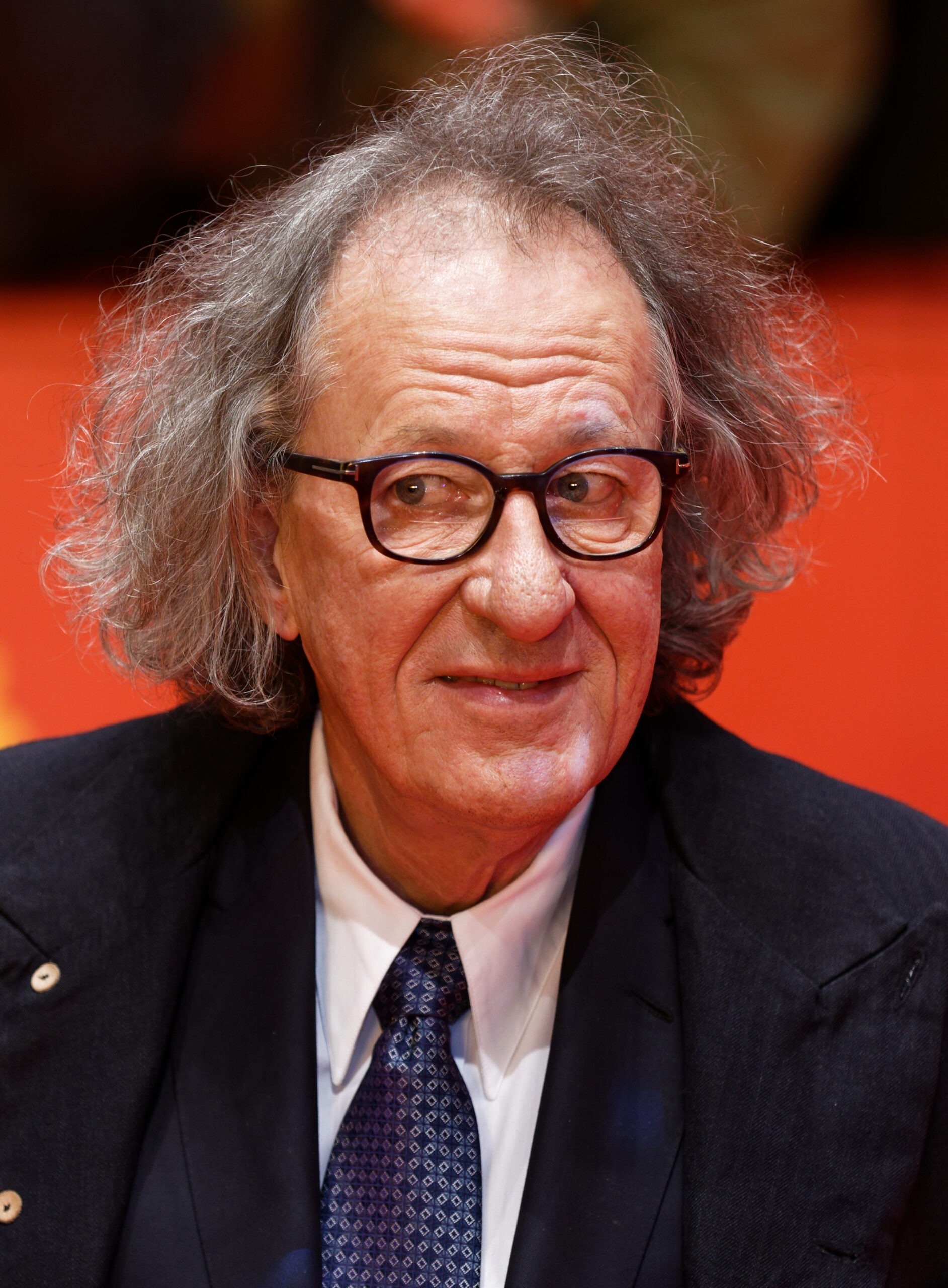
Geoffrey Roy Rush, born on July 6, 1951, in Toowoomba, Queensland, Australia, is one of the most distinguished and versatile actors of his generation. With a career spanning over four decades, Rush has become a household name in the world of cinema and theater, known for his extraordinary range, commitment to his craft, and ability to bring complex characters to life. His journey from a small town in Australia to the global stage is a testament to his talent, perseverance, and passion for the performing arts.
Early Life and Education
Geoffrey Rush’s early life was marked by both challenges and opportunities. His parents, Merle, a department store sales assistant, and Roy, a member of the Royal Australian Air Force, divorced when Geoffrey was just five years old. Following the separation, Rush moved to Brisbane with his mother and maternal grandparents. This period of his life was pivotal, as it was during these formative years that Rush began to develop his love for performance and storytelling.
Rush attended the Everton Park State High School, where he first started exploring his interest in acting. However, it wasn’t until his university years that his passion for the arts truly began to flourish. Rush enrolled at the University of Queensland, where he studied English literature. During this time, he joined the Queensland Theatre Company, marking the beginning of his professional acting career. His debut in the company’s production of “Wrong Side of the Moon” was the start of a long and successful journey in the theater.
After graduating, Rush decided to further his education in the arts by moving to Paris, where he attended the prestigious Jacques Lecoq International School of Theatre. Here, he studied mime, movement, and acting, skills that would later become integral to his diverse acting repertoire. This period in Paris not only honed his craft but also exposed him to a broader artistic culture, shaping his approach to performance.
Rise to Fame and Notable Achievements
Geoffrey Rush’s return to Australia marked the beginning of his ascent in the world of theater. He quickly established himself as a prominent figure in the Australian theater scene, performing in a wide range of productions that showcased his versatility. One of his most notable early performances was in a production of Samuel Beckett’s “Waiting for Godot,” in which he starred alongside Mel Gibson. This production was well-received and helped to solidify Rush’s reputation as a talented and committed actor.
Despite his success on the stage, it wasn’t until the 1990s that Rush gained international recognition, thanks to his work in film. His breakthrough role came in 1996 when he starred as David Helfgott in the biographical drama Shine. The film, directed by Scott Hicks, tells the story of a brilliant pianist whose career is derailed by mental illness. Rush’s portrayal of Helfgott was widely acclaimed, earning him numerous awards, including the Academy Award for Best Actor. This win catapulted Rush to international stardom and opened the doors to Hollywood.
Following the success of Shine, Rush’s career took off. In 1998, he appeared in Elizabeth, a historical drama directed by Shekhar Kapur, in which he played Sir Francis Walsingham, a role that showcased his ability to portray complex historical figures. That same year, he also starred in Les Misérables, directed by Bille August, further cementing his reputation as a versatile and reliable character actor.
Rush’s ability to immerse himself in a wide range of roles led to another Oscar nomination in 1999 for his performance in Shakespeare in Love, where he played the cunning and ambitious theater manager Philip Henslowe. This role, while supporting, demonstrated Rush’s knack for stealing scenes and bringing depth to every character he portrayed.
Continued Success and Iconic Roles
The early 2000s saw Geoffrey Rush continue to build on his success with a series of high-profile and critically acclaimed performances. In 2000, he starred in Quills, portraying the infamous Marquis de Sade in a performance that earned him yet another Oscar nomination. His portrayal of the controversial and provocative figure was both daring and nuanced, capturing the complexity of a man whose life was marked by scandal and brilliance.
Rush’s versatility as an actor was further demonstrated in 2003 when he took on the role of Captain Hector Barbossa in Pirates of the Caribbean: The Curse of the Black Pearl. Directed by Gore Verbinski, the film was a massive commercial success, and Rush’s portrayal of the ruthless yet charming pirate captain became one of the most beloved characters in the franchise. His ability to bring both menace and humor to the role made Barbossa an iconic character, and Rush would go on to reprise the role in several sequels, including Pirates of the Caribbean: Dead Man’s Chest (2006), At World’s End (2007), and On Stranger Tides (2011).
In addition to his work in the Pirates of the Caribbean series, Rush continued to take on a wide range of roles in both film and theater. In 2005, he appeared in Steven Spielberg’s Munich, a historical drama about the aftermath of the 1972 Munich Olympics massacre. The film was critically acclaimed, and Rush’s performance was praised for its depth and gravitas.
One of Rush’s most celebrated performances came in 2010 when he starred in The King’s Speech as Lionel Logue, the speech therapist who helped King George VI overcome his stammer. Directed by Tom Hooper, the film was a major critical and commercial success, winning four Academy Awards, including Best Picture. Rush’s performance earned him his fourth Oscar nomination, this time for Best Supporting Actor, and he won several other awards, including a BAFTA and a Screen Actors Guild Award.
Recent Work and Legacy
In recent years, Geoffrey Rush has continued to work in both film and theater, demonstrating his enduring passion for acting and his commitment to his craft. In 2013, he starred in Giuseppe Tornatore’s The Best Offer, playing Virgil Oldman, an eccentric art auctioneer. The film was well-received, particularly for Rush’s performance, which was praised for its complexity and emotional depth.
Rush has also remained active in the theater, continuing to take on challenging and diverse roles. His dedication to the stage has been a constant throughout his career, and he has often spoken about the importance of theater in his development as an actor. His work on stage has earned him numerous awards and accolades, further solidifying his status as one of the great actors of his generation.
In addition to his work in film and theater, Rush has also lent his voice to various animated films and video games, including the Finding Nemo franchise, in which he voiced the character of Nigel the pelican. His distinctive voice and ability to bring characters to life through animation have made him a sought-after voice actor.
Conclusion
Geoffrey Rush’s career is a testament to the power of talent, hard work, and dedication. From his early days in the theater to his rise as an international film star, Rush has consistently demonstrated his ability to bring depth, nuance, and humanity to every role he takes on. His work has earned him numerous awards and accolades, including an Academy Award, a BAFTA, and a Screen Actors Guild Award, among others.
Rush’s legacy as an actor is not just defined by the awards he has won, but by the impact he has had on the world of cinema and theater. His performances have touched audiences around the globe, and his ability to inhabit a wide range of characters has made him one of the most respected and admired actors of his generation.
As he continues to work in film and theater, Geoffrey Rush remains a shining example of what it means to be a true artist. His passion for his craft, his commitment to excellence, and his ability to connect with audiences on a profound level ensure that his work will be celebrated for generations to come.


