
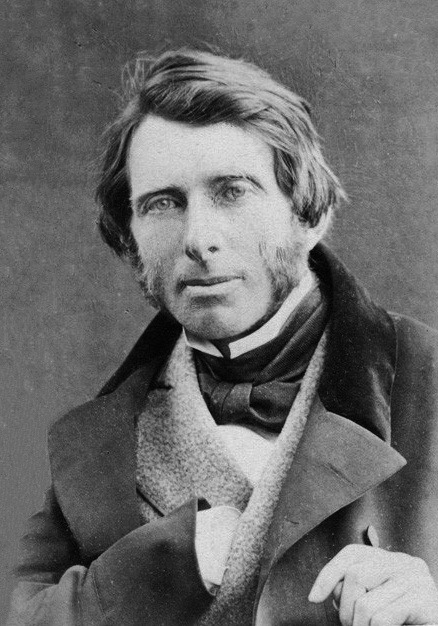
John Ruskin, born on February 8, 1819, in London, was a monumental figure in the 19th century, renowned for his work as an art critic, social thinker, and philanthropist. His legacy, shaped by his unique blend of artistic sensibility and moral philosophy, left an indelible mark on both the arts and the broader societal landscape. This comprehensive exploration delves into his life, achievements, and the historical context that framed his influence.
Early Life and Education
John Ruskin was born into a well-off Scottish family, the only child of a wine merchant. His upbringing was notably strict, with his mother enforcing a rigorous religious education rooted in Puritan values. Despite this, she also recognized and nurtured Ruskin’s artistic inclinations, enrolling him in private lessons that included not only academic subjects but also art and sports. This early exposure to art would later become a cornerstone of his life and work.
From a young age, Ruskin was well-traveled. At just six years old, he accompanied his parents on extensive tours across Europe, visiting cities such as Paris, Brussels, and regions like the Rhine and Switzerland. These travels significantly broadened his worldview and exposed him to the rich cultural heritage of Europe, which would later influence his writings and critiques.
Ruskin’s formal education began at Oxford University, where he pursued his studies under the watchful eye of his mother, who even moved to Oxford to be near him. However, his time at university was not without its emotional challenges. A pivotal moment in his youth was an unrequited love affair that left a profound impact on him, offering a counterbalance to the adulation he received from his family and preventing him from developing an inflated sense of self-worth.
Artistic and Literary Contributions
In 1843, Ruskin published his first major work, “Modern Painters,” a passionate defense of the English painter J.M.W. Turner. This book, which was initially published anonymously, marked the beginning of Ruskin’s ascent as a leading art critic. His deep admiration for Turner’s work led to a close friendship between the two, and Ruskin later became Turner’s executor upon the painter’s death.
Ruskin’s travels continued to inform his work. His second journey to Italy in 1845, where he spent a significant amount of time in Tuscany, was particularly influential. During this period, Ruskin produced some of his finest watercolors and began to develop a deep appreciation for Gothic architecture and medieval art. This Italian sojourn inspired two of his most significant works, “The Seven Lamps of Architecture” (1849) and “The Stones of Venice” (1851-1853), which introduced English audiences to the architectural splendors of Northern Italy.
Social and Economic Philosophy
As Ruskin’s career progressed, his reflections on art led him to consider broader questions about human nature and society. He became increasingly critical of the industrial revolution and its impact on both the environment and the working class. Ruskin’s writings began to articulate a philosophy that was deeply anti-utilitarian, advocating for a return to the values and practices of medieval craftsmanship and Gothic art. His ideas were considered revolutionary at the time, and some of his essays, such as those later compiled in “Unto This Last” (1860) and “Munera Pulveris” (1872), were initially suppressed due to their controversial nature.
One of Ruskin’s most ambitious social experiments was the founding of the Guild of St. George, a utopian community that aimed to revive traditional crafts and provide a model for a more just and humane society. Although the experiment ultimately failed, it demonstrated Ruskin’s commitment to translating his ideas into practical action. He also invested significant resources into philanthropic endeavors, including funding workers’ housing, cooperatives, and museums, all made possible by the substantial inheritance he received from his father.
Personal Life and Later Years
Ruskin’s personal life was fraught with difficulties, particularly in matters of love. In 1847, under pressure from his family, Ruskin married Effie Gray, the daughter of one of his father’s clients. The marriage was unhappy from the start and was eventually annulled after seven years, much to the relief of both parties.
After his failed marriage, Ruskin fell in love with Rose La Touche, a much younger woman whose parents vehemently opposed their union. The impossibility of marrying Rose plunged Ruskin into a deep depression, which was only occasionally alleviated by moments of intense creative and emotional ecstasy. This pattern of emotional turmoil continued into his later years, culminating in his unsuccessful proposal to another young woman, his student Kathleen Olander, in 1888. Once again, parental opposition thwarted Ruskin’s hopes, leaving him in a state of profound despair from which he never fully recovered.
Despite his personal struggles, Ruskin remained intellectually active well into his later years. He continued to write and teach at Oxford, where one of his students was the future literary giant Oscar Wilde. However, as he aged, Ruskin’s mental health began to deteriorate, leading to periods of confusion and melancholy. Even in this diminished state, he managed to complete his autobiography, “Praeterita,” a reflective work that offers insights into his life and thought.
John Ruskin passed away on January 20, 1900, at his home in Brantwood, succumbing to influenza at the age of 80. His death marked the end of an era, but his influence continued to resonate through the arts and social movements of the 20th century.
Legacy and Impact
John Ruskin’s contributions to art criticism and social thought are immense and enduring. He was a pioneer in advocating for the appreciation of Gothic architecture and medieval art at a time when these styles were largely neglected. His defense of Turner’s work helped to elevate the status of landscape painting in England, and his writings on architecture influenced a generation of architects and artists.
Beyond his impact on the arts, Ruskin’s social and economic ideas anticipated many of the concerns of the 20th century, including the critique of industrial capitalism and the environmental movement. His emphasis on the importance of beauty, craftsmanship, and community over profit and efficiency continues to inspire those who seek to create a more humane and sustainable world.
In conclusion, John Ruskin was a man of extraordinary vision and passion. His life was marked by both triumph and tragedy, but his ideas and works have left a lasting legacy that continues to influence the fields of art, architecture, and social thought. Understanding Ruskin’s life and work offers valuable insights into the cultural and intellectual currents of the 19th century, as well as lessons that remain relevant today.


