
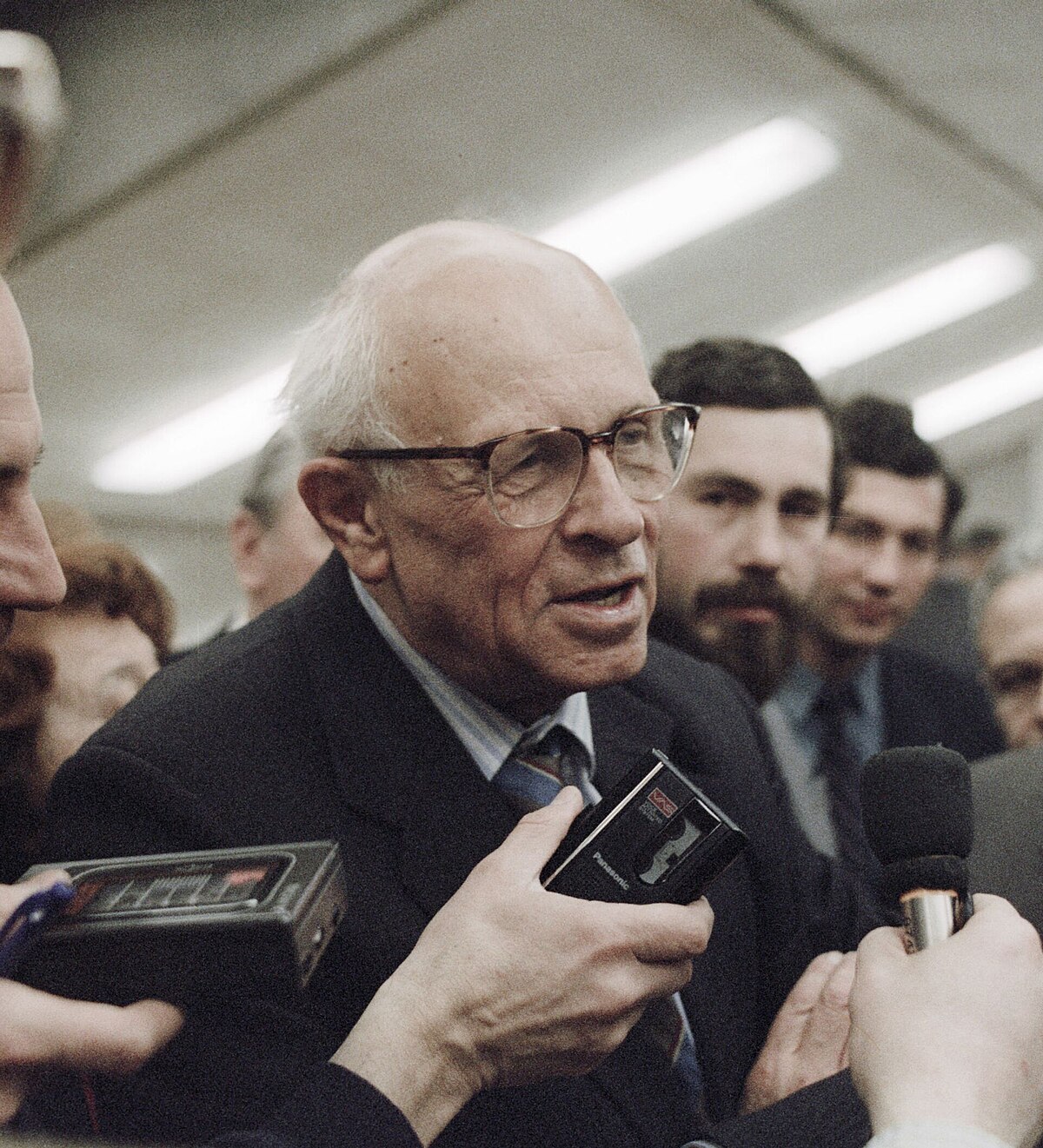
Introduction:
Andrej Dmitrievich Sakharov, born on May 21, 1921, in Moscow, is one of the most iconic figures in modern history, renowned for his groundbreaking work in nuclear physics and his staunch advocacy for human rights. His life journey is a compelling tale of scientific brilliance intertwined with moral courage. As a key figure behind the Soviet Union’s nuclear program, Sakharov later emerged as a vocal critic of the very system he once served, ultimately earning the Nobel Peace Prize for his efforts in promoting human rights and disarmament.
Early Life and Education:
Andrej Sakharov was born into a family deeply rooted in academia. His father, Dmitri Sakharov, was a physics teacher, and his intellectual influence undoubtedly played a significant role in shaping Andrej’s early interests. Sakharov’s grandfather was a prominent lawyer in the Soviet Empire, which provided him with a unique perspective on the intersection of science, law, and society.
In 1938, Sakharov enrolled at Moscow State University to study physics. However, the outbreak of World War II disrupted his education, leading him to relocate to Ashgabat in modern-day Turkmenistan. There, he completed his degree in physics and began his journey as a physicist. This early phase of his life was marked by intense study and a growing awareness of the broader implications of scientific discovery.
Contributions to the Soviet Nuclear Program:
After the war, Sakharov’s career took a pivotal turn when he joined the Soviet Union’s top-secret nuclear weapons program. Working under the guidance of prominent physicists Igor Tamm and Igor Kurchatov, Sakharov played a crucial role in developing the Soviet hydrogen bomb. His work from 1948 to 1953 contributed to the creation of the first thermonuclear weapons in the Soviet arsenal, which were instrumental in establishing the USSR as a superpower during the Cold War.
However, as Sakharov delved deeper into the world of nuclear physics, he became increasingly aware of the devastating potential of the weapons he was helping to create. This realization marked the beginning of his transformation from a dedicated scientist to a passionate advocate for nuclear disarmament and human rights.
Shift from Science to Advocacy:
By the late 1950s, Sakharov’s views on the use of nuclear technology began to shift. He started to voice his opposition to nuclear tests and the arms race, particularly the testing of nuclear weapons for military purposes. This was a bold stance, especially within the Soviet Union, where dissent was often met with severe repercussions.
In 1967, Sakharov proposed a theoretical model suggesting an asymmetry between matter and antimatter in the universe’s composition, challenging aspects of Einstein’s theory of relativity. This contribution to theoretical physics was significant, but it was his advocacy for the ethical use of scientific knowledge that truly set him apart.
In 1970, Sakharov co-founded the Committee for Human Rights in the USSR, an organization dedicated to defending political dissidents and promoting civil liberties. This marked a turning point in his life, as he increasingly became a thorn in the side of the Soviet authorities. His outspoken criticism of the government’s human rights abuses and his calls for transparency and democratic reforms made him a target for the KGB and other state security agencies.
Nobel Peace Prize and Continued Struggles:
Sakharov’s advocacy for peace and human rights did not go unnoticed. In 1975, he was awarded the Nobel Peace Prize for his efforts to promote nuclear disarmament and defend human rights in the Soviet Union. The Norwegian Nobel Committee described him as the “conscience of humanity,” recognizing his courageous stance against oppression and his commitment to the inviolable rights of all individuals.
However, the Soviet government did not allow Sakharov to travel to Oslo to receive the prize. Instead, his second wife, Elena Bonner, who played a crucial role in supporting his activism, delivered his Nobel lecture. In this powerful speech titled “Peace, Progress, and Human Rights,” Sakharov called for an end to the arms race, greater respect for the environment, and international cooperation based on the principles of human dignity.
Sakharov’s refusal to back down from his principles led to severe repercussions. In 1980, following his public condemnation of the Soviet invasion of Afghanistan, Sakharov was arrested and exiled to the city of Gorky (now Nizhny Novgorod), a location off-limits to foreigners, where he was kept under strict surveillance. This internal exile lasted for six years, during which Sakharov and his wife faced continuous harassment and isolation.
Human Rights Activism and Hunger Strikes:
Despite the harsh conditions of his exile, Sakharov continued his activism. He famously undertook several hunger strikes to protest the Soviet government’s treatment of political prisoners and to demand medical treatment abroad for his wife, who required urgent heart surgery. These hunger strikes were acts of extreme personal sacrifice, demonstrating Sakharov’s unwavering commitment to the causes he believed in.
His protests garnered international attention, with figures like Nobel laureate Eugenio Montale praising his courage. Sakharov’s plight became a symbol of the broader struggle for human rights within the Soviet Union, and his efforts helped bring global awareness to the issue of political repression in the USSR.
Return to Moscow and Political Involvement:
In December 1986, following a phone call from Soviet leader Mikhail Gorbachev, Sakharov’s exile was lifted, and he was allowed to return to Moscow. This was a significant moment, as it coincided with Gorbachev’s policies of glasnost (openness) and perestroika (restructuring), which aimed to reform the Soviet system.
Upon his return, Sakharov resumed his activism with renewed vigor. He became a leading figure in the emerging democratic opposition and was elected to the newly formed Congress of People’s Deputies in 1989. In this role, Sakharov continued to push for political reforms, human rights, and the establishment of a democratic society in the Soviet Union.
Final Years and Legacy:
Andrej Sakharov’s life came to an end on December 14, 1989, when he died suddenly of a heart arrhythmia at the age of 68. His death marked the loss of one of the most influential voices for peace and human rights in the 20th century.
Sakharov’s legacy is profound and enduring. He is remembered not only for his contributions to science but also for his moral courage and his tireless efforts to promote human rights and democracy. The European Parliament honors his memory annually with the Sakharov Prize for Freedom of Thought, awarded to individuals and organizations who have made significant contributions to the defense of human rights and freedom of expression.
Conclusion:
Andrej Sakharov’s life is a testament to the power of conscience and the enduring impact of principled activism. From his early days as a brilliant physicist contributing to the Soviet nuclear program to his later years as a relentless advocate for human rights, Sakharov demonstrated that true greatness lies not in scientific achievements alone, but in the courage to stand up for what is right, even in the face of overwhelming opposition.
His story is a powerful reminder that the pursuit of knowledge must be accompanied by a deep sense of responsibility to humanity. Sakharov’s vision for a world free of nuclear weapons, governed by respect for human rights, continues to inspire generations of activists, scientists, and leaders around the globe. As we reflect on his life and legacy, we are reminded of the importance of standing up for justice, peace, and the dignity of every individual.


