
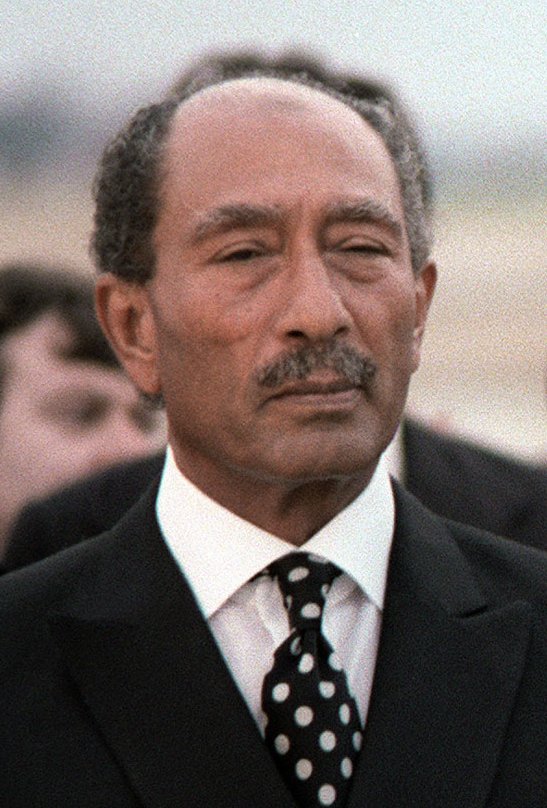
Anwar al-Sadat is a name that resonates deeply in the annals of 20th-century history, not just in Egypt, but across the globe. Born on December 25, 1918, in Mit Abu al-Kum, Egypt, Sadat rose from humble beginnings to become one of the most significant and controversial leaders of the Arab world. His life was marked by a series of dramatic transformations, from a military officer to a revolutionary, and finally to the President of Egypt. This article delves into the life of Anwar al-Sadat, exploring his early years, rise to power, his pivotal role in shaping the Middle East, and the enduring legacy of his leadership.
Early Life and Military Career
Anwar al-Sadat was born into a large family in the village of Mit Abu al-Kum, located in the Nile Delta region. Growing up in a rural environment, Sadat’s early life was characterized by modesty and the values of a traditional Egyptian family. At the age of seven, his family moved to Cairo, a shift that exposed young Sadat to the broader socio-political dynamics of Egyptian society. Cairo, at the time, was a bustling metropolis, grappling with the complexities of colonial rule under the British Empire.
Sadat’s education began in local schools, but it was his admission to the Royal Military Academy in Cairo that set the stage for his future career. Graduating in 1938, Sadat joined the Egyptian army as a young officer. His early military career coincided with a turbulent period in global history, as the world was on the brink of World War II. During the war, Sadat’s anti-British sentiments intensified, leading to his imprisonment by the British authorities in Egypt. This experience of incarceration fueled his nationalist fervor and solidified his resolve to see Egypt free from foreign domination.
The Free Officers Movement and the 1952 Revolution
The post-war period in Egypt was marked by increasing dissatisfaction with the ruling monarchy, which was seen as corrupt and subservient to British interests. In this environment, Sadat became involved with a group of nationalist officers who shared his desire for change. This group, known as the Free Officers Movement, was led by a charismatic young officer named Gamal Abdel Nasser.
On July 23, 1952, the Free Officers orchestrated a coup d’état that successfully overthrew King Farouk, ending centuries of monarchical rule in Egypt. The revolution was a turning point in Egyptian history, ushering in a new era of republicanism. Although Nasser quickly emerged as the leader of the new government, Sadat held key positions within the regime, including serving as Secretary of the National Union (the single-party system established by Nasser) and later as President of the National Assembly.
Sadat’s loyalty to Nasser and his significant role within the revolutionary government helped him climb the political ladder. Despite the internal power struggles that characterized the early years of the revolution, Sadat remained a trusted confidant of Nasser, and in 1964, he was appointed as Vice President of Egypt, a position he held again from 1969 to 1970.
Ascension to the Presidency
The sudden death of Gamal Abdel Nasser on September 28, 1970, left a power vacuum in Egypt. Nasser’s passing was a moment of national grief, as he had been a towering figure in the Arab world, known for his pan-Arabist vision and his defiance of Western powers. In the wake of Nasser’s death, Anwar al-Sadat, who was then Vice President, was elected as the President of Egypt.
Sadat’s ascension to the presidency was initially met with skepticism. Many viewed him as a transitional figure, lacking the charisma and political acumen of his predecessor. However, Sadat quickly dispelled these doubts by taking bold and decisive actions that would redefine Egypt’s domestic and foreign policy.
The Yom Kippur War and Regional Politics
One of the most defining moments of Sadat’s presidency came in October 1973, during the Yom Kippur War (also known as the Ramadan War). Sadat, determined to reclaim the Sinai Peninsula, which had been occupied by Israel since the Six-Day War in 1967, launched a surprise attack on Israeli positions in the Sinai and the Golan Heights in coordination with Syria.
The war initially caught Israel off guard, and for several days, Egyptian and Syrian forces made significant gains. However, the tide of the war eventually turned in favor of Israel, leading to a military stalemate. Despite the eventual outcome, the Yom Kippur War was seen as a psychological and political victory for Sadat. It restored Egyptian pride and allowed Sadat to position himself as a strong leader capable of challenging Israel and altering the status quo in the Middle East.
The war also set the stage for a dramatic shift in Egypt’s foreign policy. Recognizing the limitations of military conflict, Sadat began to pursue a path of diplomacy, aiming to secure a lasting peace with Israel. This approach was a radical departure from the policies of Nasser, who had consistently advocated for Arab unity against Israel.
The Historic Visit to Israel and the Camp David Accords
Anwar al-Sadat’s most audacious and controversial act came on November 19, 1977, when he became the first Arab leader to officially visit Israel. Sadat’s visit to Jerusalem, where he met with Israeli Prime Minister Menachem Begin and addressed the Knesset (Israel’s parliament), was a watershed moment in Middle Eastern history. It signaled a willingness to negotiate peace and recognize the state of Israel, a move that shocked the Arab world and was met with outrage by many Arab nations.
Sadat’s bold initiative culminated in the Camp David Accords, a series of negotiations mediated by U.S. President Jimmy Carter at the presidential retreat in Maryland. The talks, which took place in September 1978, resulted in two agreements: a framework for peace between Egypt and Israel, and a broader framework for peace in the Middle East.
On March 26, 1979, Sadat and Begin signed the Egypt-Israel Peace Treaty in Washington, D.C., with President Carter standing as a witness. The treaty stipulated the return of the Sinai Peninsula to Egypt, in exchange for Egypt’s recognition of Israel and the establishment of normal diplomatic relations between the two countries. For their efforts, Sadat and Begin were jointly awarded the Nobel Peace Prize in 1978.
Domestic Challenges and Opposition
While Sadat’s peace initiative earned him international acclaim, it also generated significant domestic and regional opposition. Many Arab nations, including Syria, Iraq, and Libya, severed diplomatic ties with Egypt, accusing Sadat of betraying the Arab cause. The Palestine Liberation Organization (PLO) and other Palestinian groups condemned Sadat for abandoning the struggle for Palestinian statehood.
Within Egypt, Sadat faced growing discontent as well. His decision to shift from Nasser’s socialist policies to a more market-oriented economy, known as the “Infitah” (or “Open Door”) policy, led to increased economic inequality and social unrest. The rapid privatization of state assets and the influx of foreign investment created a new class of wealthy elites, while many Egyptians continued to live in poverty. This economic liberalization, coupled with Sadat’s authoritarian style of governance, fueled widespread dissatisfaction.
In September 1981, in an attempt to quell rising dissent, Sadat ordered a sweeping crackdown on opposition groups, including Islamic fundamentalists, leftists, and even some of his former allies. Over 1,600 people were arrested, leading to further polarization within Egyptian society.
Assassination and Legacy
The culmination of the opposition to Sadat’s policies came on October 6, 1981, during a military parade in Cairo commemorating the anniversary of the Yom Kippur War. As Sadat watched the parade from a reviewing stand, a group of Islamist extremists, led by Lieutenant Khalid al-Islambuli, attacked the platform, killing Sadat and several others.
Sadat’s assassination sent shockwaves across the world. His death was a tragic end to a presidency that had sought to redefine Egypt’s role in the Middle East and bring about a new era of peace and stability. Sadat was succeeded by his Vice President, Hosni Mubarak, who would go on to rule Egypt for nearly three decades.
Historical Context and Impact
Anwar al-Sadat’s presidency must be understood within the broader context of post-colonial Egypt and the Cold War era. Sadat inherited a nation that had been shaped by decades of foreign domination, military conflict, and socialist experimentation under Nasser. His leadership was characterized by a pragmatic approach to foreign policy, a willingness to engage with the West, and a controversial shift away from Nasserist policies.
Sadat’s decision to pursue peace with Israel was a gamble that paid off in terms of regaining the Sinai Peninsula and securing Egypt’s place as a leader in the Arab world. However, it also isolated Egypt from its Arab neighbors and sparked internal divisions that would have long-lasting consequences.
Internationally, Sadat is remembered as a courageous statesman who took significant risks to achieve peace. His willingness to break with traditional Arab policy and engage directly with Israel was a turning point in Middle Eastern diplomacy. The Camp David Accords, though imperfect, laid the groundwork for subsequent peace efforts in the region.
Domestically, Sadat’s legacy is more complex. While he is credited with restoring Egyptian pride and sovereignty, his economic policies and authoritarian governance left a mixed record. The social and economic inequalities that emerged during his presidency contributed to the rise of Islamist movements, which would later challenge Mubarak’s regime and shape the future of Egyptian politics.
Conclusion: The Enduring Legacy of Anwar al-Sadat
Anwar al-Sadat’s life and legacy are a testament to the complexities of leadership in a region fraught with conflict and division. His presidency was marked by bold decisions that reshaped the Middle East, from the battlefield of the Yom Kippur War to the negotiating table at Camp David. Sadat’s vision of peace, though controversial, remains a significant chapter in the ongoing quest for stability in the region.
Today, Sadat is remembered both as a hero and a controversial figure. His assassination was a stark reminder of the deep divisions within Egypt and the broader Arab world. Yet, his willingness to pursue peace, even at great personal risk, continues to inspire leaders and diplomats around the world.
As we reflect on Anwar al-Sadat’s life, it is clear that his contributions to history extend beyond the immediate outcomes of his policies. He was a leader who dared to challenge the status quo, to seek reconciliation in a region marked by decades of enmity. In doing so, Sadat left an indelible mark on the world, one that continues to shape the geopolitical landscape of the Middle East to this day.


