
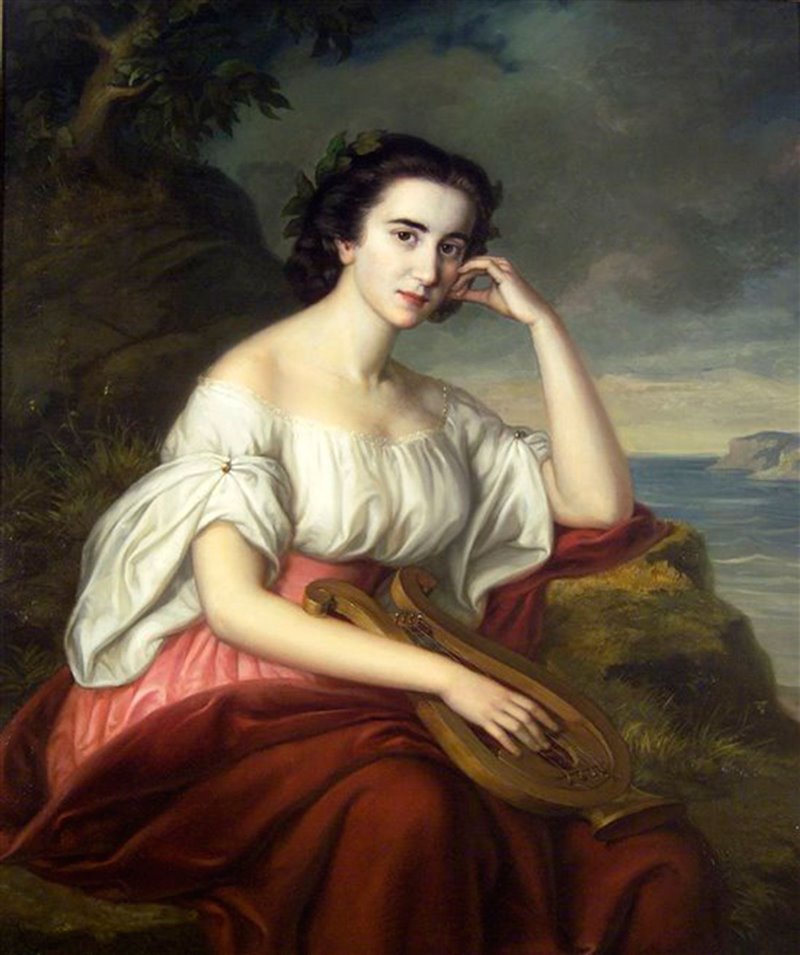
Saffo, often referred to as Sappho in English, remains one of the most enigmatic and celebrated figures of ancient Greek literature. Born on the island of Lesbos in either Eresos or Mytilene during the late 7th century BC, her exact birth year is uncertain. Estimates range from 640 BC, as suggested by the Byzantine encyclopedia, to 610 BC, based on the chronograph Eusebius. This discrepancy highlights the challenges in reconstructing the life of a figure shrouded in historical and mythical layers.
Early Life and Family Background
Saffo hailed from a noble family, which had a profound influence on her upbringing and the opportunities she had. She had three brothers: Charaxos, Erigyios, and Larichos. Charaxos is particularly notable for his passionate but ultimately disastrous affair with a woman, which led to his financial ruin. Larichos, the youngest, served as a cupbearer in the Prytaneion of Mytilene, a position reserved for young men from the most prestigious families. This role underscores the aristocratic status of Saffo’s family.
The island of Lesbos, however, was not a tranquil haven. It was embroiled in a brutal civil war that forced Saffo and her family into exile in Sicily, possibly in Syracuse or Akragas. This period of upheaval would have undoubtedly left a mark on Saffo, influencing her poetic themes and perhaps her outlook on life.
Saffo’s Physical Appearance and Personality
Historical records paint a complex picture of Saffo’s physical appearance. She was reportedly of short stature with a dark complexion, a description that contrasts sharply with the Greek ideal of beauty. However, this portrayal may have been influenced by the Socratic tradition, which often emphasized inner beauty over physical attributes. The poet Alcaeus, a contemporary of Saffo, reportedly praised her beauty, suggesting that her appearance might have been more appealing than some sources imply.
Saffo’s marriage to the wealthy Cercylas of Andros has been widely disputed. While some sources claim she was married and had a daughter named Cleis, others argue that Cleis might have been a young girl whom Saffo loved passionately. This uncertainty adds to the mystique surrounding Saffo’s personal life.
The Tiasos: Saffo’s School and Its Cultural Significance
One of the most significant aspects of Saffo’s life was her role as the head of a school for young aristocratic women. This institution, known as the “Tiasos,” was dedicated to the worship of the goddess Aphrodite and served as a center for religious and cultural education. The term “Tiasos” originally referred to the followers of the god Dionysus, but in Saffo’s time, it came to denote religious communities more broadly.
The Tiasos was not merely an academic institution; it was a space where young women were prepared for marriage through lessons in domestic rituals, singing, and dancing. The school’s religious aspect, focused on the worship of Aphrodite, further deepened the bond between Saffo and her students. Many of these young women, such as Archeanassa, Atthis, Arignota, Dike, Eirene, and Megara, became the subjects of Saffo’s poetry, leading to speculation about the nature of her relationships with them.
The Tiasos has often been romanticized, with some scholars suggesting that it was a place where Saffo and her students formed deep, possibly romantic bonds. While these interpretations have contributed to the mythologization of Saffo’s life, they also reflect the intense emotional connections that her poetry evokes.
Saffo’s Poetry: Themes and Style
Saffo’s poetic output was vast and diverse, although only fragments of her work have survived. Her poetry was traditionally organized into eight or nine books, categorized by the type of poetic meter she used. The first book contained Saffo’s odes, the second featured couplets in Aeolic pentameter, the third had couplets in greater Asclepiadean meter, and so on. The eighth and ninth books, however, were less precisely defined, though they included epithalamia—poems written to celebrate marriages, a recurring theme in Saffo’s work. The goddess Hera, associated with marriage, frequently appears in her poetry, underscoring the centrality of this theme in her oeuvre.
One of the most famous and complete pieces of Saffo’s poetry that has survived is an ode dedicated to the goddess Aphrodite. This ode is part of the first book and exemplifies Saffo’s skill in expressing deep emotion through lyrical verse. Her ability to capture the nuances of love, desire, and human relationships in her poetry has earned her a lasting place in the literary canon.
Historical Context and Legacy
Saffo lived during a time of significant social and political upheaval in ancient Greece. The civil strife on Lesbos and her subsequent exile in Sicily would have exposed her to a wide range of experiences and influences, which are reflected in her poetry. The historical context in which she lived is crucial to understanding her work, as it provides insight into the themes she explored and the emotions she expressed.
Saffo’s reputation as a poet was well-established during her lifetime and continued to grow after her death. Her work was highly regarded in ancient Greece, and she was often referred to as the “Tenth Muse.” Despite the limited number of surviving works, her influence on later poets and writers is undeniable. The Roman poet Catullus, for example, was deeply influenced by Saffo’s style and themes.
The exact date of Saffo’s death remains unknown, though it is generally believed to have occurred around 570 BC. Some of her later poems hint at physical decline, suggesting that she may have lived to an advanced age. The story of her suicide, supposedly due to unrequited love for a young boatman named Phaon, has been largely debunked as a fictional creation of later comedic writers. This narrative, while dramatic, does not align with the tone and content of Saffo’s surviving work.
Saffo in Later Literature and Art
Saffo’s life and work have continued to inspire writers and artists throughout the centuries. One of the most famous literary tributes to Saffo is Giacomo Leopardi’s poem “Ultimo canto di Saffo” (“The Last Song of Saffo”), written in 1822. This poem imagines Saffo’s final moments, blending historical detail with Leopardi’s characteristic melancholy.
In addition to literary tributes, Saffo has been the subject of numerous artistic representations. Her image has been depicted in paintings, sculptures, and other forms of visual art, often emphasizing her role as a poet and teacher. These representations have contributed to the enduring fascination with Saffo as both a historical figure and a symbol of poetic genius.
The Impact of Saffo’s Poetry on Modern Scholarship
Modern scholarship on Saffo has sought to unravel the complexities of her life and work, often challenging traditional interpretations. For instance, recent studies have questioned the longstanding assumption that Saffo’s poetry was exclusively focused on romantic love between women. Instead, scholars have emphasized the broader social and cultural contexts of her work, arguing that her poetry reflects a wide range of human experiences and emotions.
The discovery and analysis of new fragments of Saffo’s poetry have also shed light on her creative process and thematic concerns. These fragments, often recovered from ancient papyri, have provided valuable insights into the structure and content of her work, though they are frequently incomplete and subject to interpretation.
Conclusion: The Enduring Legacy of Saffo
Saffo’s legacy as one of the greatest poets of antiquity remains secure. Her ability to convey profound emotions through her poetry has resonated with readers for millennia, and her work continues to be studied and admired today. The challenges of reconstructing her life and the fragmentary nature of her surviving work only add to the allure of her story, inviting ongoing exploration and interpretation.
As a figure who straddles the line between history and myth, Saffo embodies the enduring power of poetry to capture the complexities of human experience. Her life and work offer a window into the world of ancient Greece, while also speaking to universal themes that remain relevant across time and cultures. In this way, Saffo’s poetry continues to inspire and captivate, ensuring her place in the pantheon of great literary figures.


