
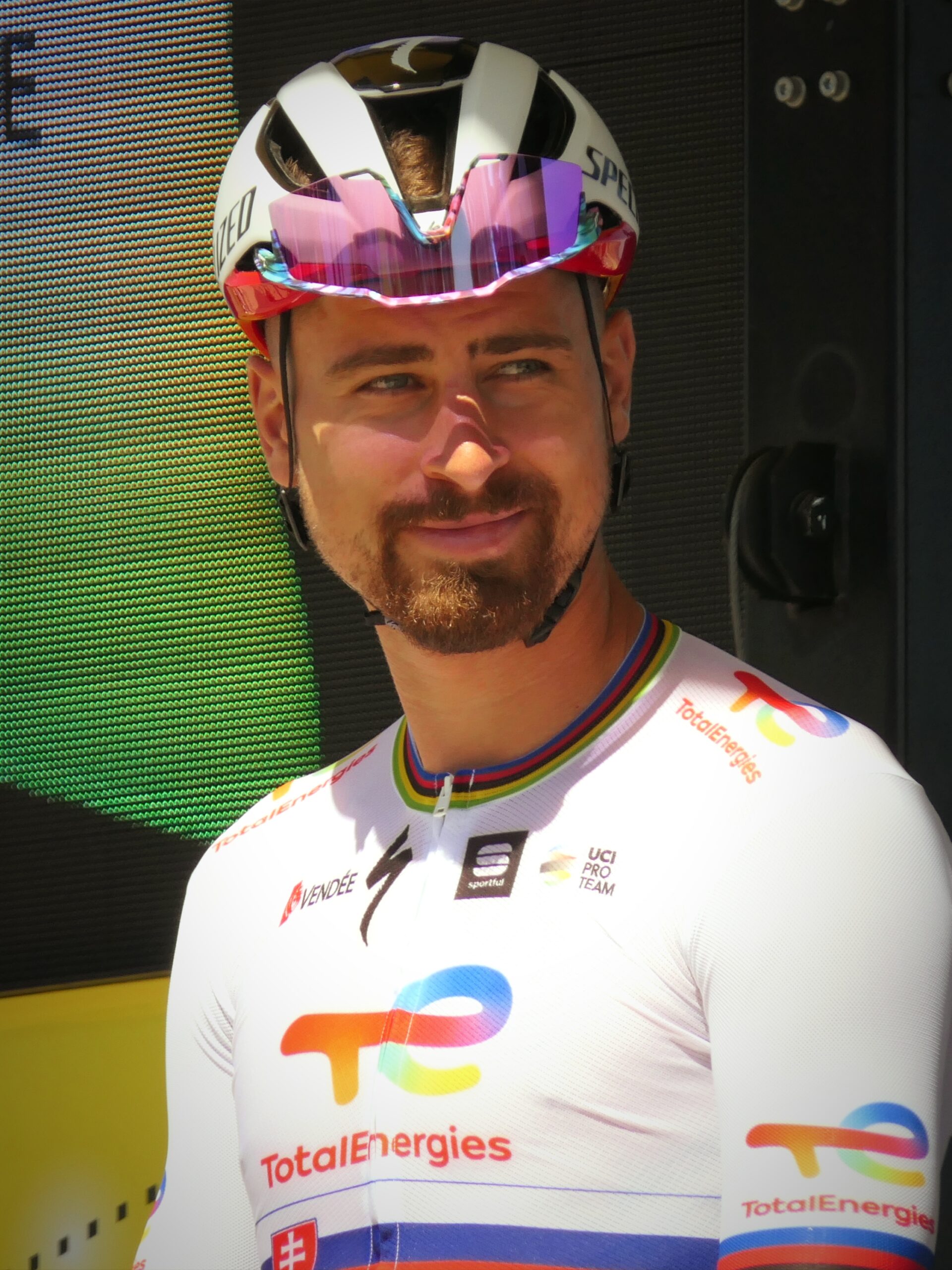
Peter Sagan, born on January 26, 1990, in Žilina, Slovakia, is one of the most accomplished and recognizable figures in the world of professional cycling. Known for his versatility, charisma, and a unique blend of power and finesse, Sagan has earned a place among the sport’s elite through his numerous victories and memorable performances. This article explores Peter Sagan’s journey from his early years to becoming a global cycling icon, providing detailed insights into his life, career highlights, and the historical context of his rise to fame.
Early Life and Introduction to Cycling
Peter Sagan grew up in a modest family in Žilina, a city in the northern part of Slovakia. From a young age, he displayed a natural talent for sports, particularly cycling. Sagan began riding bikes at the tender age of nine, initially focusing on mountain biking, a discipline that would later prove foundational to his success on the road.
By the time he was a junior, Sagan had already started making waves in the mountain biking world. In 2008, he achieved a remarkable feat by winning all the major junior mountain biking titles, including the national, European, and world championships. These early successes set the stage for his transition to road cycling, where he would go on to achieve even greater heights.
Transition to Road Cycling
In 2009, Peter Sagan made the pivotal decision to focus on road cycling, marking the beginning of a career that would see him dominate in multiple disciplines. He joined Dukla Trenčín-Merida, a Slovakian Continental team, where he made his professional debut. Sagan’s potential was evident from the start, as he quickly distinguished himself with a top-ten finish at the European Under-23 Championships.
The following year, Sagan’s career took a significant leap forward when he signed with Liquigas-Doimo, an Italian ProTeam. It was here that he began to make a name for himself on the international stage. His breakthrough came during the 2010 Paris-Nice race, where he won two stages and secured the points classification. This performance was followed by another stage victory at the Tour de Romandie, further cementing his status as a rising star in the cycling world.
Sagan’s rapid rise continued with a string of impressive results, including two stage wins at the Tour of California, where he also claimed the young rider and points classifications. By the end of 2010, Sagan had established himself as one of the most promising young talents in professional cycling.
Breakthrough in 2011 and Early Career Success
The year 2011 was a turning point in Peter Sagan’s career. At just 21 years old, he demonstrated his versatility and consistency across various races. Sagan started the year with three stage wins at the Giro di Sardegna, which he capped off by winning the overall classification. His success continued at the Tour de Suisse, where he won two stages, defeating established riders like Damiano Cunego and Thor Hushovd.
In the same year, Sagan claimed his first national title in the road race and went on to win two stages and the overall classification at the Tour de Pologne, becoming the youngest rider ever to win a World Tour stage race. These victories highlighted Sagan’s ability to excel in both one-day races and stage races, a rare quality that would define his career.
The 2012 Season: Tour de France Debut and Olympic Games
Peter Sagan entered the 2012 season with high expectations, and he did not disappoint. He began the year with a victory at the Tour of Oman, followed by a stage win at the Tirreno-Adriatico. Sagan also showcased his classics potential with top-five finishes at prestigious races like Milan-San Remo and Gent-Wevelgem.
However, it was during the Tour of California that Sagan truly announced his arrival on the world stage. He won an astonishing five out of eight stages, showcasing his sprinting prowess and versatility. Sagan then went on to win four stages at the Tour de Suisse, further solidifying his reputation as a force to be reckoned with.
The 2012 Tour de France marked Sagan’s debut in the world’s most prestigious cycling race. He made an immediate impact by winning three stages and claiming the green jersey for the points classification. Sagan’s aggressive and fearless riding style won him legions of fans, and his “Forrest Gump” victory celebration on Stage 1 became one of the most memorable moments of the Tour.
Sagan also represented Slovakia at the London Olympics, although he did not reach the podium. Nevertheless, he ended the year with a remarkable tally of 16 victories, making him one of the most successful riders of the season.
2013: Continued Success and First Classic Victory
In 2013, Peter Sagan joined the newly formed Cannondale team, continuing his streak of success. He started the year with victories at the Tour of Oman and the GP Città di Camaiore in Italy. Sagan also claimed two stage wins at the Tirreno-Adriatico and finished second in several high-profile races, including Strade Bianche, Milan-San Remo, and E3 Harelbeke.
Sagan’s persistence paid off when he won his first major classic, Gent-Wevelgem, a significant milestone in his career. He followed this with another victory at the Brabantse Pijl, further establishing himself as a formidable classics rider.
The Tour de France once again saw Sagan dominate the points classification, winning the green jersey for the second consecutive year. He also won the stage to Albi, bringing his total number of Tour stage wins to four. Sagan’s consistency throughout the season earned him numerous podium finishes, and he capped off the year with a sixth-place finish at the World Championships in Florence.
2014-2015: National Dominance and World Championship Glory
The 2014 season saw Peter Sagan continue his dominance in both national and international competitions. He won stages at the Tour of Oman and Tirreno-Adriatico and secured his fourth consecutive Slovakian national road race title. Despite being a favorite for races like the Tour of Flanders and Paris-Roubaix, Sagan fell short of victory, highlighting the challenges of consistently winning at the highest level.
Sagan’s move to the Russian Tinkoff-Saxo team in 2015, under the patronage of Oleg Tinkov, marked a new chapter in his career. Despite facing a nine-month victory drought, Sagan bounced back by winning stages at the Tirreno-Adriatico, Tour of California, and Tour de Suisse. Although he did not win any stages at the Tour de France, he claimed the green jersey for the fourth consecutive time, showcasing his unmatched consistency in the points classification.
Sagan’s crowning achievement in 2015 came at the World Championships in Richmond, where he won the road race, becoming the first Slovakian to claim the title. His victory was particularly impressive given that he had only two teammates for support, underlining his tactical intelligence and sheer determination.
2016: A Historic Year and Olympic Challenges
The 2016 season was arguably the most successful of Peter Sagan’s career. He began the year with a series of second-place finishes but quickly returned to winning ways with a victory at Gent-Wevelgem, making him the first rider since Rik Van Looy to win the Belgian classic while wearing the rainbow jersey of world champion.
Sagan then went on to win the 100th edition of the Tour of Flanders, one of the most prestigious monuments in cycling. His victory was a testament to his strength and tactical acumen, as he outpaced his rivals on the cobbled climbs of Flanders.
The Tour de France saw Sagan win three stages, including his first-ever stint in the yellow jersey, which he held for three days. Sagan’s ability to excel in sprints, breakaways, and hilly terrain made him a unique and versatile rider, capable of competing in almost any race scenario.
Despite his success on the road, Sagan faced challenges at the 2016 Rio Olympics, where he opted to compete in mountain biking rather than the road race. Unfortunately, he finished far from the podium, but his participation in multiple disciplines highlighted his diverse skill set.
Sagan capped off the year by defending his world championship title in Doha, Qatar, becoming the first rider since Paolo Bettini to win back-to-back world titles. His ability to perform under pressure in the sweltering desert heat solidified his status as one of the greatest riders of his generation.
2017: A Legendary Third World Championship
Peter Sagan’s 2017 season began with a new team, Bora-Hansgrohe, and a continuation of his remarkable form. He started the year with strong performances at the Tour Down Under and the Tirreno-Adriatico, where he won stages in his typical commanding style. Sagan also finished second in the Milan-San Remo, losing out in a close sprint to Michal Kwiatkowski.
However, it was at the World Championships in Bergen, Norway, where Sagan made history. On September 24, 2017, Sagan won his third consecutive world title, a feat never before achieved in the history of the sport. His victory in Bergen, achieved in a thrilling sprint finish, cemented his legacy as one of the greatest cyclists of all time.
Historical Context and Legacy
Peter Sagan’s career must be viewed within the broader context of modern professional cycling. His rise to prominence occurred during a period of significant change in the sport, characterized by increased globalization, advances in training and nutrition, and the growing importance of one-day classics and stage races.
Sagan’s versatility as a rider, capable of winning sprints, classics, and stages in Grand Tours, set him apart from many of his contemporaries. His charismatic personality, combined with his bold and aggressive racing style, made him a fan favorite and brought a new level of excitement to the sport.
Sagan’s impact on cycling extends beyond his race results. He has inspired a new generation of riders with his approach to the sport, emphasizing the importance of versatility, adaptability, and resilience. His success has also helped raise the profile of Slovakian cycling, putting the country on the map in the world of professional cycling.
Conclusion: The Enduring Influence of Peter Sagan
Peter Sagan’s journey from a young mountain biking prodigy in Slovakia to a three-time world champion and cycling superstar is a testament to his talent, determination, and passion for the sport. Throughout his career, Sagan has consistently pushed the boundaries of what is possible on a bike, earning a place among the sport’s legends.
As Peter Sagan continues to compete at the highest level, his influence on the sport of cycling will undoubtedly endure. His ability to captivate audiences, win in a variety of disciplines, and inspire the next generation of riders ensures that his legacy will be remembered for years to come.


