
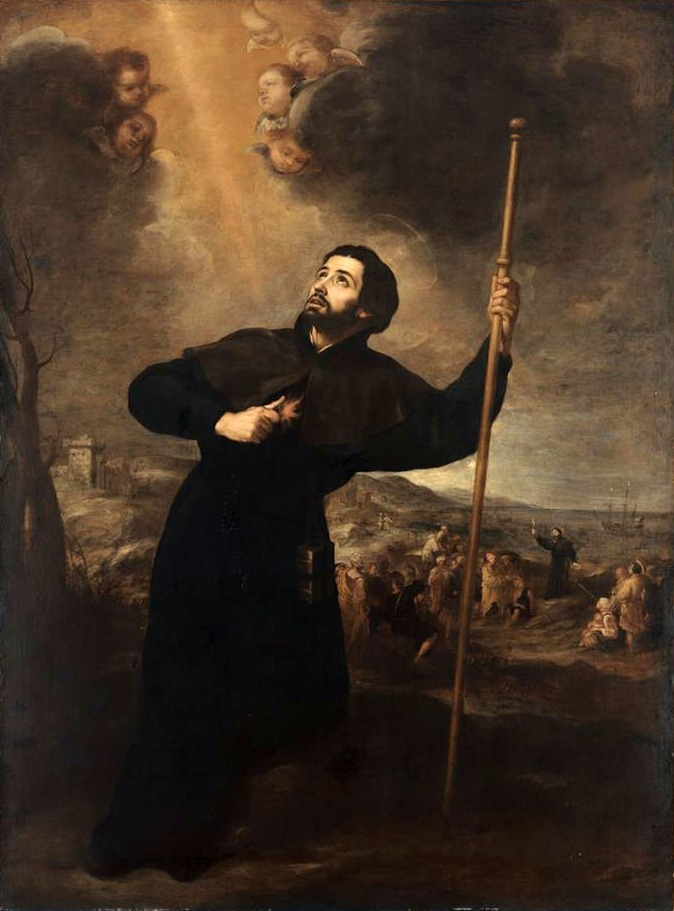
San Francesco Saverio, born Francisco de Jasso Azpilicueta Atondo y Aznares de Javier on April 7, 1506, in the castle of Javier in Navarra, Spain, is one of the most revered figures in the history of the Catholic Church. His life is a remarkable tale of spiritual devotion, missionary zeal, and the spread of Christianity to distant lands. This article provides a comprehensive look at the life of San Francesco Saverio, exploring his early years, rise to fame, and the enduring legacy of his missionary work.
Early Life and Education
San Francesco Saverio was born into a noble Basque family in the Kingdom of Navarra. His early life was marked by the political and religious upheavals of the time. The Kingdom of Navarra was embroiled in conflicts with Spain, and after the Navarrese rebellion, King Ferdinand II of Aragon confiscated the family’s properties. This loss of wealth and status deeply influenced the young Francesco, shaping his character and future path.
In search of education and a new direction, Francesco left for France, where he enrolled at the University of Paris, one of Europe’s leading centers of learning. It was here that he would meet Ignatius of Loyola, a fellow student who would profoundly influence his life. Ignatius, who later founded the Society of Jesus (Jesuits), became Francesco’s spiritual mentor. Despite initial resistance, Francesco was eventually persuaded by Ignatius to dedicate his life to the service of God. In 1534, in the chapel of Saint-Pierre de Montmartre, Francesco, along with Ignatius and a small group of companions, took vows of poverty, chastity, and obedience, thus laying the foundation of the Jesuit order.
Founding of the Society of Jesus
The formation of the Society of Jesus, or the Jesuits, marked a pivotal moment in Francesco’s life. The Jesuits were dedicated to the renewal of the Catholic Church and the spread of Christianity through education and missionary work. Francesco’s zeal for the faith and his commitment to the Jesuit ideals set him apart as one of the most promising members of the new order.
In 1537, Francesco was ordained a priest in Venice. The Jesuits quickly gained a reputation for their rigorous education, discipline, and missionary zeal. Francesco’s first years as a Jesuit were spent in Italy, where he preached in Bologna and served the sick in hospitals. His fame as a preacher and healer grew, but his true calling lay far beyond the borders of Europe.
The Call to Missionary Work: Journey to the East
The turning point in Francesco’s life came in 1540 when King John III of Portugal requested the Pope to send missionaries to the Portuguese colonies in the East. The Pope, recognizing the need for capable and dedicated missionaries, chose Francesco Saverio for the task. In 1541, Francesco embarked on a journey that would take him across the seas to India, Southeast Asia, and eventually Japan.
Francesco’s missionary journey began in Goa, India, where he arrived in 1542. Goa was the center of Portuguese colonial power in Asia and served as the base for his missionary activities. Francesco’s approach to missionary work was hands-on and deeply personal. He learned the local languages, lived among the people, and dedicated himself to teaching catechism, caring for the sick, and baptizing converts. His work in Goa laid the foundation for the spread of Christianity in India.
Evangelization in Southeast Asia and Japan
After several years in India, Francesco extended his missionary efforts to Southeast Asia. He traveled to Malacca, an important trading port in present-day Malaysia, where he continued his work of evangelization. Francesco’s missionary zeal knew no bounds. He was driven by a profound desire to bring the message of Christianity to the farthest corners of the known world.
In 1549, Francesco arrived in Japan, becoming one of the first Christian missionaries to set foot in the country. His arrival in Japan marked a new chapter in his missionary work. The cultural and linguistic barriers were immense, but Francesco’s determination was unwavering. He initially faced resistance from local authorities and the Japanese people, but his persistence gradually won him a following. Over the course of two years, Francesco established a small but dedicated Christian community in Japan, laying the groundwork for the future growth of the Church in the country.
Francesco’s approach to evangelization was marked by a deep respect for the local cultures and a commitment to understanding the people he sought to convert. He adapted his message to the cultural context of Japan, presenting Christianity in a way that resonated with the Japanese worldview. Despite the challenges, his work in Japan was a testament to his missionary spirit and his ability to connect with people from vastly different cultures.
The Final Mission: China and the Legacy of San Francesco Saverio
Francesco’s missionary journey did not end in Japan. His sights were set on China, the great and mysterious empire that had remained largely untouched by Christian missionaries. In 1552, Francesco embarked on what would be his final mission, traveling to the island of Sancian off the coast of China, where he hoped to gain entry into the mainland. However, Francesco’s health, worn down by years of arduous travel and harsh conditions, began to fail. He fell ill with pneumonia and died on December 3, 1552, at the age of 46.
Francesco Saverio’s death marked the end of a remarkable life, but his legacy lived on. He was buried in Goa, where his body remains enshrined in the Basilica of Bom Jesus. His right arm, which had baptized thousands, was later sent to Rome as a relic, and it is now housed in the Church of the Gesù, the mother church of the Jesuit order.
Canonization and Veneration
San Francesco Saverio was canonized by Pope Gregory XV on March 12, 1622, along with his friend and mentor, Ignatius of Loyola. His feast day is celebrated on December 3, the anniversary of his death, and he is honored as the patron saint of missionaries. Francesco’s life and work have inspired countless generations of missionaries and continue to be a model for those who dedicate their lives to spreading the Christian faith.
The impact of Francesco’s missionary work is still felt today, particularly in Asia, where he is venerated as a saint and a pioneer of the Christian faith. The Jesuit order, which he helped to found, remains one of the most influential religious orders in the Catholic Church, known for its commitment to education, social justice, and missionary work.
The Cultural and Historical Context of San Francesco Saverio’s Mission
To fully understand the significance of San Francesco Saverio’s missionary work, it is essential to consider the cultural and historical context of the 16th century. The Age of Exploration was in full swing, and European powers were establishing colonies and trade routes across the globe. The spread of Christianity was closely linked to these colonial enterprises, with missionaries often accompanying explorers and traders to newly discovered lands.
Francesco’s missions were part of a broader effort by the Catholic Church to counter the spread of Protestantism in Europe and to expand its influence in the newly discovered territories. The Jesuits, with their emphasis on education, discipline, and missionary work, were at the forefront of this effort. Francesco’s work in Asia was particularly significant because it represented the first sustained attempt to evangelize the continent.
The challenges that Francesco faced in his missionary work were immense. The languages, cultures, and religions of Asia were vastly different from those of Europe, and the political landscapes were often hostile to foreign influence. Despite these obstacles, Francesco’s approach to evangelization was marked by a deep respect for the cultures he encountered. He believed in adapting the Christian message to the local context, rather than imposing European customs and traditions on the people he sought to convert.
The Enduring Legacy of San Francesco Saverio
San Francesco Saverio’s legacy is one of faith, perseverance, and intercultural dialogue. His life and work continue to inspire people around the world, particularly those involved in missionary work and intercultural communication. The success of his missions in India, Southeast Asia, and Japan laid the groundwork for the future growth of Christianity in these regions.
Francesco’s approach to evangelization, characterized by respect for local cultures and a commitment to understanding the people he served, remains a model for modern missionaries. His ability to bridge cultural divides and connect with people from different backgrounds is a testament to his deep spiritual conviction and his belief in the universal message of Christianity.
In conclusion, San Francesco Saverio was a pioneering missionary whose life and work left an indelible mark on the history of the Catholic Church. His journey from the castle of Javier to the farthest reaches of Asia is a story of courage, faith, and determination. As the patron saint of missionaries, his legacy continues to inspire those who dedicate their lives to spreading the Christian faith and fostering understanding between cultures.


