
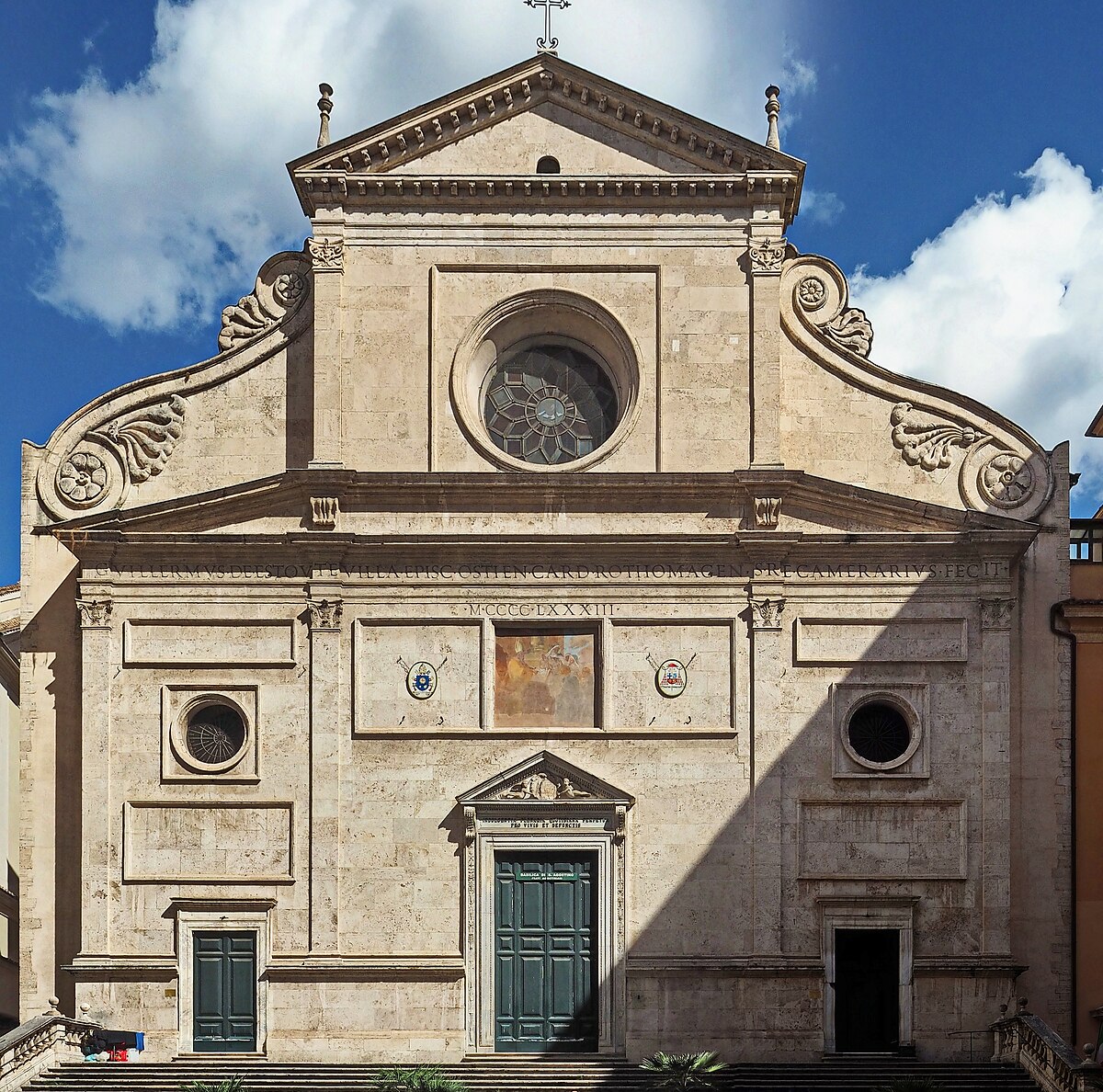
Saint Augustine, known as Sant’Agostino in Italian, is one of the most influential figures in the history of Christianity. Born on November 13, 354, in Tagaste, a small town in Roman North Africa (modern-day Algeria), Augustine was an African by birth but Roman by language and culture. He is celebrated as a philosopher, theologian, and one of the eminent Doctors of the Church. His life, marked by a profound spiritual journey, continues to inspire millions around the world.
Early Life and Education
Augustine was born into a modest family. His father, Patricius, was a municipal counselor, while his mother, Monica, was a devout Christian who played a crucial role in his spiritual formation. Despite his mother’s influence, Augustine’s early life was characterized by a search for meaning in various philosophical and religious schools of thought.
He began his education in the local schools of Tagaste and later continued his studies in Carthage, where he pursued rhetoric, a highly respected field in Roman society. Augustine’s early years were marked by a hedonistic lifestyle, which he later regretted deeply. His early experiences are detailed in his autobiographical work, Confessions, where he reflects on his youthful misadventures and the spiritual emptiness they entailed.
Philosophical Exploration and Manichaeism
In his pursuit of truth, Augustine encountered Cicero’s Hortensius, a work that ignited his passion for philosophy. This newfound interest led him to the teachings of Manichaeism, a religious sect that offered a dualistic view of the world. According to Manichaeism, the universe is a battleground between two eternal forces: Light (Good) and Darkness (Evil).
For nearly a decade, Augustine was deeply involved with the Manichaeans. However, over time, he grew disillusioned with their teachings. His critical mind, honed by his studies in rhetoric and philosophy, led him to question the consistency and validity of Manichaean beliefs, particularly after his encounter with the Manichaean bishop, Faustus, whom Augustine found to be intellectually unsatisfactory.
Conversion to Christianity
Augustine’s intellectual journey did not end with his departure from Manichaeism. He continued to explore various philosophies, including skepticism and Platonism. The latter, in particular, influenced his thinking, especially regarding the nature of God and the soul.
His conversion to Christianity was catalyzed by his encounter with Ambrose, the Bishop of Milan, during his time in Italy. Ambrose’s interpretation of the Scriptures, which he presented in a spiritual and allegorical manner, resonated deeply with Augustine. In 386, after a profound personal crisis, Augustine experienced a dramatic conversion. He describes this moment in Confessions, where he recounts how, while in a garden in Milan, he heard a child’s voice chanting, “Take up and read.” Interpreting this as a divine command, he opened the Bible and read a passage from the Epistle to the Romans, which led him to fully embrace the Christian faith.
On the night of April 24-25, 387, Augustine was baptized by Ambrose in Milan, along with his son, Adeodatus, who was born out of wedlock when Augustine was seventeen. This event marked the beginning of his new life dedicated to God.
Return to Africa and Episcopal Ministry
After his conversion, Augustine decided to return to Africa. However, on the journey back, at Ostia, near Rome, his beloved mother Monica passed away. This loss deeply affected Augustine, but he remained committed to his newfound faith.
Upon his return to Africa, Augustine adopted an ascetic lifestyle and was eventually ordained as a priest in 391 in Hippo (modern-day Annaba, Algeria). Four years later, he became the Bishop of Hippo, a position he held until his death. As Bishop, Augustine was known for his pastoral care, theological writings, and defense of the Christian faith against various heresies, including Donatism and Pelagianism.
Theological Contributions
Augustine’s theological contributions are vast and have had a lasting impact on both Western Christianity and philosophy. His works address a wide range of topics, but some of his most significant contributions include his teachings on the nature of God, the problem of evil, and the concept of grace.
One of Augustine’s central theological concerns was the problem of sin and grace. He argued that humanity is inherently sinful due to the Fall of Adam and that salvation is only possible through God’s grace. This grace, he believed, is a free gift from God that cannot be earned through human effort. Augustine’s doctrine of original sin and his views on predestination were particularly influential in shaping the theological debates of the medieval and Reformation periods.
In his work Confessions, Augustine explored the inner workings of the human soul and its relationship with God. He emphasized the importance of self-reflection and the interior life, arguing that it is within the depths of one’s own conscience that one encounters God. This focus on interiority became a hallmark of Augustine’s spirituality and had a profound influence on later Christian mysticism.
Augustine’s City of God is another monumental work that addressed the relationship between Christianity and the secular world. Written in response to the sack of Rome by the Visigoths in 410, the work contrasts the earthly city, characterized by self-love and pride, with the heavenly city, characterized by the love of God. Augustine’s vision of history as a struggle between these two cities has had a lasting impact on Christian thought and has been interpreted as a precursor to the modern understanding of the relationship between church and state.
Legacy and Influence
Augustine’s influence extends far beyond his own time. His writings laid the groundwork for much of Western Christian theology and philosophy. His ideas on original sin, grace, and predestination became central to the theological debates of the Reformation, with both Protestant reformers like Martin Luther and John Calvin drawing heavily on Augustine’s teachings.
In addition to his theological contributions, Augustine’s philosophical insights, particularly his emphasis on the interior life and the search for truth, have made him a key figure in the history of Western thought. His work has been studied and revered by philosophers and theologians alike, from the Middle Ages to the present day.
Augustine’s thoughts on the nature of time, particularly in Confessions, where he reflects on the fluidity of time and the concept of eternity, have also been influential in the development of Western metaphysics.
Death and Canonization
Augustine died on August 28, 430, during the siege of Hippo by the Vandals. His death marked the end of an era in the history of the early Church, but his legacy continued to grow in the centuries that followed. He was canonized by popular acclaim and later declared a Doctor of the Church by Pope Boniface VIII in 1298, an acknowledgment of the profound impact his teachings have had on the Church.
Conclusion
Saint Augustine’s life is a testament to the transformative power of faith and the relentless pursuit of truth. His intellectual journey, from the hedonism of his youth to the deep spirituality of his later years, offers a powerful narrative of redemption and grace. As a philosopher, theologian, and spiritual leader, Augustine’s insights continue to resonate with believers and thinkers alike, making him one of the most important figures in the history of Christianity.


