
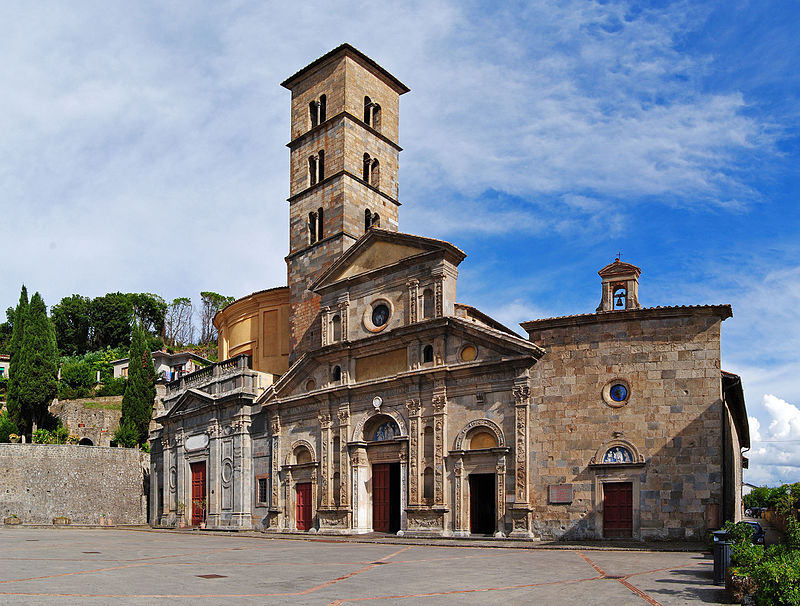
Santa Cristina di Bolsena, also known as Saint Christina of Bolsena, is one of the revered virgin martyrs of the early Christian Church. Celebrated on July 24th, she is remembered for her steadfast faith, miraculous endurance through severe tortures, and her ultimate sacrifice. Santa Cristina’s story is one of the most compelling narratives among Christian martyrs, marked by miraculous interventions and unwavering commitment to her faith despite the brutal persecutions she faced. This article provides an in-depth look at the life, martyrdom, and enduring legacy of Santa Cristina di Bolsena.
Early Life and Historical Context
Santa Cristina is believed to have been born in the late 3rd century AD, during a time of intense persecution of Christians under Roman Emperor Diocletian. While exact dates of her birth and death are not clearly documented, it is widely accepted that her martyrdom occurred around the early 4th century, placing her life within a period marked by severe trials for Christians.
Santa Cristina was born into a noble family in the city of Tyre, which is present-day Lebanon, according to some accounts. However, her life and death are most closely associated with the town of Bolsena, near a lake in central Italy’s Lazio region, where her father served as a governor. The period of her life coincided with one of the most violent anti-Christian campaigns in Roman history, making her story particularly resonant for the early Christian community.
The Conversion and Defiance
Santa Cristina’s upbringing was typical of her time, rooted in Roman paganism, but her life took a significant turn as she grew older. From a young age, Cristina was noted for her beauty and intelligence, which drew many suitors. However, her heart was increasingly drawn to the teachings of Christianity, which she encountered through stories of other Christian martyrs and the influence of the Holy Spirit. Despite being surrounded by pagan idols and rituals, Cristina found herself repulsed by the worship of these false gods and began to secretly practice the Christian faith.
Her father, Urbano, who was a staunch pagan and a high-ranking official under the Roman Empire, was deeply opposed to Christianity. He dedicated his life to eradicating the Christian faith, and when he discovered his daughter’s conversion, his disappointment turned into fury. Urbano attempted to force Cristina to renounce her newfound faith by ordering her to participate in pagan rituals, but she steadfastly refused.
Cristina’s refusal to abandon Christianity and her acts of defiance, such as breaking pagan idols and distributing her family’s wealth to the poor, led to her arrest. Her father, infuriated by her disobedience, subjected her to a series of brutal tortures in an attempt to break her spirit and compel her to return to the pagan fold.
The Miracles and Tortures
Santa Cristina’s martyrdom is particularly noted for the numerous miracles that are said to have occurred during her tortures. These events not only underscore her sanctity but also reflect the deep veneration she received from the Christian community. According to tradition, her father ordered that Cristina be tortured on a wheel while flames burned beneath her. Despite this horrific treatment, Cristina miraculously survived the ordeal, which only further enraged her persecutors.
One of the most notable miracles occurred when Cristina was thrown into the lake of Bolsena with a stone tied around her neck, intended to drown her. Instead of sinking, the stone miraculously floated, bringing her safely to the surface. This event is often depicted in Christian art and has become a central element of her story, symbolizing divine intervention and the protection of the righteous.
Another miracle occurred when Cristina was placed in a cauldron of boiling oil and pitch by her persecutors. Yet, she emerged from the cauldron unharmed, further demonstrating her divine protection and unshakeable faith. These miracles, witnessed by many, only intensified the resolve of the early Christians and made Cristina a symbol of divine grace and protection.
Despite these miraculous survivals, Santa Cristina’s tortures continued. After the death of her father Urbano, who died in despair over his failure to force his daughter to renounce her faith, the mantle of persecution was taken up by other Roman officials. Cristina was subjected to more brutal tortures, including having her tongue cut out and being thrown into a den of snakes. Yet, she remained unharmed, her faith growing ever stronger.
Martyrdom and Legacy
The final chapter of Santa Cristina’s life was marked by her ultimate sacrifice. According to tradition, after enduring countless tortures and surviving numerous attempts on her life, Cristina was finally martyred by being shot with arrows. Her soul, as the story goes, ascended to heaven, where she was crowned as a martyr, a symbol of purity, faith, and unyielding devotion to God.
Santa Cristina’s death did not mark the end of her influence; rather, it was the beginning of a long-lasting legacy. She was buried in Bolsena, and her tomb quickly became a site of pilgrimage. Over the centuries, her cult spread across Europe, and she became a patroness of several causes, including millers, against eye diseases, and for protection during childbirth.
The Cult of Santa Cristina di Bolsena
The veneration of Santa Cristina began almost immediately after her death. Her story resonated deeply within the early Christian community, particularly in Bolsena, where she was martyred. Her relics became objects of veneration, believed to possess miraculous powers, and her tomb in Bolsena turned into a significant pilgrimage site.
The town of Bolsena itself holds an annual celebration in her honor every July 23rd, known as the Feast of Santa Cristina. This festival is marked by processions, reenactments of her martyrdom, and other religious ceremonies. The “Misteri di Santa Cristina” (Mysteries of Saint Christina) are a series of tableaux vivants—living pictures—that depict scenes from her life and tortures. These are staged throughout the town, bringing to life the story of her martyrdom in a powerful and communal expression of faith.
Santa Cristina’s influence extended beyond Italy, reaching other parts of Europe. Her story was particularly popular during the Middle Ages, when the veneration of virgin martyrs was at its peak. Churches and chapels were dedicated to her, and she was frequently depicted in religious art, often holding the palm of martyrdom and standing beside a wheel, a symbol of her tortures.
Artistic Representations and Cultural Impact
Santa Cristina di Bolsena’s life and martyrdom have inspired countless works of art over the centuries. In Christian iconography, she is often depicted with the instruments of her torture, including the wheel and arrows. These symbols serve not only to identify her but also to remind the faithful of the trials she endured for her faith.
One of the most famous depictions of Santa Cristina can be found in the church of San Martino ai Monti in Rome, where a fresco illustrates her story. In other works of art, she is portrayed with a stone tied around her neck, symbolizing her miraculous escape from drowning. These images have played a significant role in keeping her memory alive and in spreading her story across the Christian world.
In addition to visual art, Santa Cristina has also been commemorated in literature and music. Her story has been retold in various hagiographies, which were popular during the medieval period as a means of inspiring the faithful. These stories often emphasized the miraculous aspects of her life and her unwavering faith in the face of persecution, serving as a source of comfort and strength for believers.
The Relics of Santa Cristina
The relics of Santa Cristina are considered highly sacred and have been the focus of veneration for centuries. Her remains were originally buried in Bolsena, and her tomb quickly became a pilgrimage site. Over the years, her relics have been dispersed to various locations, further spreading her cult.
In 1880, additional relics believed to belong to Santa Cristina were discovered and are now housed in Palermo and Rome. These relics continue to be objects of devotion, drawing pilgrims who seek her intercession and blessings.
Conclusion
Santa Cristina di Bolsena’s life and martyrdom are a testament to the power of faith and the enduring strength of the human spirit in the face of persecution. Her story, marked by miraculous events and unyielding devotion, has inspired countless believers over the centuries. As a symbol of purity, faith, and resilience, Santa Cristina continues to be venerated by Christians around the world.
Her legacy lives on not only in the religious observances and artistic representations that bear her name but also in the hearts of those who see in her story a reflection of the divine grace that sustains believers in their darkest moments. Santa Cristina’s life serves as a powerful reminder of the strength that faith can provide, even in the face of overwhelming adversity.


