
Introduction
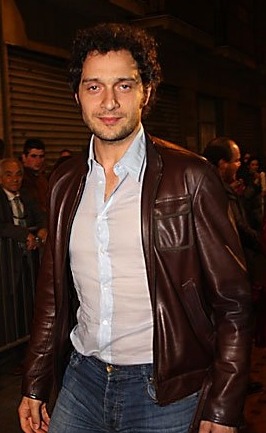
Claudio Santamaria, an acclaimed Italian actor, has made a significant mark in the world of cinema and television. Born on July 22, 1974, in Rome, Italy, Santamaria’s journey from a young aspiring actor to a household name in Italian cinema is a testament to his talent, perseverance, and versatility. This article delves into the life of Claudio Santamaria, exploring his age, career highlights, and contributions to both the entertainment industry and society at large.
Early Life and Beginnings in Acting
Claudio Santamaria was born into a modest family in Rome, the third son of a housewife and a painter. From a young age, he displayed a deep interest in the arts, a passion that eventually led him to pursue a career in acting. After completing his studies at a local artistic high school, Santamaria initially considered becoming an architect. However, his love for cinema and acting soon took precedence, and he found himself drawn to the world of performance.
His early exposure to the arts came through working in a dubbing studio as a teenager. This experience ignited his fascination with using his voice to create characters, leading him to enroll in a three-year acting course called “Acting Training.” During this time, Santamaria honed his skills, learning the craft of acting under the guidance of Stefano Molinari, who introduced him to the Stanislavski method, a technique that would greatly influence his approach to acting.
Despite his passion and dedication, Santamaria faced initial setbacks. He failed to pass the selection process for the prestigious Italian acting academy, a disappointment that could have deterred many. However, his perseverance paid off when he made his theatrical debut in the play “La nostra città,” directed by his mentor, Stefano Molinari. This marked the beginning of what would become an illustrious career in both theater and film.
Breakthrough in Cinema: Early Roles and Rising Fame
Claudio Santamaria’s foray into the world of cinema began in 1997 when he landed his first film role in “Fuochi d’artificio,” directed by Leonardo Pieraccioni. This opportunity opened doors for him, leading to further roles in significant films such as “Ecco Fatto” by Gabriele Muccino and “L’assedio” directed by the legendary Bernardo Bertolucci. Although these early roles were modest, they showcased Santamaria’s potential and versatility as an actor.
Santamaria’s rise to fame came with his performances in “Almost Blue” (2000) and “L’ultimo bacio” (2001), both of which garnered critical acclaim. His portrayal of complex characters in these films earned him his first two nominations for the prestigious David di Donatello award, Italy’s equivalent of the Academy Awards. Although he did not win at the time, these nominations were significant milestones in his career, establishing him as a talented and promising actor in Italian cinema.
Major Film Roles and International Recognition
As Santamaria’s career progressed, he took on more challenging roles, further cementing his reputation as one of Italy’s most skilled actors. In 2002, he starred in the critically acclaimed film “Romanzo Criminale,” directed by Michele Placido. The film, based on the real-life story of the Banda della Magliana, a notorious criminal organization in Rome, was a significant success and became a cultural phenomenon in Italy. Santamaria’s portrayal of one of the gang members was widely praised, and the film’s success extended beyond Italy, earning international recognition.
Santamaria’s talents were not confined to Italian cinema. In 2006, he appeared in “Casino Royale,” the James Bond film that marked Daniel Craig’s debut as 007. Santamaria played a minor role, but the film’s global success introduced him to international audiences. His ability to transition from Italian cinema to international productions demonstrated his versatility and broadened his appeal as an actor.
Critical Acclaim and the Role of a Lifetime: “Lo chiamavano Jeeg Robot”
One of the most pivotal moments in Claudio Santamaria’s career came in 2015 with the release of “Lo chiamavano Jeeg Robot,” directed by Gabriele Mainetti. The film, a unique blend of superhero and crime drama, was one of the first Italian films to explore the superhero genre. Santamaria played the lead role of Enzo Ceccotti, a small-time crook who gains superhuman abilities after coming into contact with radioactive waste.
Santamaria’s portrayal of Ceccotti was nothing short of remarkable. He brought depth and nuance to the character, transforming what could have been a typical superhero role into a compelling study of a flawed but ultimately heroic individual. His performance earned him widespread acclaim and won him the David di Donatello award for Best Actor, a well-deserved recognition of his talent and hard work.
“Lo chiamavano Jeeg Robot” was not only a commercial success but also a critical darling, praised for its originality and Santamaria’s standout performance. The film’s success further solidified his status as one of Italy’s top actors and introduced him to a new generation of fans.
Theatre and Voice Acting: Expanding His Repertoire
In addition to his work in film, Claudio Santamaria has also made significant contributions to theater and voice acting. His theater work has been diverse, ranging from classical plays to contemporary productions, showcasing his ability to tackle a wide range of roles. Theater has always been an important part of Santamaria’s career, allowing him to explore different aspects of acting and connect with audiences in a more intimate setting.
Santamaria’s voice acting work is another notable aspect of his career. He has lent his voice to several high-profile films, most notably as the Italian voice of Batman in Christopher Nolan’s “Dark Knight” trilogy, where he dubbed the voice of Christian Bale. His work as a voice actor has been widely praised for its precision and ability to convey the emotions of the characters he portrays, adding another dimension to his already impressive body of work.
Personal Life and Social Engagement
Claudio Santamaria’s life off-screen is as intriguing as his career. He is a private individual, but his relationships and personal beliefs have often made headlines. He has a daughter, Emma, born in August 2007, from his relationship with Delfina Delettrez Fendi, a member of the famous Fendi fashion family. Although the couple eventually separated, Santamaria has remained a devoted father.
In 2017, Santamaria married journalist Francesca Barra in a private ceremony in Las Vegas, followed by a second wedding in Basilicata, Italy. The couple’s relationship has been a subject of media interest, particularly due to their shared involvement in social and political causes.
Santamaria is deeply committed to social issues, particularly those concerning indigenous rights in South America. His involvement began during the filming of “Birdwatchers – La terra degli uomini rossi” in 2008, a film that highlighted the struggles of the Guarani people in Brazil. Moved by their plight, Santamaria became an advocate for their cause, working with various organizations to raise awareness and support for indigenous communities.
In 2009, Santamaria narrated “Mine – storia di una montagna sacra,” a documentary focusing on the struggles of an indigenous community fighting to protect their sacred mountain from mining exploitation. His commitment to social issues reflects his belief in using his platform to make a positive impact on the world.
Legacy and Future Prospects
As Claudio Santamaria continues to work in the entertainment industry, his legacy as one of Italy’s most talented and versatile actors is already well established. His career has been marked by a series of critically acclaimed performances, both on-screen and in the theater, as well as significant contributions to the world of voice acting. Santamaria’s ability to navigate different genres and mediums has made him a respected figure in Italian cinema and beyond.
Looking ahead, Santamaria shows no signs of slowing down. He continues to take on challenging roles in both film and theater, always seeking to push the boundaries of his craft. His dedication to his work and his passion for social justice make him not only a remarkable actor but also a role model for aspiring artists and activists.
Conclusion
Claudio Santamaria’s journey from a young boy in Rome to a celebrated actor is a story of talent, perseverance, and a deep love for the arts. His contributions to cinema, theater, and voice acting have left an indelible mark on the industry, and his commitment to social causes demonstrates his belief in using his influence for the greater good. As he continues to take on new challenges and inspire audiences around the world, Claudio Santamaria’s legacy as a versatile and impactful artist is secure.


