
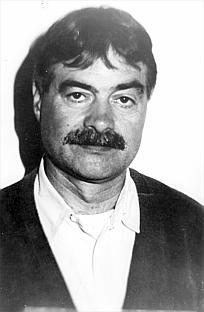
Nitto Santapaola, born Benedetto Santapaola on June 4, 1938, in Catania, Italy, is one of the most notorious figures in the history of the Sicilian Mafia, also known as Cosa Nostra. His life, marked by a trajectory from humble beginnings to becoming a feared Mafia boss, encapsulates the dark and violent history of organized crime in Italy. This article explores the life, criminal career, and impact of Nitto Santapaola, delving into the historical context that shaped his rise to power and the lasting influence he has had on both the Mafia and Italian society.
Early Life and Path to Criminality
Nitto Santapaola was born in the San Cristoforo district of Catania, a neighborhood known for its poverty and high crime rates. Coming from a family of modest means, Santapaola’s early life was shaped by the harsh realities of his environment. He attended a local Salesian school but did not pursue further education, instead gravitating towards a life of crime at a young age.
By the early 1960s, Santapaola had established himself as a small-time criminal, engaging in activities such as robbery and theft. His first significant brush with the law occurred in 1962, when he was arrested for association with criminal activities and theft. This marked the beginning of a criminal career that would eventually lead him to the upper echelons of the Mafia.
Rise to Power: The Mafia in Catania
The Mafia in Catania during the 1960s and 1970s was characterized by intense power struggles and violent conflicts. Santapaola initially served as the right-hand man to Giuseppe Calderone, the then-head of the Catania Mafia family. Calderone was a prominent figure within Cosa Nostra, but his leadership style and alliances, particularly his association with the more traditional Mafia families, made him vulnerable.
By the late 1970s, a significant shift was occurring within Cosa Nostra, primarily driven by the rise of the Corleonesi faction, led by Salvatore “Totò” Riina and Bernardo Provenzano. The Corleonesi were known for their ruthlessness and ambition, and they sought to consolidate power by eliminating rivals and those perceived as obstacles to their dominance.
Santapaola, recognizing the changing dynamics within the Mafia, aligned himself with the Corleonesi. This strategic alliance proved pivotal in his rise to power. In 1978, Santapaola orchestrated the assassination of his mentor, Giuseppe Calderone, effectively taking control of the Catania Mafia family. This move was sanctioned by the Corleonesi, who saw in Santapaola a valuable ally in their quest for supremacy within Cosa Nostra.
The 1980s: Expansion and Violence
Under Santapaola’s leadership, the Catania Mafia family expanded its influence, not only in Sicily but also in other parts of Italy, particularly in the northern regions. Santapaola’s operations extended into various illegal activities, including drug trafficking, extortion, smuggling, and money laundering. He also played a crucial role in establishing connections between the eastern and western factions of the Sicilian Mafia, serving as a mediator and enforcer.
The 1980s were a particularly violent period in the history of Cosa Nostra, marked by the so-called “Second Mafia War.” This conflict, largely instigated by the Corleonesi, led to the deaths of hundreds of Mafiosi and associates. Santapaola was deeply involved in this war, orchestrating numerous killings to solidify his position and eliminate rivals.
One of the most infamous incidents linked to Santapaola during this period was the assassination of Vito Lipari, the mayor of Castelvetrano, in 1980. Lipari was killed in a Mafia hit, and Santapaola was arrested in connection with the murder. However, he was quickly released, highlighting the influence and power he wielded within the criminal justice system at the time.
In 1982, another significant event underscored Santapaola’s brutal methods: the “Circonvallazione massacre,” where his rival Alfio Ferlito was killed along with four escorting officers in a carefully planned ambush. This was part of a broader campaign to eliminate competitors and assert dominance in the region.
The Assassination of Giuseppe Fava
One of the most significant episodes in Santapaola’s criminal career was the assassination of Giuseppe “Pippo” Fava, a renowned journalist and editor. Fava was a vocal critic of the Mafia and had exposed the connections between Santapaola’s clan and prominent Sicilian businessmen, whom he dubbed the “Four Horsemen of the Mafia Apocalypse.” These businessmen—Mario Rendo, Gaetano Graci, Francesco Finocchiaro, and Carmelo Costanzo—were heavily involved in the construction industry and had deep ties to the Mafia.
On January 5, 1984, Fava was gunned down outside the Teatro Stabile in Catania. It wasn’t until nearly two decades later that Santapaola was convicted as the mastermind behind the killing, a testament to the deep-rooted influence of the Mafia and the challenges of prosecuting high-ranking Mafiosi.
The 1990s: A Turning Point and Arrest
The 1990s marked a turning point for Nitto Santapaola and Cosa Nostra as a whole. The decade began with a series of high-profile Mafia killings, including the assassinations of anti-Mafia judges Giovanni Falcone and Paolo Borsellino in 1992. These murders shocked the nation and led to an unprecedented crackdown on the Mafia by the Italian government.
Santapaola, who had been a fugitive for years, was implicated in several major crimes, including the assassination of Falcone and the bombings that killed Borsellino and his security detail in the Via D’Amelio massacre. The Italian authorities intensified their efforts to capture key Mafia figures, and Santapaola became one of the most wanted men in Italy.
On May 18, 1993, after years on the run, Nitto Santapaola was finally apprehended in a rural hideout near Mazzarrone, in the province of Catania. His arrest was the result of a meticulous operation by the Italian police, who had tracked him down through intercepted communications involving his family. When the police arrived at his hideout, Santapaola did not resist arrest. Instead, he calmly asked to have breakfast with his wife before being taken away. This calm demeanor, even in the face of capture, underscored the calculated and composed nature that had defined his criminal career.
During the search of his hideout, police discovered a small chapel in the garden, complete with a statue of the Virgin Mary, pews, and a bell tower. This discovery highlighted the complex and often contradictory nature of many Mafia figures, who combined deep religious devotion with ruthless criminality.
Trials and Sentences
Following his arrest, Nitto Santapaola faced numerous trials for his crimes. He was convicted on multiple counts, including Mafia association, murder, and involvement in several high-profile Mafia killings. In 1995, he was sentenced to 18 months of solitary confinement for his Mafia activities. The same year, he received a life sentence for his role in the Capaci bombing that killed Giovanni Falcone, his wife, and three police officers.
In subsequent years, Santapaola was also convicted for his involvement in the Via D’Amelio bombing that killed Paolo Borsellino, and for the murder of journalist Giuseppe Fava. Despite multiple appeals, the Italian courts upheld these sentences, and Santapaola remains in prison, serving multiple life sentences.
Historical Context and Influence
To understand Nitto Santapaola’s impact on the Mafia and Italian society, it is essential to consider the broader historical context of Sicily and Italy during his rise to power. The Mafia has deep roots in Sicilian society, dating back to the 19th century. It has historically thrived in regions where the state’s presence was weak, and local power structures were dominated by a combination of landowners, church officials, and criminal organizations.
Santapaola’s rise to power in the 1970s and 1980s coincided with a period of significant economic and social change in Italy. The post-war economic boom led to rapid urbanization and industrialization, particularly in the northern regions. However, in southern Italy and Sicily, these changes were accompanied by entrenched poverty, unemployment, and social unrest. The Mafia exploited these conditions, embedding itself in various sectors of the economy, including construction, real estate, and drug trafficking.
The violence and corruption that characterized Santapaola’s tenure as a Mafia boss also reflect the broader struggle between the Italian state and organized crime during this period. The assassinations of Falcone and Borsellino were turning points in this struggle, leading to a significant public outcry and a renewed commitment by the government to combat the Mafia.
Santapaola’s influence extended beyond the criminal underworld. His connections with prominent businessmen and politicians highlight the deep entanglement between organized crime and legitimate institutions in Italy. This relationship allowed the Mafia to wield significant power and influence, often with devastating consequences for those who dared to oppose it.
Legacy and Conclusion
Nitto Santapaola’s life and career are emblematic of the dark and violent history of the Sicilian Mafia. His rise from a small-time criminal to one of the most powerful Mafia bosses in Italy reflects the ruthless and opportunistic nature of Cosa Nostra. Despite his eventual capture and imprisonment, Santapaola’s legacy continues to cast a long shadow over Sicily and Italy as a whole.
Today, Santapaola remains imprisoned, serving multiple life sentences for his crimes. His story serves as a stark reminder of the destructive power of organized crime and the challenges that societies face in combating such deeply entrenched criminal organizations.
As Italy continues its ongoing battle against the Mafia, the story of Nitto Santapaola highlights both the progress that has been made and the work that remains to be done. His life is a cautionary tale of how crime, power, and corruption can intertwine, leaving a legacy that impacts generations.


