
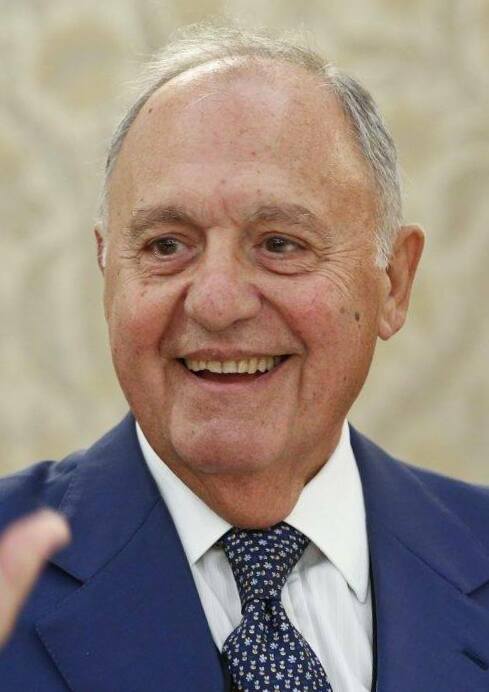
Paolo Savona, born on October 6, 1936, in Cagliari, Italy, is a distinguished Italian economist, academic, and politician whose career spans decades and encompasses significant contributions to both the theoretical and practical aspects of economics. Renowned for his critical stance on European monetary policies, particularly the Euro, Savona’s influence has been felt across various sectors, including academia, finance, and government. His work has earned him both acclaim and controversy, making him one of the most prominent and polarizing figures in contemporary Italian economic thought.
Early Life and Academic Pursuits
Paolo Savona’s early life in Cagliari laid the foundation for what would become a remarkable career in economics. After completing his secondary education, he pursued a degree in Economics and Commerce at the University of Cagliari, graduating cum laude in 1961. His academic excellence quickly propelled him into the professional world, where he began his career at the Servizio Studi della Banca d’Italia (Research Department of the Bank of Italy). It was here that Savona made his first significant mark by developing the first econometric model of the Italian economy, known as M1BI.
Savona’s early work demonstrated his deep interest in monetary economics, a field that would dominate much of his career. In 1972, he published his first major work, “La liquidità internazionale: proposta per la ridefinizione del problema” (International Liquidity: A Proposal for Redefining the Problem), which established him as a serious thinker in international economics. His subsequent publication, “La sovranità monetaria” (Monetary Sovereignty), further explored the implications of national control over monetary policy, a theme that would become central to his later critiques of the Eurozone.
To refine his expertise, Savona pursued further studies in monetary economics and econometrics at the Massachusetts Institute of Technology (MIT). There, he had the opportunity to collaborate with Nobel laureate Franco Modigliani, deepening his understanding of financial markets and monetary systems. His time at MIT also allowed him to study the workings of the U.S. Federal Reserve, where he gained insights that would later influence his views on central banking and monetary policy.
Academic and Professional Contributions
In 1976, after winning a prestigious academic position, Paolo Savona left the Bank of Italy to embark on a career in academia. He initially taught Economic Policy at the University of Cagliari and later at the University Pro Deo, which he helped transform into LUISS (Libera Università Internazionale degli Studi Sociali Guido Carli), a leading private university in Rome. His academic career was marked by a focus on the intersection of economic theory and policy, with particular attention to how monetary policy impacts economic stability and growth.
Savona’s academic achievements were paralleled by his growing influence in the private and public sectors. After Guido Carli was elected president of Confindustria (the General Confederation of Italian Industry), Savona was appointed as the association’s Director General. In this role, he played a crucial part in shaping industrial policy during a period of significant economic transformation in Italy. His tenure at Confindustria from 1976 to 1980 was characterized by efforts to modernize Italian industry and improve its competitiveness in the global market.
In 1980, Savona took on the presidency of the Credito Industriale Sardo (Sardinian Industrial Credit), and later, he was appointed as the Secretary General for Economic Planning at the Ministry of the Budget. These roles allowed him to influence economic policy at both regional and national levels, focusing on the integration of economic planning with industrial development.
Influence in Economic Thought and Government
Paolo Savona’s influence in economic thought became even more pronounced in the mid-1980s when he co-authored several important works. In 1985, he collaborated with Enzo Grilli and Giorgio La Malfa on “L’Italia al bivio: ristagno o sviluppo” (Italy at the Crossroads: Stagnation or Development), a book that examined Italy’s economic challenges and proposed pathways for growth. This was followed by his curatorial work on “Eurodollars and International Banking” and “Strategic Planning in International Banking” in 1986, where he explored the complexities of international finance and the role of strategic planning in global banking operations.
In 1989, Savona left Credito Industriale Sardo to become the CEO of the Banca Nazionale del Lavoro (BNL), one of Italy’s largest banks. During his tenure, he focused on strengthening the bank’s financial structure and expanding its international reach. His experience in banking further informed his critiques of the global financial system and his concerns about the limitations of European monetary integration.
The 1990s saw Savona take on a more prominent role in government. In 1990, he became the President of the Interbank Deposit Protection Fund, where he worked to safeguard the stability of the Italian banking system. His most significant governmental role came in 1993 when he was appointed Minister of Industry, Commerce, and Crafts in the government of Carlo Azeglio Ciampi. In this capacity, Savona was tasked with overseeing the restructuring of Italy’s state-owned enterprises, a critical component of the country’s economic reform agenda.
Savona’s tenure as Minister was marked by his efforts to balance the demands of economic modernization with the need to protect Italy’s industrial base. He advocated for policies that would enhance Italy’s competitiveness while ensuring that the social impacts of economic restructuring were managed effectively. His experience in both academia and the private sector gave him a unique perspective on the challenges facing Italy, and he used this to inform his policy decisions.
Publications and Thought Leadership
Throughout his career, Paolo Savona has been a prolific writer, contributing to the academic and public discourse on economics through numerous publications. His works often reflect his deep understanding of economic theory, his practical experience in banking and government, and his critical perspective on the global financial system.
In 1996, Savona published “Gli enigmi dell’economia: Come orientarsi nella scienza che condiziona la nostra vita” (The Enigmas of Economics: How to Navigate the Science that Shapes Our Lives), which sought to demystify economic concepts for a broader audience. This was followed by “La disoccupazione e il terzo capitalismo: lavoro, finanza, tecnologia nell’era del mercato globale” (Unemployment and the Third Capitalism: Work, Finance, Technology in the Global Market Era), where he examined the relationship between technological change, finance, and employment in a rapidly globalizing world.
In the late 1990s and early 2000s, Savona continued to explore the implications of globalization for national economies. His books, such as “Sovranità & ricchezza: Come riempire il vuoto politico della globalizzazione” (Sovereignty & Wealth: How to Fill the Political Void of Globalization) and “Geopolitica economica: Globalizzazione, sviluppo e cooperazione” (Economic Geopolitics: Globalization, Development, and Cooperation), delved into the challenges posed by global economic integration and the need for new forms of governance to manage these challenges.
Savona’s critical stance on the Euro and European monetary policy became particularly prominent in the 2010s. In 2012, he published “Eresie, esorcismi e scelte giuste per uscire dalla crisi: Il caso Italia” (Heresies, Exorcisms, and Right Choices to Exit the Crisis: The Case of Italy), where he argued that the Euro had become a straitjacket for Italy, limiting its economic sovereignty and ability to respond to crises. His critique of the Euro was rooted in his broader concerns about the lack of democratic accountability in European institutions and the risks of imposing a one-size-fits-all monetary policy on diverse economies.
Political Role and Controversies in the 2010s
Paolo Savona’s critique of the Euro and his advocacy for greater economic sovereignty brought him back into the political spotlight in the 2010s. In 2018, following the general elections in Italy, Savona was proposed as a candidate for the position of Minister of Economy in the coalition government formed by the Five Star Movement and the League. However, his nomination became a point of contention due to his Eurosceptic views, leading to a standoff between the coalition and the Italian President, Sergio Mattarella.
The controversy ultimately led to Savona being appointed as Minister for European Affairs instead of Economy Minister. In this role, he continued to advocate for reforms to the Eurozone and greater flexibility in European economic governance. His appointment highlighted the ongoing tensions within Italy and Europe regarding the future of the Euro and the balance between national sovereignty and European integration.
Savona’s tenure as Minister for European Affairs was marked by his efforts to push for changes to the European Union’s economic framework, reflecting his long-standing concerns about the risks of a rigid monetary union. His proposals included measures to protect national economies from external shocks and to ensure that European policies were more responsive to the needs of individual member states.
Legacy and Influence
Paolo Savona’s career has been characterized by a deep commitment to understanding and shaping the economic forces that impact Italy and the broader global economy. His work has had a significant influence on both academic and policy debates, particularly in the areas of monetary policy, economic sovereignty, and the challenges of globalization.
Savona’s legacy is complex, reflecting his dual roles as a scholar and a policymaker. His critiques of the Euro and his advocacy for greater economic sovereignty have made him a controversial figure, particularly in the context of the ongoing debates about the future of the European Union. However, his contributions to economic thought and his efforts to navigate Italy through periods of economic and political change have left an indelible mark on the country’s history.
Conclusion: The Enduring Impact of Paolo Savona
As Paolo Savona continues to engage in public discourse and contribute to economic thought, his impact on Italy and the broader world remains significant. His willingness to challenge established economic orthodoxy and to advocate for policies that prioritize national sovereignty and economic stability has made him a key figure in contemporary debates about the future of the global economy.
For those interested in the intersections of economics, politics, and globalization, Savona’s work offers valuable insights into the challenges and opportunities of managing economic systems in an increasingly interconnected world. His career serves as a reminder of the importance of critical thinking, intellectual rigor, and the courage to challenge the status quo in the pursuit of a more just and prosperous society.


