
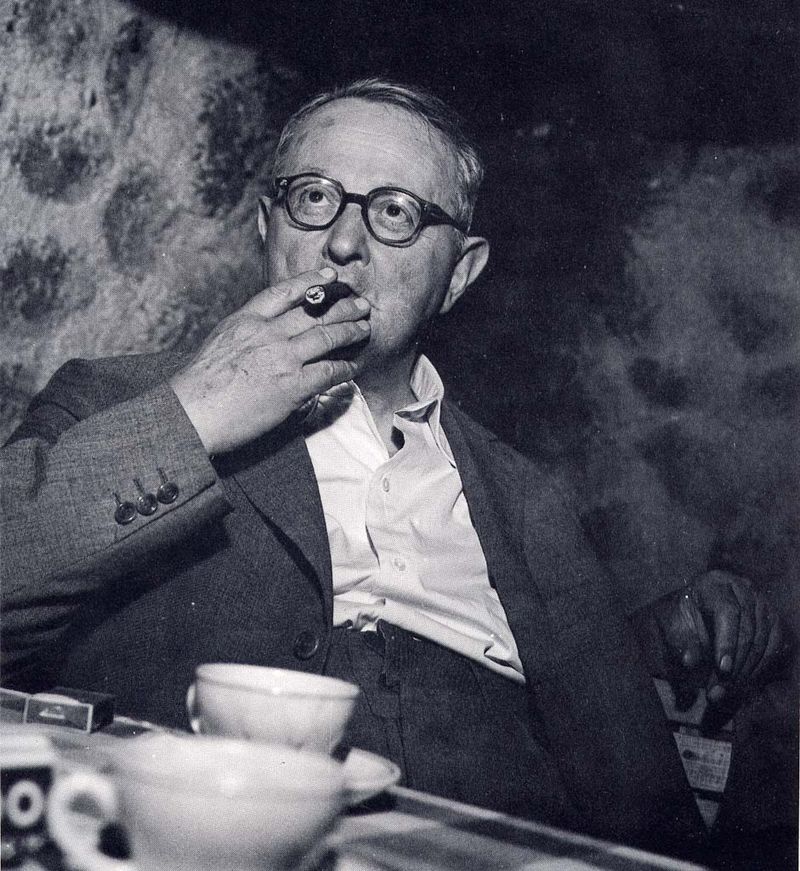
Camillo Sbarbaro, born on January 12, 1888, in Santa Margherita Ligure, Italy, was a distinguished Italian poet, writer, and botanist whose work left an indelible mark on Italian literature. Best known for his poignant poetry that reflected the struggles of existential despair and his deep connection to his native Liguria, Sbarbaro’s life was as complex as his writings. This article delves into his early life, literary achievements, historical context, and lasting legacy, providing a comprehensive overview of this significant figure in 20th-century Italian literature.
Early Life and Education
Camillo Sbarbaro was born in Santa Margherita Ligure, a picturesque town in the province of Genoa, a region that would heavily influence his poetry. His childhood, however, was marred by tragedy. His mother, Angiolina Bacigalupo, passed away from tuberculosis when Camillo was just five years old. This loss had a profound impact on him, shaping much of his later work, which often dealt with themes of loss, isolation, and introspection.
After his mother’s death, Camillo and his younger sister, Clelia, were raised by their aunt Maria, affectionately known as Benedetta. His father, Carlo Sbarbaro, a respected engineer and architect, became a central figure in Camillo’s life, and their relationship would inspire much of his later poetry, particularly the collection titled “Pianissimo” (1914), which is considered one of his finest works.
Camillo’s education began at a Salesian school in Varazze, a town to which his family moved in 1895. He later attended the Liceo Gabriello Chiabrera in Savona, where he developed a deep interest in literature. Under the mentorship of Remigio Zena, a noted writer, and his philosophy teacher, Adelchi Baratono, Sbarbaro honed his literary skills. These early influences were crucial in shaping his literary style, which was deeply introspective and often melancholic.
The Beginning of a Literary Career
Sbarbaro’s first foray into poetry came in 1911 with the publication of his collection titled “Resine.” While the collection did not gain widespread recognition at the time, it showcased the recurring theme of alienation that would become a hallmark of his work. The poems in “Resine” reflect a young man grappling with his place in the world, feeling disconnected from society and even from himself.
However, it was his second collection, “Pianissimo,” published in 1914, that brought him critical acclaim. This collection marked a significant evolution in his poetic voice, with a deeper exploration of existential themes. The title itself, “Pianissimo,” suggests a subdued, almost whispered reflection on the human condition. The poetry in this collection is characterized by its stark imagery and a pervasive sense of detachment. Sbarbaro’s introspective nature is evident in his questioning of his own existence, not just as a poet but as a human being. The concept of oblivion emerges as a central motif, with the poet expressing a desire to fade away, to become one with the silence that pervades his verses.
One of the most famous poems from this collection is “Taci, anima stanca di godere” (“Be Silent, Tired Soul of Enjoying”), which has become emblematic of Sbarbaro’s poetic sensibility. The poem speaks to the weariness of life, the longing for an end to the ceaseless cycle of pleasure and pain, and the ultimate resignation to the quietude of existence.
Impact of World War I
The outbreak of World War I in 1914 had a profound impact on Sbarbaro, as it did on many of his contemporaries. He volunteered to serve with the Italian Red Cross, and in 1917, he was called to the front lines. The war’s brutal realities further deepened his sense of alienation and despair, themes that would resonate throughout his post-war writings.
Upon returning from the war, Sbarbaro channeled his experiences into prose, resulting in the 1920 publication of “Trucioli,” a collection of fragmented, introspective pieces that blur the line between poetry and narrative. “Trucioli” reflects the disillusionment and disintegration of the human spirit that Sbarbaro witnessed during the war. The collection’s fragmented nature mirrors the fractured psyche of the post-war generation, struggling to make sense of a world that had been irrevocably altered by conflict.
Friendship with Eugenio Montale
A pivotal moment in Sbarbaro’s career came in 1920 when the celebrated poet Eugenio Montale, a future Nobel Laureate, took notice of his work. Montale’s review of “Trucioli” in “L’Azione di Genova” marked the beginning of a lifelong friendship between the two poets. Montale’s admiration for Sbarbaro’s work was evident in the influence it had on his own poetry, particularly in the early drafts of his masterpiece “Ossi di seppia” (Cuttlefish Bones). Montale even paid homage to Sbarbaro in his poems “Caffè a Rapallo” and “Epigramma,” where he directly references Sbarbaro by name.
This friendship was more than just a mutual appreciation of each other’s work; it was a relationship that helped solidify Sbarbaro’s place in the Italian literary canon. Montale’s encouragement and recognition provided Sbarbaro with the confidence to continue writing, despite the personal and professional challenges he faced.
The Fascist Era and Its Challenges
The rise of Fascism in Italy during the 1920s and 1930s posed significant challenges for many Italian intellectuals, including Sbarbaro. Unlike some of his contemporaries who embraced or at least acquiesced to the regime, Sbarbaro was deeply skeptical of the Fascist ideology. His refusal to join the National Fascist Party cost him his position as a teacher of Greek and Latin at a Jesuit school in Genoa, forcing him to retreat further into his private world.
During the Fascist era, censorship became increasingly oppressive, and Sbarbaro found himself silenced. One of his works, “Calcomania,” was blocked by the regime’s censors, an experience that led him to withdraw even further from public life. He sought solace in his other great passion: botany. Sbarbaro’s interest in lichens, a field he had begun to explore in his youth, became a major focus during these years. His meticulous study of lichens earned him recognition as a leading expert in the field, and he corresponded with botanists from around the world.
Post-War Years and Literary Legacy
After World War II, Sbarbaro resumed his literary activities, although his output was less prolific than in his earlier years. He continued to write and publish, but much of his time was devoted to botany. In 1951, he retired to Spotorno with his sister Clelia, where he lived a quiet life, away from the literary circles of the big cities.
During this period, he published several collections of prose and poetry, including “Rimanenze” (1955), “Fuochi fatui” (1956), “Scampoli” (1960), “Gocce” (1963), “Contagocce” (1965), and “Cartoline in franchigia” (1966). These works are characterized by their reflective nature, often revisiting themes from his earlier poetry but with a greater sense of acceptance and resignation.
Sbarbaro also became a prolific translator, working on translations of Greek classics such as Sophocles, Euripides, and Aeschylus, as well as French authors like Gustave Flaubert, Stendhal, and Honoré de Balzac. His translations were highly regarded for their fidelity to the original texts and their lyrical quality, which often mirrored his own poetic voice.
Despite his retreat from the public eye, Sbarbaro’s work continued to influence Italian literature. His poetry, with its emphasis on introspection and existential themes, resonated with the post-war generation of writers who were grappling with the aftermath of the war and the rise of modernity.
Death and Posthumous Recognition
Camillo Sbarbaro passed away on October 31, 1967, at the age of 79, in the San Paolo Hospital in Savona. His death marked the end of a life characterized by both profound introspection and significant contributions to Italian culture. Despite the challenges he faced, including personal loss, political oppression, and health issues, Sbarbaro remained committed to his craft, producing work that continues to be studied and appreciated today.
Sbarbaro’s legacy is multifaceted. As a poet, he is remembered for his poignant exploration of existential themes, his deep connection to his native Liguria, and his ability to capture the human condition in all its complexity. As a translator, he brought some of the greatest works of ancient and modern literature to Italian audiences. And as a botanist, he made significant contributions to the study of lichens, a field that brought him international recognition.
Today, Sbarbaro’s work is considered essential reading for those interested in 20th-century Italian literature. His poetry, with its emphasis on silence, solitude, and the search for meaning in a world often devoid of it, continues to resonate with readers who find in his verses a reflection of their own struggles and aspirations.
Conclusion
Camillo Sbarbaro’s life and work are a testament to the power of perseverance in the face of adversity. From his early years in Liguria to his rise as a celebrated poet and translator, Sbarbaro navigated a complex and often challenging landscape with grace and determination. His poetry, marked by its introspection and existential depth, offers a window into the soul of a man who was deeply attuned to the struggles of the human condition. As we look back on his life, it is clear that Camillo Sbarbaro was not just a poet, but a profound thinker who left an indelible mark on Italian literature and culture.


