
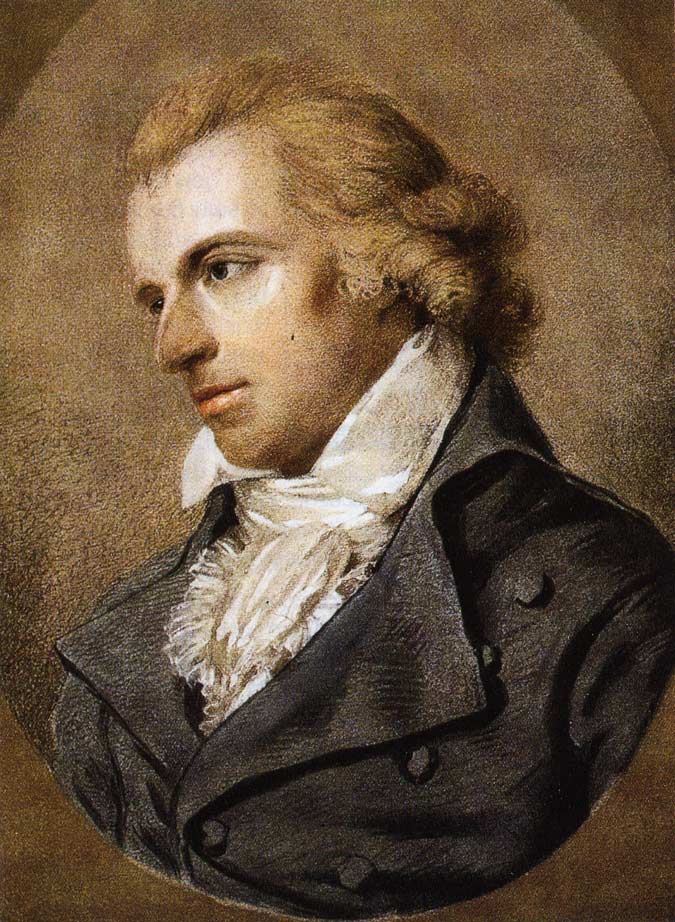
Friedrich Schiller, born Johann Christoph Friedrich von Schiller on November 10, 1759, in Marbach am Neckar, Germany, is celebrated as one of the most influential poets, playwrights, and historians of the German-speaking world. Schiller’s works are a cornerstone of German literature, embodying the ideals of freedom, human dignity, and the struggle against oppression. His writings, which span from the Sturm und Drang (Storm and Stress) movement to German Classicism, have left a lasting impact not only on literature but also on philosophy, politics, and the arts.
Early Life and Education
Schiller was born into a military family. His father, Johann Kaspar Schiller, was an officer in the service of the Duke of Württemberg. This military background meant that discipline and duty were central to Schiller’s upbringing, but it also created a tension between his personal inclinations and the expectations placed upon him. Schiller’s early education was marked by a strong religious influence, as he was initially expected to pursue a career in theology.
However, his true passions lay elsewhere. Schiller was deeply drawn to literature and the arts, even as he was steered toward a more conventional path. At the age of 14, he entered the Karlsschule, a military academy in Stuttgart, where he studied law and medicine. The rigid and authoritarian atmosphere of the academy, combined with the intellectual and creative stimulation he received from his reading of Shakespeare, Rousseau, and other Enlightenment thinkers, fueled his desire to break free from the constraints of his environment.
The Birth of a Playwright: The Robbers and the Sturm und Drang Movement
Schiller’s literary career began in earnest with the publication of his first play, The Robbers (Die Räuber), in 1781. This powerful and emotionally charged drama was a defining work of the Sturm und Drang movement, a precursor to Romanticism that emphasized individualism, emotional intensity, and a rebellion against societal norms.
The Robbers tells the story of Karl Moor, a nobleman who becomes an outlaw in response to the injustices he perceives in society. The play’s themes of freedom, tyranny, and moral ambiguity resonated deeply with audiences of the time, who were grappling with the social and political upheavals of the late 18th century. Its premiere in 1782 at the National Theater in Mannheim was a sensation, catapulting Schiller to fame. However, the play’s subversive themes also drew the ire of the authorities. Schiller, who had left his post as a military doctor without permission to attend the premiere, was arrested and forbidden from publishing or producing any further plays.
This restriction did not deter Schiller. Instead, it fueled his resolve to pursue a career as a writer. He fled Württemberg and spent the next decade moving between various German cities, including Mannheim, Leipzig, Dresden, and Weimar, living in a state of relative obscurity and financial precarity. Despite these challenges, this period was one of intense creativity and productivity for Schiller.
Political Themes and Classical Influences: Don Carlos and Beyond
During his years of wandering, Schiller produced several significant works, including The Conspiracy of Fiesco at Genoa (Die Verschwörung des Fiesco zu Genua, 1783) and Intrigue and Love (Kabale und Liebe, 1784). These plays, like The Robbers, dealt with themes of political power, corruption, and the struggle for justice. Intrigue and Love, in particular, is a powerful critique of the social hierarchy and the arbitrary exercise of power, focusing on the doomed love affair between a nobleman and a commoner.
In 1787, Schiller completed Don Carlos, a historical drama set in the Spanish court. This play marked a significant evolution in Schiller’s writing style and thematic focus. While it continued to explore the themes of freedom and oppression, Don Carlos also introduced a more refined and classical approach to drama. Schiller abandoned the prose of his earlier works in favor of iambic pentameter, a metrical form associated with classical Greek tragedies. This shift signaled Schiller’s growing interest in the ideals of beauty, harmony, and moral clarity that would come to define the Weimar Classicism movement.
Weimar Classicism and Collaboration with Goethe
The late 1780s and early 1790s were transformative years for Schiller, both personally and professionally. In 1789, thanks to the intervention of Johann Wolfgang von Goethe, Schiller was appointed to a professorship in history and philosophy at the University of Jena. This position provided him with a stable income and the opportunity to engage deeply with the intellectual currents of the time, including the works of Immanuel Kant and the emerging field of aesthetics.
Schiller’s tenure at Jena was marked by a series of important historical and philosophical writings, including The History of the Thirty Years’ War (1791-1793) and his essays on aesthetic education, which explored the role of art in the development of moral and intellectual faculties. These works reflected Schiller’s belief in the transformative power of art and literature, a belief that would underpin much of his later work.
In 1794, Schiller’s relationship with Goethe deepened into a close and fruitful collaboration. Together, they became the leading figures of Weimar Classicism, a movement that sought to harmonize the ideals of the Enlightenment with the emotional and imaginative richness of Romanticism. Their partnership was one of mutual respect and intellectual exchange, with each influencing the other’s work in profound ways. This period saw the creation of some of Schiller’s most enduring plays, including Wallenstein (1799), Maria Stuart (1800), The Maid of Orleans (Die Jungfrau von Orleans, 1801), The Bride of Messina (Die Braut von Messina, 1803), and William Tell (Wilhelm Tell, 1804).
Historical Context and the Power of Drama
Schiller’s works are deeply rooted in the historical and political context of his time. The late 18th and early 19th centuries were marked by profound social and political change, including the American Revolution, the French Revolution, and the Napoleonic Wars. These events reshaped the political landscape of Europe and provided a backdrop for Schiller’s exploration of themes such as freedom, tyranny, and the moral responsibilities of individuals and governments.
In plays like William Tell, Schiller drew on historical events to craft narratives that spoke to the aspirations and anxieties of his contemporaries. William Tell, for example, is based on the Swiss folk hero who led a rebellion against the Habsburg oppressors. The play’s depiction of a struggle for national independence and individual rights resonated with audiences across Europe, who were themselves grappling with questions of national identity and political sovereignty.
Similarly, Maria Stuart dramatizes the final days of Mary, Queen of Scots, exploring themes of power, betrayal, and the conflict between personal conscience and political duty. Through his portrayal of these historical figures and events, Schiller not only engaged with the political issues of his time but also contributed to the broader cultural discourse on the nature of power, justice, and human freedom.
The Philosophical Dimension: Aesthetics and Moral Philosophy
In addition to his work as a dramatist, Schiller made significant contributions to philosophy, particularly in the areas of aesthetics and moral philosophy. His engagement with the works of Immanuel Kant led him to explore the relationship between beauty, art, and morality. In his essays, particularly On the Aesthetic Education of Man (1794-1795), Schiller argued that art has the power to cultivate moral and intellectual virtues by appealing to the emotions and the imagination.
Schiller’s concept of the “aesthetic state”—a state of being in which individuals are free to develop their full potential through the harmonious interplay of reason and emotion—was a central theme in his philosophical writings. He believed that exposure to great art and literature could help individuals achieve a balance between their rational and emotional faculties, leading to a more just and harmonious society.
This philosophical perspective is evident in Schiller’s later plays, which often explore the tension between idealism and reality, and the ways in which individuals navigate the complexities of moral choice. In The Bride of Messina, for example, Schiller blends elements of Greek tragedy with contemporary issues, creating a work that is both timeless and deeply rooted in the human experience.
Legacy and Influence
Friedrich Schiller’s influence extends far beyond his own time. His works have been translated into numerous languages and continue to be performed and studied around the world. Schiller’s impact on literature, philosophy, and political thought is profound, and his ideas about freedom, justice, and the role of art in society remain relevant today.
Schiller’s legacy is also evident in the many adaptations of his works. Composers such as Ludwig van Beethoven and Giuseppe Verdi were inspired by Schiller’s plays and poetry, creating musical compositions that have become iconic in their own right. Beethoven’s Ninth Symphony, for example, incorporates Schiller’s Ode to Joy, a poem that expresses the poet’s deep belief in the possibility of human unity and brotherhood.
Moreover, Schiller’s works have influenced political leaders and thinkers throughout history. His ideas about the moral responsibilities of individuals and governments have resonated with those seeking to promote justice and human dignity, making him a figure of enduring significance in the cultural and intellectual history of the West.
Conclusion
Friedrich Schiller’s life and work represent a remarkable fusion of literary genius, philosophical inquiry, and political engagement. From his early days as a rebellious young playwright to his later years as a leading figure of German Classicism, Schiller consistently grappled with the fundamental questions of human existence: the nature of freedom, the role of art in society, and the moral responsibilities of individuals and governments.
Today, Schiller is remembered not only as one of the greatest writers of the German language but also as a thinker whose ideas continue to challenge and inspire. His works remain a vital part of the global literary canon, offering insights into the complexities of human nature and the enduring struggle for justice and freedom.


