
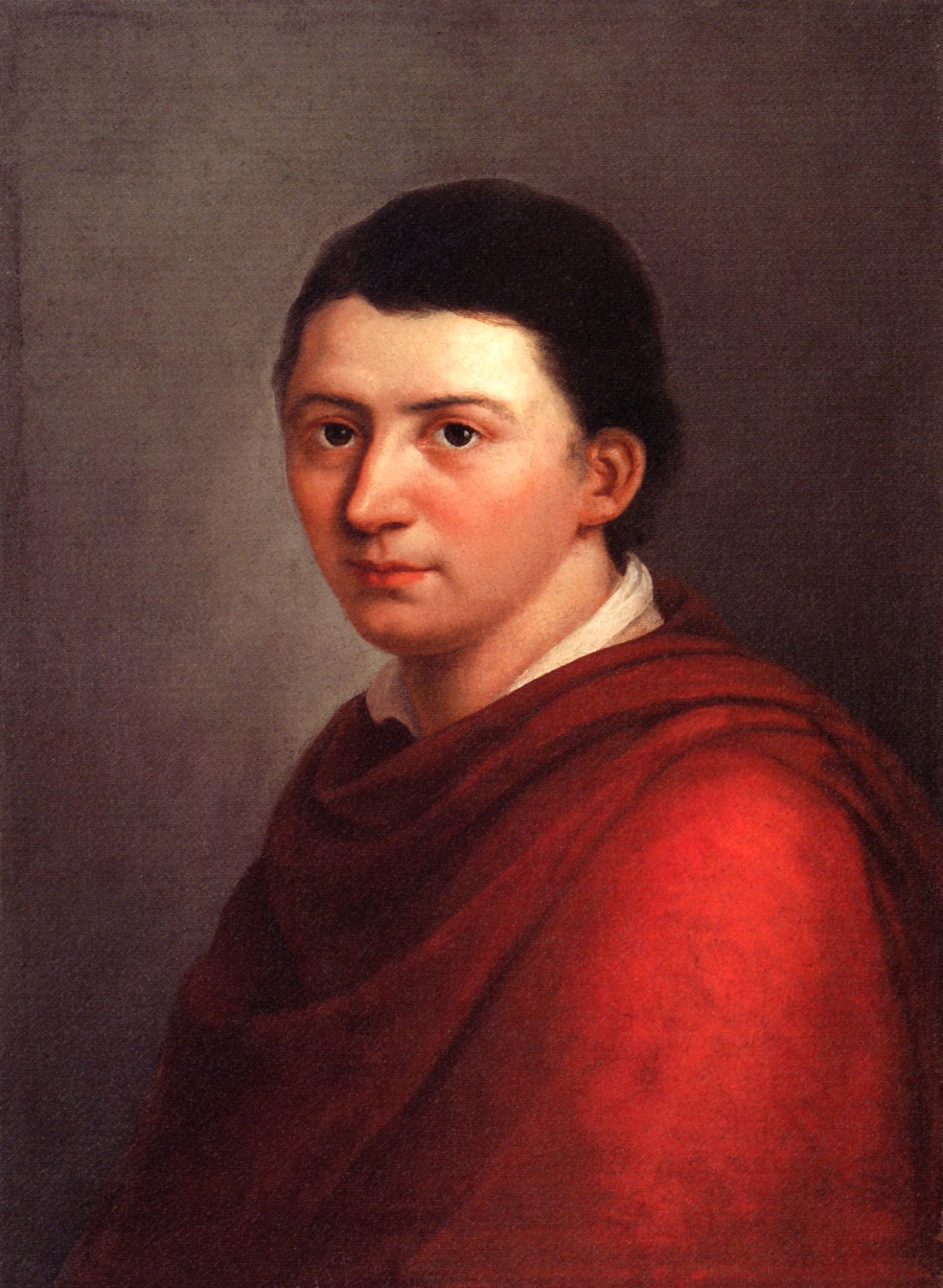
Friedrich Schlegel is a seminal figure in the history of German literature and philosophy, widely recognized as one of the founders of Romanticism. His contributions to literary criticism, philosophy, and the study of ancient and modern literature have left an indelible mark on the intellectual landscape of the 19th century. This article delves into Schlegel’s life, exploring his age, rise to fame, and the significant highlights of his career, while also providing insights into the historical context that influenced his work.
Early Life and Education
Friedrich Schlegel was born on March 10, 1772, in Hannover, Germany, into an intellectually vibrant family. His father, Johann Adolf Schlegel, was a Protestant pastor, while his mother, Johann Ursula, was a mathematics teacher. The Schlegel household was steeped in intellectual pursuits, which undoubtedly influenced Friedrich’s early development. Although his family initially aimed to steer him toward a career in commerce, Friedrich’s interests lay elsewhere.
Schlegel began his formal education studying law at the universities of Göttingen and Leipzig. However, he quickly grew disillusioned with the rigid structure of legal studies and gravitated towards literature and philosophy. By the early 1790s, Schlegel had abandoned his legal studies altogether, immersing himself in the works of classical and contemporary writers. His early exposure to the writings of Goethe, Schiller, and other luminaries of German literature played a crucial role in shaping his intellectual trajectory.
The Beginnings of Romanticism
In the mid-1790s, Schlegel moved to Dresden, where he began to cultivate his literary talents. At just over 20 years old, Schlegel published his first significant works: “Von der Schule der griechischen Poesie” (On the School of Greek Poetry) in 1794, and “Über das Studium der griechischen Poesie” (On the Study of Greek Poetry) in 1797. These works marked Schlegel’s entry into the intellectual circles of Germany and established his reputation as a serious scholar of classical literature.
Schlegel’s early writings reflect his deep admiration for ancient Greek poetry, which he regarded as the pinnacle of artistic achievement. He argued that Greek poetry was characterized by a harmonious and objective quality that modern literature lacked. This notion was in line with Friedrich Schiller’s distinction between “naive” and “sentimental” poetry, where the former represented an unselfconscious, natural expression, and the latter, a more reflective, subjective mode of expression.
It was during this period that Schlegel became increasingly involved in the intellectual movement that would later be known as Romanticism. In 1797, he moved to Jena, a hub of German intellectual life, where he forged connections with key figures such as the philosopher and theologian Friedrich Schleiermacher and the poet Novalis. These relationships would prove instrumental in the development of Schlegel’s ideas and his role in the Romantic movement.
Founding the Romantic Movement
In 1798, Friedrich Schlegel and his older brother, August Wilhelm Schlegel, founded the journal “Athenaeum,” which became the leading voice of the early Romantic movement. Athenaeum was a platform for the Schlegel brothers and their contemporaries to explore and propagate the principles of Romanticism. The journal published essays, critiques, and literary works that challenged the established norms of classicism and promoted a new, more personal and introspective approach to art and literature.
Schlegel’s contributions to Athenaeum were characterized by their innovative and, at times, provocative ideas. He introduced the concept of “progressive universal poetry,” which he described as a form of poetry that was inherently self-reflective and constantly evolving. This idea was central to the Romantic philosophy, which emphasized the infinite potential of human creativity and the rejection of fixed forms and genres.
During this period, Schlegel also published several influential essays on literary figures such as Carl Jacobi, Gotthold Ephraim Lessing, and Johann Wolfgang von Goethe. His critiques were notable for their departure from traditional literary analysis, focusing instead on the subjective experience of the reader and the emotional and intellectual impact of the work. Schlegel’s approach to literary criticism laid the groundwork for modern literary theory, which often emphasizes the role of the reader in interpreting a text.
The Novel “Lucinde” and Romantic Love
In 1799, Friedrich Schlegel published his novel “Lucinde,” a work that would become one of the most controversial and influential texts of the Romantic movement. Lucinde is often regarded as an autobiographical novel, drawing heavily on Schlegel’s own life experiences and his relationship with his future wife, Dorothea Veit. The novel explores the themes of love, individuality, and the reconciliation of sensual and spiritual desires, all of which were central to the Romantic ideology.
Lucinde was met with a mixed reception. While it was praised by some for its bold exploration of romantic and sexual love, it was also criticized for its perceived immorality and lack of conventional structure. The novel’s frank treatment of erotic love and its challenge to traditional gender roles sparked controversy, with some critics condemning it as indecent. Despite—or perhaps because of—this controversy, Lucinde became a defining text of Romanticism, embodying the movement’s emphasis on personal freedom, emotional depth, and the breaking of societal taboos.
Shifting Philosophical Focus
The turn of the 19th century marked a period of significant intellectual and personal change for Schlegel. The death of his close friend Novalis in 1801 was a profound loss that contributed to Schlegel’s gradual shift away from the ideals of early Romanticism. Around this time, Schlegel moved to Berlin, where he began to engage more deeply with philosophy and history.
In Berlin, Schlegel delivered a series of lectures on the history of literature, which were later published as “Geschichte der Poesie der Griechen und der Römer” (History of Greek and Roman Poetry). These lectures expanded on his earlier work on Greek poetry, but they also reflected a broader interest in the evolution of literature across different cultures and historical periods. Schlegel’s growing interest in philosophy also led him to explore the connections between literature, history, and the development of human consciousness.
Schlegel’s intellectual journey took another significant turn in 1808, when he published “Über die Sprache und Weisheit der Inder” (On the Language and Wisdom of India). This work marked the beginning of Schlegel’s fascination with Eastern philosophies and languages, particularly Sanskrit. Schlegel’s studies of Indian texts introduced him to new ways of thinking about language, mythology, and the nature of reality, which would influence his later philosophical work.
Conversion to Catholicism and Later Life
One of the most significant developments in Friedrich Schlegel’s later life was his conversion to Catholicism in 1808. This conversion was part of a broader intellectual and spiritual transformation that saw Schlegel move away from the ideals of Romanticism and towards a more conservative and religious worldview. His newfound faith deeply influenced his subsequent work, leading him to advocate for a return to traditional Christian values and to critique the secularism and individualism of modern society.
After his conversion, Schlegel moved to Vienna, where he became a prominent figure in the intellectual and cultural life of the city. He was appointed to a position at the Austrian court by the influential statesman Klemens von Metternich, and he continued to publish works on philosophy, history, and literature. In Vienna, Schlegel delivered a series of lectures on the history of ancient and modern literature, which were later published as “Vorlesungen über die Geschichte der alten und der neuen Literatur” (Lectures on the History of Ancient and Modern Literature).
In these lectures, Schlegel articulated a vision of literature and culture that was deeply rooted in Christian theology and traditional values. He argued that modern literature had lost its way by abandoning the spiritual and moral foundations that had characterized earlier periods of cultural achievement. Schlegel’s later work was characterized by a desire to reconcile the ideals of Romanticism with a renewed commitment to Christian orthodoxy.
Legacy and Historical Context
Friedrich Schlegel’s contributions to literature, philosophy, and criticism are foundational to the Romantic movement, but his influence extends far beyond Romanticism. His ideas about the nature of poetry, the role of the artist, and the importance of historical and cultural context in shaping literature have had a lasting impact on literary theory and criticism. Schlegel’s work laid the groundwork for many of the ideas that would later be developed by thinkers such as Friedrich Nietzsche, Walter Benjamin, and the early proponents of literary modernism.
Schlegel’s exploration of Eastern philosophies and languages also played a significant role in introducing European intellectuals to non-Western ways of thinking. His work in this area helped to broaden the scope of Western philosophy and literature, encouraging a more global and comparative approach to cultural studies.
However, Schlegel’s legacy is also marked by the tension between his early Romantic ideals and his later conservative and religious beliefs. While his early work celebrated the individual, the subjective, and the innovative, his later writings often emphasized tradition, authority, and the spiritual over the secular. This duality in Schlegel’s thought reflects the broader tensions within Romanticism itself, a movement that was both revolutionary and nostalgic, both radical and conservative.
Conclusion
Friedrich Schlegel remains a towering figure in the history of Western thought. His work as a critic, philosopher, and writer helped to shape the intellectual landscape of the 19th century and continues to influence contemporary discussions about literature, culture, and philosophy. Schlegel’s life and work are a testament to the power of ideas to transcend the boundaries of time and place, and to the enduring relevance of the questions he posed about art, society, and the human condition.
As we reflect on Schlegel’s contributions, it is important to consider the broader historical and cultural context in which he lived and worked. His ideas were shaped by the intellectual currents of his time, but they also helped to shape those currents in turn. In this sense, Schlegel’s legacy is not only a reflection of the past but also a living tradition that continues to inspire and challenge us today.


