
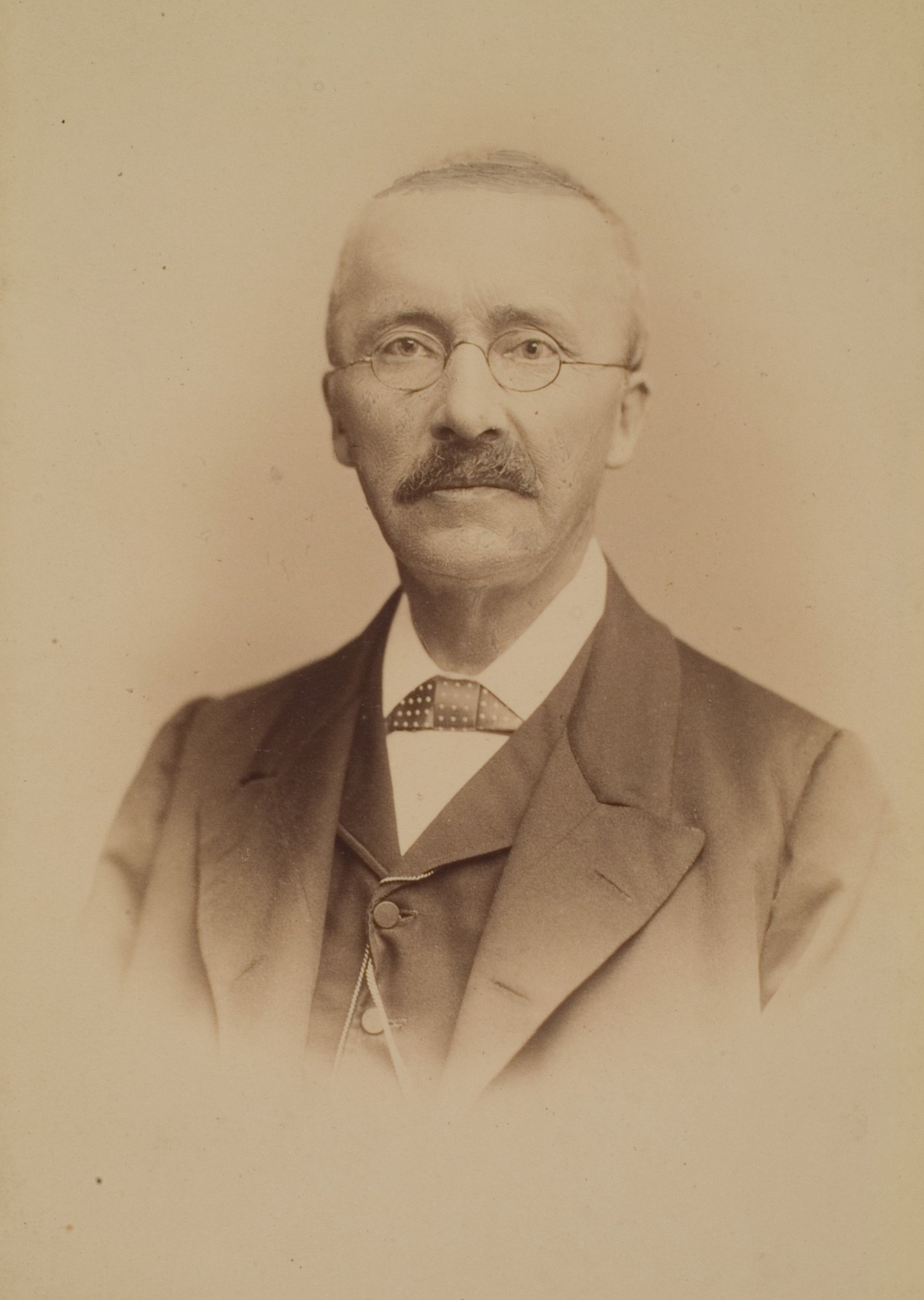
Heinrich Schliemann is a name that resonates profoundly within the field of archaeology, often credited with the discovery of the ancient city of Troy. Born on January 6, 1822, in Neubukow, Germany, Schliemann’s life is a compelling tale of passion, determination, and groundbreaking discoveries that have had a lasting impact on our understanding of ancient civilizations. This article provides an in-depth exploration of Schliemann’s life, his rise to fame, and the key highlights of his career, while also offering insights into the historical context that shaped his work.
Early Life and Influences
Heinrich Schliemann was born into a modest family. His father, Ernst Schliemann, was a Protestant pastor with a deep interest in ancient history, a passion he passed on to his son. Heinrich’s early exposure to the Iliad and the Odyssey—epic poems by Homer that recount the tales of the Trojan War—sparked a lifelong fascination with ancient civilizations. By the age of seven, young Heinrich was already captivated by the idea of uncovering the ruins of Troy, a city that was considered by many scholars of the time to be purely mythical.
Schliemann’s childhood was marked by hardship, particularly after the death of his mother when he was just nine years old. He was sent to live with his uncle, where he received a basic education. Due to financial difficulties, Schliemann had to leave formal schooling at a young age, and by 14, he began working as an apprentice to a grocer. Although his formal education was cut short, Schliemann was undeterred in his quest for knowledge, particularly in languages. His linguistic talent would later become one of his most valuable tools in his archaeological pursuits.
Early Career and the Path to Wealth
Heinrich Schliemann’s early career was far removed from the world of archaeology. After leaving his apprenticeship, he took on various jobs, eventually finding his way to Hamburg, where he intended to travel to Venezuela. However, fate had other plans; the ship he boarded was shipwrecked, and Schliemann found himself in the Netherlands. There, he worked as a clerk and later as a bookkeeper, all the while teaching himself several languages, including Russian, French, and English.
Schliemann’s big break came when he moved to Russia, where he became a successful businessman. He made a considerable fortune by trading indigo and other commodities, and later, during the Crimean War, by supplying military equipment to the Russian army. His success in business allowed him to amass the wealth necessary to fund his true passion: archaeology.
Despite his financial success, Schliemann’s personal life was tumultuous. His first marriage to Ekaterina Lyschin, the daughter of a Russian lawyer, ended in separation. This period of his life, however, marked the beginning of his transition from a businessman to an archaeologist. By the late 1860s, Schliemann had retired from business and was fully committed to pursuing his childhood dream of discovering Troy.
The Quest for Troy
Schliemann’s obsession with Troy led him to the site of Hissarlik in modern-day Turkey, where he believed the ancient city was buried. His initial attempts to gain permission to excavate were met with resistance, but his persistence paid off. In 1871, Schliemann, alongside the British vice-consul Frank Calvert, began excavations at Hissarlik.
Schliemann’s methods were unconventional and often criticized by his contemporaries. He employed a technique known as “trench digging,” which involved cutting deep trenches through the site to reach the ancient layers of the city. This method, while effective in quickly reaching the older layers, also caused significant damage to the archaeological record. Many structures and artifacts were destroyed in the process, including evidence of the very city Schliemann was so eager to find.
Despite these criticisms, Schliemann made several groundbreaking discoveries. In 1873, he uncovered what he believed to be the remains of Troy, including a cache of gold and other artifacts that he famously dubbed “Priam’s Treasure,” after the legendary king of Troy. Schliemann’s dramatic announcement of his discovery captivated the world and made him an international celebrity. However, his methods and the authenticity of some of his finds were subjects of controversy, particularly regarding the exact identification of the city layers he excavated.
Excavations at Mycenae and Further Discoveries
Following his work at Troy, Schliemann turned his attention to Mycenae, another site of great historical significance mentioned in Homeric epics. In 1876, he began excavations at Mycenae, where he discovered the famous “Mask of Agamemnon,” a gold funeral mask that he believed belonged to the legendary Greek king Agamemnon, leader of the Greeks during the Trojan War. This discovery was monumental and added further credibility to Schliemann’s reputation as a pioneering archaeologist.
Schliemann’s work at Mycenae revealed a wealth of artifacts, including gold jewelry, weapons, and other treasures. These finds provided valuable insights into the Mycenaean civilization, which flourished in Greece during the second millennium BCE. However, like his work at Troy, Schliemann’s methods were once again criticized for their destructiveness. His eagerness to uncover treasures often led to the destruction of important archaeological layers, a fact that has marred his legacy in the eyes of many modern archaeologists.
Legacy and Historical Context
Heinrich Schliemann’s life and work cannot be fully understood without considering the historical context in which he operated. The 19th century was a period of burgeoning interest in ancient history and archaeology, fueled in part by the Romantic movement, which idealized the classical past. Schliemann was very much a product of his time, driven by a passion for the ancient world that bordered on obsession.
Schliemann’s discoveries at Troy and Mycenae were pivotal in shifting scholarly opinion about the historicity of the Homeric epics. Before Schliemann’s excavations, many scholars regarded the Iliad and the Odyssey as purely literary works, with little basis in historical fact. Schliemann’s work demonstrated that these stories might have been grounded in real historical events and locations, thus opening new avenues of research into the ancient world.
However, Schliemann’s methods and his sometimes sensationalist approach to archaeology have also drawn criticism. Modern archaeologists often view Schliemann’s work as a cautionary tale of how the pursuit of glory can sometimes lead to the destruction of valuable historical evidence. Despite these criticisms, there is no denying that Schliemann’s work had a profound impact on the field of archaeology. His discoveries at Troy and Mycenae laid the groundwork for future archaeological investigations and inspired generations of archaeologists to follow in his footsteps.
Personal Life and Final Years
Heinrich Schliemann’s personal life was as eventful as his professional one. After separating from his first wife, Schliemann married Sophia Engastromenou, a young Greek woman who shared his passion for ancient history. Sophia often accompanied Schliemann on his excavations and played a significant role in his later work. Their marriage was a partnership in every sense, with Sophia actively involved in Schliemann’s archaeological pursuits.
In his later years, Schliemann continued to travel and conduct excavations, but his health began to deteriorate. In 1890, while waiting for permission to begin a new excavation, Schliemann fell ill in Naples, Italy. He passed away on December 26, 1890, at the age of 68. Schliemann was buried in Athens, a city he had come to love, and where he had spent much of his life pursuing his archaeological dreams.
Historical Impact and Controversy
The legacy of Heinrich Schliemann is a complex one. On the one hand, he is celebrated as the discoverer of Troy and Mycenae, two of the most important archaeological sites in the ancient world. His work brought the ancient world to life for millions of people and helped to establish archaeology as a legitimate field of scientific inquiry.
On the other hand, Schliemann’s methods have been widely criticized for their destructiveness. His focus on finding treasures often led to the careless destruction of other archaeological evidence, and his interpretation of his findings has been questioned by many scholars. For example, the identification of the “Mask of Agamemnon” as belonging to the legendary king is now considered highly unlikely by most archaeologists.
Schliemann’s life and work also raise important questions about the ethics of archaeology. His removal of “Priam’s Treasure” from Turkey and its subsequent donation to Germany sparked international controversy, with multiple countries now laying claim to the artifacts. This episode highlights the ongoing issues surrounding the ownership and repatriation of cultural heritage, issues that are still very much relevant today.
Conclusion
Heinrich Schliemann remains one of the most fascinating and controversial figures in the history of archaeology. His discoveries at Troy and Mycenae have had a lasting impact on our understanding of the ancient world, and his life story continues to inspire both admiration and debate. While his methods may have been flawed, there is no denying the significance of his contributions to the field. Schliemann’s legacy is a reminder of the importance of passion and perseverance in the pursuit of knowledge, as well as the need for careful and ethical practices in the preservation of our shared cultural heritage.


