
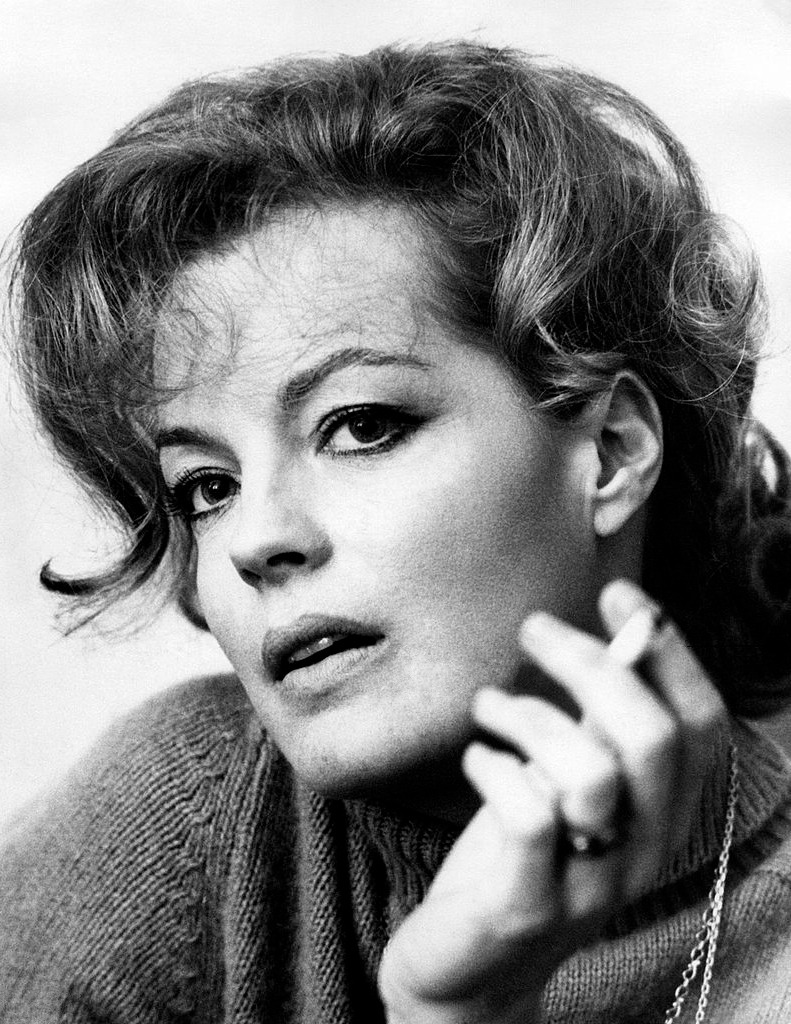
Romy Schneider, born Rosemarie Magdalena Albach-Retty on September 23, 1938, in Vienna, Austria, was a celebrated actress whose life and career were marked by both incredible successes and deep personal tragedies. Known for her ethereal beauty and emotional depth, Schneider became an iconic figure in European cinema during the 1960s and 1970s. This article provides a comprehensive look at her life, exploring the nuances of her career, her rise to fame, and the challenges she faced along the way.
Early Life and Family Background
Romy Schneider was born into a family with a rich artistic heritage. Her mother, Magda Schneider, was a well-known actress who starred in over seventy films, while her father, Wolf Albach-Retty, was also an actor, albeit with less success. Growing up in this environment, Schneider was exposed to the world of acting from a young age. It was her mother who inspired her passion for the craft, and they would go on to work together in several films, most notably in the trilogy that would define Romy’s early career.
The Role of Sissi: A Double-Edged Sword
Romy Schneider’s career took off when she was cast as the young Empress Elisabeth of Austria, better known as “Sissi,” in the 1955 film of the same name. Directed by Ernst Marischka, the film was a massive success and quickly became a beloved classic in German-speaking countries. Schneider’s portrayal of Sissi, a character known for her grace, independence, and charm, captured the hearts of audiences and cemented her status as a star.
The success of “Sissi” led to two sequels, “Sissi – The Young Empress” (1956) and “Sissi – The Fateful Years of an Empress” (1957). While these films brought Schneider immense fame, they also created a public image that she found increasingly difficult to escape. The role of Sissi was both a blessing and a curse; it made her famous, but it also typecast her as the sweet, innocent princess, a persona she would spend years trying to shed.
Transition to French Cinema and Relationship with Alain Delon
In 1958, Romy Schneider made a pivotal move in her career by transitioning to French cinema. This shift was catalyzed by her relationship with French actor Alain Delon, whom she met while filming “Christine,” directed by Pierre Gaspard-Huit. The two quickly became one of the most famous couples in Europe, and Delon played a significant role in convincing Schneider to leave her home country and pursue her career in France.
This move marked the beginning of Schneider’s transformation as an actress. No longer confined to the role of the innocent empress, she began to take on more complex and mature roles. Films like “Plein Soleil” (1960) by René Clément and “Boccaccio ’70” (1962) directed by Luchino Visconti showcased her versatility and helped her break away from the Sissi image.
However, Schneider’s relationship with Delon was tumultuous. Although deeply in love, the couple’s relationship was marked by frequent arguments and infidelities, ultimately leading to their breakup in 1964. The end of this relationship was a devastating blow to Schneider, plunging her into a period of depression and alcohol abuse.
Career Resurgence and Continued Success
Despite her personal struggles, Romy Schneider continued to work prolifically throughout the 1960s and 1970s. One of her most significant films from this period was “The Trial” (1962), directed by Orson Welles, in which she starred alongside Anthony Perkins. Her role in “The Swimming Pool” (1969), again with Alain Delon, was another highlight, showcasing her ability to portray complex emotional dynamics with subtlety and depth.
Schneider’s collaboration with Luchino Visconti continued with “Ludwig” (1973), in which she once again portrayed Empress Elisabeth, but this time in a much darker and more complex portrayal. The film was a critical success, and Schneider’s performance was widely praised, proving that she had fully matured as an actress capable of delivering performances with significant emotional weight.
Personal Tragedies and Struggles
Romy Schneider’s personal life was fraught with tragedy and turmoil. After her breakup with Alain Delon, she married German director Harry Meyen in 1966, with whom she had a son, David. However, the marriage was unhappy and ended in divorce in 1975. Schneider’s personal life continued to unravel with the tragic death of her son David in 1981, when he was just 14 years old. He died in a horrific accident, impaled on a fence while trying to climb into his parents’ house. This loss was a blow from which Schneider never fully recovered.
In addition to these personal tragedies, Schneider’s health began to deteriorate. Her struggles with depression and alcohol were well-documented, and she underwent several surgeries for various health issues. Despite these challenges, Schneider continued to work, delivering one of her most poignant performances in “Fantasma d’Amore” (1981), directed by Dino Risi. The film, which explores themes of love, loss, and the passage of time, was seen by many as a reflection of Schneider’s own life experiences.
The Tragic End of Romy Schneider’s Life
Romy Schneider’s life came to a tragic and premature end on May 29, 1982. She was found dead in her Paris apartment at the age of 43. The official cause of death was listed as cardiac arrest, but there has been much speculation that it may have been a suicide, given the immense grief and depression she had been battling.
Schneider’s death shocked the world, and she was mourned by fans and colleagues alike. Her legacy as an actress, however, remains enduring. She left behind a body of work that continues to be celebrated for its emotional depth, complexity, and beauty.
Legacy and Influence
Romy Schneider’s impact on cinema cannot be overstated. She was a pioneer in her transition from a beloved child star to a serious actress, challenging the conventions of her time and breaking free from the roles that initially defined her. Her performances in films such as “The Swimming Pool,” “Ludwig,” and “Fantasma d’Amore” remain some of the most memorable in European cinema.
Schneider’s life story is a testament to the pressures and challenges faced by those in the public eye. Despite the fame and success she achieved, she was not immune to the personal struggles that ultimately defined her life. Yet, it is this very complexity that has made her an enduring figure in the world of cinema.
Her influence can be seen in the many actresses who followed in her footsteps, navigating the difficult transition from child star to serious artist. Schneider’s ability to portray a wide range of emotions with nuance and authenticity has inspired generations of actors and filmmakers.
Conclusion
Romy Schneider was a remarkable actress whose life was as dramatic and compelling as the roles she portrayed on screen. From her early success as Sissi to her later work in French and Italian cinema, she consistently pushed the boundaries of her craft, earning her place as one of the great actresses of her time. Despite the personal tragedies that marred her life, Schneider’s legacy remains one of resilience, talent, and an enduring passion for the art of cinema.
Her story is a poignant reminder of the human side of fame, where the pressures of public life can often overshadow personal struggles. Yet, through it all, Romy Schneider remained dedicated to her craft, leaving behind a body of work that continues to inspire and resonate with audiences around the world. As we reflect on her life and career, we honor the memory of a true cinematic legend, whose star continues to shine brightly in the annals of film history.


