
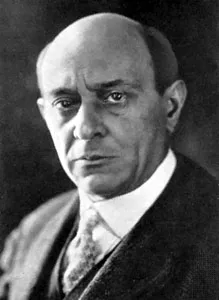
Arnold Schönberg, born on September 13, 1874, in Vienna, Austria, was a composer whose innovative approaches to music have left an indelible mark on the world of classical music. Known for his pioneering work in atonality and the development of the twelve-tone technique, Schönberg is often credited as one of the fathers of 20th-century music. This article provides a comprehensive look at Schönberg’s life, his rise to fame, the historical context of his work, and his most significant contributions to the world of music.
Early Life and Musical Beginnings
Arnold Schönberg was born into a modest Jewish family in Vienna, a city renowned for its rich musical heritage. From a young age, Schönberg exhibited a profound interest in music, although his formal training was somewhat haphazard. He described himself as largely self-taught, learning to play the violin and later the cello. Despite his limited formal education, Schönberg’s natural talent for composition quickly became evident.
His early works were heavily influenced by the late Romantic composers, particularly Johannes Brahms and Richard Wagner. Schönberg’s compositions from this period, such as the string sextet Verklärte Nacht (1899), reflect the lush harmonies and expressive melodies characteristic of the late Romantic era. However, even in these early works, one can discern Schönberg’s burgeoning desire to push the boundaries of traditional tonal music.
The Development of Atonality
The early 20th century was a period of intense artistic experimentation, with many composers seeking to break free from the constraints of traditional tonality. Schönberg was at the forefront of this movement. By 1908, he began to compose music that abandoned the traditional tonal center altogether, a style that would come to be known as atonality.
Atonality marked a radical departure from the music of the past, where pieces were typically structured around a central key or tonality. Schönberg’s atonal works, such as Pierrot Lunaire (1912), rejected this hierarchical structure, instead treating all twelve notes of the chromatic scale as equal. This approach allowed for greater freedom in composition but also posed significant challenges for both performers and audiences accustomed to the conventions of tonal music.
Schönberg’s exploration of atonality was not merely a rejection of tradition but a logical extension of his desire to express the complexities of the modern world. In a time of rapid social and technological change, Schönberg sought to create a new musical language that could capture the dissonances and ambiguities of contemporary life.
The Twelve-Tone Technique: A New Musical Language
Schönberg’s most significant contribution to music theory came in the form of the twelve-tone technique, or dodecaphony, which he developed in the early 1920s. This method was a systematic approach to atonal composition, designed to provide a sense of structure and coherence in the absence of a tonal center.
The twelve-tone technique involves arranging the twelve notes of the chromatic scale into a specific sequence, known as a tone row. This row serves as the basis for a composition, with the composer using various permutations and transformations of the row to generate the musical material. The technique ensures that no single note dominates the composition, maintaining the atonal character of the piece while providing an underlying structure.
Schönberg’s twelve-tone works, such as the Suite for Piano, Op. 25 (1921-23) and the unfinished opera Moses und Aron, are among his most intellectually rigorous and challenging compositions. These works demonstrate Schönberg’s ability to combine formal innovation with deep emotional expression, creating music that is both complex and profoundly moving.
Schönberg’s Influence on Music and Art
Arnold Schönberg’s influence extended far beyond the realm of music. His ideas about atonality and the twelve-tone technique had a profound impact on the visual arts, particularly in the work of the painter Wassily Kandinsky. The two men developed a close friendship, and Kandinsky’s abstract paintings were deeply influenced by Schönberg’s ideas about the dissolution of traditional structures in art.
Schönberg’s influence can also be seen in the work of his students, including Alban Berg and Anton Webern, who together with Schönberg are often referred to as the Second Viennese School. These composers continued to develop the principles of atonality and twelve-tone composition, creating some of the most important and influential works of the 20th century.
Life in Exile and Later Years
The rise of the Nazi regime in Germany in the 1930s forced Schönberg, who was of Jewish descent, to flee Europe. In 1933, he emigrated to the United States, where he eventually settled in Los Angeles, California. There, he joined the faculty of the University of California, Los Angeles (UCLA), where he taught composition and music theory from 1936 until his retirement in 1944.
Schönberg’s years in America were marked by both professional success and personal challenges. While he continued to compose and teach, he struggled with health issues and the difficulties of adapting to life in a foreign country. Despite these challenges, Schönberg produced some of his most significant late works during this period, including the Violin Concerto, Op. 36 (1936) and the Piano Concerto, Op. 42 (1942).
Throughout his life, Schönberg remained a deeply committed teacher, dedicated to passing on his knowledge to the next generation of composers. His teaching philosophy was rooted in the belief that music should be both intellectually rigorous and emotionally expressive, a balance that he sought to achieve in his own work.
Legacy and Cultural Impact
Arnold Schönberg’s legacy is one of profound and lasting influence on the world of music. His innovations in atonality and the twelve-tone technique paved the way for much of the music of the 20th century, influencing not only classical composers but also artists in other fields. Schönberg’s work challenged the conventions of the past and opened up new possibilities for musical expression, making him one of the most important and influential figures in the history of music.
In addition to his contributions to music theory and composition, Schönberg’s ideas about the role of the artist in society have had a lasting impact on cultural and intellectual life. His belief in the importance of innovation and the need to challenge established norms continues to inspire artists and thinkers across disciplines.
Conclusion
Arnold Schönberg’s life and work represent a turning point in the history of music. His development of atonality and the twelve-tone technique challenged the very foundations of Western music and opened up new possibilities for artistic expression. Schönberg’s influence extends far beyond the world of classical music, affecting the visual arts, literature, and philosophy.
Schönberg’s story is also one of resilience and determination. Despite the challenges of exile and illness, he remained committed to his artistic vision and continued to innovate throughout his life. His work stands as a testament to the power of creativity and the enduring importance of challenging established norms.
Today, Arnold Schönberg is remembered not only as a great composer but also as a visionary thinker who transformed the landscape of modern music. His legacy continues to resonate, inspiring new generations of musicians, artists, and scholars to explore the boundaries of their own creativity.


