
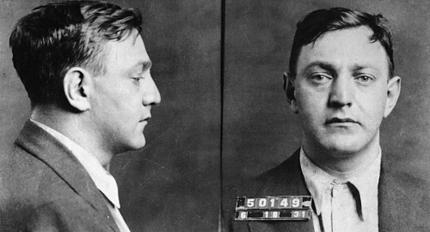
Dutch Schultz, born Arthur Simon Flegenheimer on August 6, 1902, in New York City, was one of the most infamous and enigmatic figures in American organized crime. His life, marked by violence, power struggles, and an insatiable quest for dominance, epitomizes the turbulent era of Prohibition and the rise of organized crime in the United States. This article delves deep into the life of Dutch Schultz, exploring his rise to fame, his age at key moments in his life, and the highlights that defined his notorious career.
Early Life and Background
Arthur Flegenheimer, later known as Dutch Schultz, was born into a Jewish family in the Bronx. His father abandoned the family when Arthur was young, leaving his mother, Emma, to raise him and his younger sister, Lucy, in poverty. The absence of a father figure and the harsh realities of life in the Bronx likely played a significant role in shaping Schultz’s character and his eventual turn towards a life of crime.
Schultz’s early years were marked by delinquency. By the age of 17, he had already joined the notorious “The Frog Hollow Gang,” a criminal group composed of young men from the Bronx. It was during this time that Schultz began to make a name for himself, engaging in petty thefts and other criminal activities. His criminal career took a significant turn when he was arrested for theft and sentenced to 15 months in a juvenile detention center. It was during his time in detention that he earned the nickname “Dutch Schultz,” a name that would soon strike fear into the hearts of many.
Rise to Power
In 1921, at the age of 19, Dutch Schultz formed his own gang, specializing in burglaries and assaults. The 1920s were a time of great opportunity for criminals like Schultz, as Prohibition had created a lucrative black market for alcohol. Schultz quickly capitalized on this, using violence and intimidation to gain control over various illegal enterprises, including speakeasies, illegal gambling, and racketeering.
By 1925, Schultz had established himself as a formidable force in New York’s underworld. He expanded his operations to include Harlem, where he ruthlessly eliminated his rivals and took control of the neighborhood’s criminal enterprises. Schultz’s reputation for violence was well-known, and he was not afraid to use it to maintain his grip on power. His gang became one of the most feared in New York, and Schultz himself was known for his unpredictable temper and willingness to kill anyone who stood in his way.
One of the most significant events in Schultz’s rise to power was his conflict with Jack “Legs” Diamond, an Irish mobster who was connected to the Italian Mafia. The rivalry between Schultz and Diamond culminated in the assassination of Diamond in 1931, an act that further solidified Schultz’s position as one of the most powerful crime bosses in New York.
The Height of Power: “The King of New York”
By the early 1930s, Dutch Schultz had earned the moniker “The King of New York,” a title that reflected his status as the most powerful and feared gangster in the city. His criminal empire extended far beyond Harlem, encompassing illegal lotteries, extortion, and protection rackets. Schultz also had significant interests in legitimate businesses, including banks, skyscrapers, and even movie production companies.
Schultz’s influence was so extensive that he managed to bribe and intimidate numerous public officials, ensuring that his operations remained largely unchallenged by law enforcement. However, his growing power also made him a target for both rival gangsters and the authorities.
In 1933, Schultz made a bold move that would ultimately lead to his downfall. He decided to break away from the established criminal syndicates and form his own independent organization. This decision angered many within the organized crime world, particularly the Italian Mafia, which viewed Schultz as a threat to their dominance.
The Fall of Dutch Schultz
The turning point in Schultz’s life came in 1935 when he became the target of a federal investigation led by Thomas E. Dewey, a determined and incorruptible prosecutor. Dewey sought to bring Schultz to justice for tax evasion, much like he had done with Al Capone. Despite Schultz’s attempts to bribe jurors and intimidate witnesses, he was acquitted in two separate trials. However, Dewey’s relentless pursuit of Schultz had put him in the crosshairs of both the law and his criminal rivals.
Faced with mounting pressure from all sides, Schultz made a fateful decision: he planned to assassinate Thomas E. Dewey. This decision, however, was opposed by the other major crime figures of the time, who feared that such an action would bring too much heat on their operations. Schultz’s insistence on going through with the plan led to his isolation within the criminal underworld.
On October 23, 1935, Dutch Schultz’s life came to a violent end. While dining with his associates at the Palace Chop House in Newark, New Jersey, Schultz and his bodyguards were ambushed by a team of hitmen. Although Schultz managed to shoot several of his attackers, he was mortally wounded and died the next day, on October 24, 1935, at the age of 33.
Legacy and Cultural Impact
Dutch Schultz’s life and death have left an indelible mark on American culture. His story has been the subject of numerous books, films, and television shows, each attempting to capture the complexity of a man who was both a ruthless killer and a charismatic leader. Schultz’s life exemplifies the rise and fall of organized crime during the Prohibition era, a time when men like him could amass enormous wealth and power through illegal means.
Despite his violent and criminal life, Schultz remains a figure of fascination, representing both the allure and the dangers of the criminal underworld. His legacy is one of a man who rose from the poverty of the Bronx to become one of the most powerful crime bosses in New York, only to fall victim to the very violence and treachery that had helped him rise to power.
Conclusion
Dutch Schultz’s life is a testament to the volatile nature of power in the world of organized crime. From his early days as a petty thief to his reign as “The King of New York,” Schultz’s story is one of ambition, violence, and the constant struggle for dominance. His ability to navigate the treacherous waters of the criminal underworld, coupled with his willingness to use extreme violence, allowed him to rise to the top. However, his refusal to play by the rules of the organized crime syndicates ultimately led to his downfall.
Schultz’s story also reflects the broader historical context of the time. The Prohibition era created opportunities for criminals like Schultz to amass great wealth and power, but it also led to increased law enforcement efforts to bring down these criminal empires. In the end, Schultz’s life serves as a cautionary tale about the dangers of unchecked ambition and the inevitable consequences of a life lived outside the law.
Dutch Schultz remains a figure of intrigue and mystery, a man whose life and death continue to captivate the public imagination. As one of the most powerful and feared gangsters in American history, Schultz’s legacy is a reminder of the dark side of the American Dream.


