
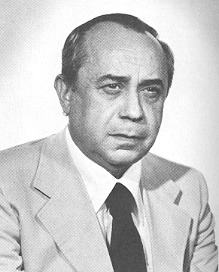
Leonardo Sciascia, born on January 8, 1921, in Racalmuto, Agrigento, was an Italian writer, essayist, and intellectual whose works have profoundly impacted Italian literature and political discourse. Sciascia is best known for his ability to intertwine the social and political issues of his time with the cultural and historical backdrop of Sicily, turning his homeland into a microcosm of broader human experiences. This article delves into the life, achievements, and legacy of Leonardo Sciascia, exploring the nuances of his work, the historical context that shaped his ideas, and his lasting influence on literature and politics.
Early Life and Education
Leonardo Sciascia was born into a modest Sicilian family. His father worked in the sulfur mines, a common occupation in the region, while his mother came from a family of artisans. Sciascia was the eldest of three children, growing up in an environment that was both culturally rich and economically challenging. His early life was marked by the stark realities of Sicilian society, which would later become a central theme in his literary work.
Sciascia’s formal education began in 1927, and from an early age, he showed a keen interest in literature and history. His extracurricular time was often spent with his uncles and grandfather, who played significant roles in shaping his worldview. In 1935, Sciascia’s family moved to Caltanissetta, where he attended the Istituto Magistrale IX Maggio. It was here that Sciascia encountered Vitaliano Brancati, a renowned Italian author who became a major influence on his literary style. Under Brancati’s mentorship, Sciascia developed a deep appreciation for the works of Alessandro Manzoni, Luigi Pirandello, and Enlightenment philosophers like Voltaire, who would all leave a lasting imprint on his writing.
The Beginning of a Literary Journey
In 1941, after several attempts, Sciascia passed his military service exam and became a primary school teacher. He took up a position in his hometown of Racalmuto, where he also worked as a clerk at the local grain depot until 1948. These years were formative for Sciascia, as he gained firsthand experience of the socio-economic conditions of rural Sicily, a theme that would recur in his writings.
Sciascia married Maria Andronico in 1944, and the couple had two daughters, Laura and Anna Maria. However, his life was not without tragedy; in 1948, his brother Giuseppe committed suicide, an event that profoundly affected Sciascia and influenced his later works.
First Publications and Political Engagement
The 1950s marked the beginning of Sciascia’s active involvement in both the literary and political spheres. In 1952, he published his first collection of poems, “Favole della dittatura” (Fables of the Dictatorship), a work that hinted at his growing political consciousness. The following year, Sciascia won the prestigious Pirandello Prize for a critical essay on Luigi Pirandello, further establishing his reputation as a literary talent.
During this period, Sciascia also began contributing to various literary magazines and collaborated with publishers like Salvatore Sciascia, a distant relative who shared his passion for Sicilian culture. In 1956, Sciascia published his first significant book, Le parrocchie di Regalpetra (The Parishes of Regalpetra), a semi-autobiographical work that drew from his experiences as a teacher in a small Sicilian town. The book offered a vivid portrayal of Sicilian life, blending documentary realism with fictional elements, a style that would characterize much of Sciascia’s later work.
Breakthrough: “The Day of the Owl” and Mafia Themes
The turning point in Sciascia’s career came with the publication of Il giorno della civetta (The Day of the Owl) in 1961. This novel, inspired by the real-life murder of trade unionist Accursio Miraglia by the Mafia, was one of the first literary works to address the Mafia directly. The Day of the Owl is a pioneering piece of literature that blends elements of crime fiction with a sociopolitical commentary on the pervasive influence of the Mafia in Sicilian society. The novel was a critical and commercial success, bringing Sciascia national and international recognition.
The novel’s impact extended beyond the literary world. It was adapted into a film in 1968, directed by Damiano Damiani, further cementing Sciascia’s reputation as a writer unafraid to tackle Italy’s most pressing social issues. The success of The Day of the Owl marked Sciascia’s emergence as a leading voice in Italian literature, particularly in the genre of “Mafia fiction,” which he helped to define.
Literary Success and Continued Political Critique
Throughout the 1960s and 1970s, Sciascia continued to explore themes of power, corruption, and justice in his works. In 1963, he published Il consiglio d’Egitto (The Council of Egypt), a historical novel set in 18th-century Sicily, which examines themes of deception and political manipulation. This novel, like many of Sciascia’s works, is a reflection of his deep-seated skepticism towards authority and his belief in the need for intellectual and moral integrity.
In 1967, Sciascia moved to Palermo, where he became increasingly involved in political and intellectual circles. His decision to retire from his government job in 1970 allowed him to devote himself entirely to writing and political activism. During this period, Sciascia published Il contesto (Equal Danger), a novel that critiques the corrupt political system in Italy. The book sparked controversy, particularly for its depiction of political figures and institutions, but it also solidified Sciascia’s reputation as a fearless critic of the status quo.
Sciascia’s literary output during this period was prolific. In 1966, he published A ciascuno il suo (To Each His Own), a mystery novel that, like The Day of the Owl, uses the framework of a detective story to explore deeper societal issues. The novel was adapted into a film by Elio Petri, further expanding Sciascia’s influence.
In 1974, Sciascia published Todo modo, a novel that offers a scathing critique of the Italian political and religious establishment. The book was met with significant backlash from both the Church and the Christian Democratic Party, but it also earned Sciascia a reputation as one of Italy’s most incisive and provocative writers.
Political Involvement and The Moro Affair
In the late 1970s, Sciascia’s involvement in politics became more direct. In 1975, he ran for office as a candidate for the Italian Communist Party in Palermo and was elected to the city council. However, disillusioned with the party’s compromises and internal conflicts, Sciascia resigned after two years.
Despite his disillusionment with traditional politics, Sciascia remained a committed public intellectual. In 1978, he published L’affaire Moro, a controversial book about the kidnapping and murder of Italian statesman Aldo Moro by the Red Brigades. Sciascia’s analysis of the Moro affair, which emphasized the moral and ethical failures of the Italian political class, was both praised and criticized. The book underscored Sciascia’s belief in the importance of moral integrity and his disdain for the Machiavellian nature of politics.
Sciascia’s political involvement continued in the late 1970s when he ran for the Italian Parliament as a candidate for the Radical Party. He served as a member of the Italian Parliament and later as a member of the European Parliament, where he continued to advocate for human rights, justice, and transparency in government.
Later Works and Legacy
In the final years of his life, Sciascia continued to write and publish, producing some of his most reflective and introspective works. In 1987, he published Porte aperte (Open Doors), a novel set in 1930s Fascist Italy, which explores themes of justice and morality. This was followed by Il cavaliere e la morte (The Knight and Death) in 1988, a novel that reflects Sciascia’s pessimism about the state of Italian society and the human condition.
Sciascia’s final major work, Una storia semplice (A Simple Story), was published on the day of his death, November 20, 1989. The novel, a short but powerful exploration of corruption and the abuse of power, serves as a fitting conclusion to a career marked by a relentless pursuit of truth and justice.
Leonardo Sciascia’s legacy is vast and enduring. His works have been translated into numerous languages and continue to be studied and admired for their incisive critique of society and their moral depth. Sciascia’s ability to weave complex social and political issues into compelling narratives has earned him a place among Italy’s greatest writers.
Conclusion
Leonardo Sciascia was more than just a writer; he was a keen observer of the human condition and a relentless critic of societal corruption and injustice. His works offer a profound exploration of the complexities of power, the challenges of moral integrity, and the enduring struggle for justice. Sciascia’s legacy as a writer and intellectual continues to resonate, reminding us of the importance of truth, justice, and the courage to speak out against wrongdoing.


