
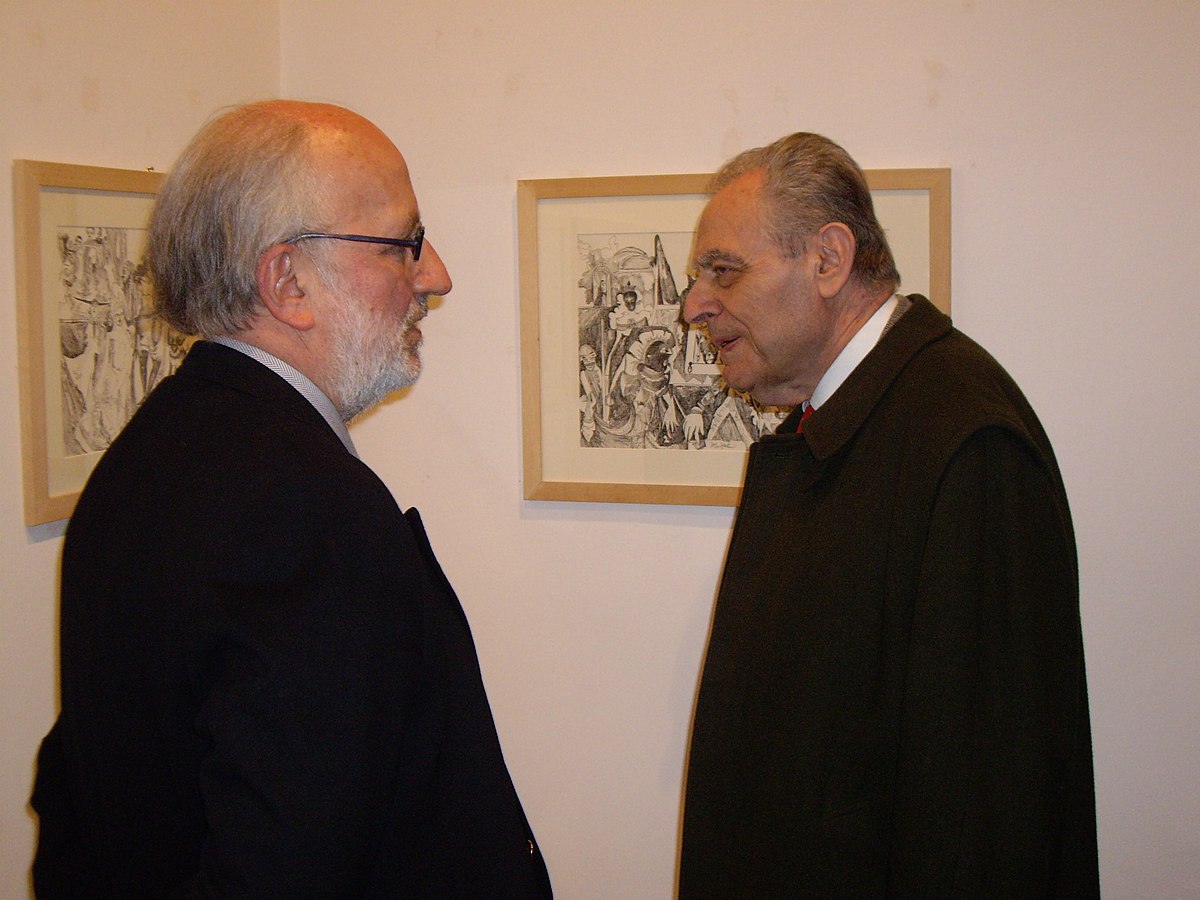
Cesare Segre is a name that resonates deeply within the fields of philology, semiotics, and literary criticism. Born on April 4, 1928, in Verzuolo, a small town in the province of Cuneo, Italy, Segre’s life and work have had a profound impact on the study of language, literature, and textual analysis. His contributions to the academic world, particularly in the realm of Romance philology and structuralist criticism, have left an indelible mark that continues to influence scholars and students alike.
Early Life and Academic Beginnings
Cesare Segre was born into a Jewish family during a tumultuous period in European history. The 1930s and 1940s were marked by the rise of fascism, the horrors of World War II, and the persecution of Jews across Europe. These historical events would shape much of Segre’s early life and influence his later work.
Despite the challenging circumstances, Segre’s father was determined that his son would pursue higher education. He did not want Cesare to settle for a teaching position at a high school; instead, he encouraged him to aim for an academic career. This push towards academia was a defining moment in Segre’s life. The death of his father during this period was a significant emotional blow, but it also strengthened Segre’s resolve to fulfill his father’s wishes.
Segre enrolled at the University of Turin, where he studied under the guidance of Benvenuto Terracini and his uncle, Santorre Debenedetti. These mentors played a crucial role in shaping Segre’s intellectual development. In 1950, he graduated with a degree in Romance philology, a field that would become the cornerstone of his academic career.
Academic Career and Contributions
After completing his studies, Cesare Segre embarked on a career that would see him become one of the most respected figures in philology and literary criticism. In 1954, just four years after his graduation, he became a libero docente (equivalent to a tenure-track professor) in Romance philology. He began teaching at the University of Trieste and later moved to the University of Pavia, where he became a full professor in 1960.
During his tenure at these institutions, Segre produced critical editions of several key texts in Italian and European literature. His work on Orlando Furioso, published in 1960, remains a landmark in Ariosto studies. He meticulously edited the 1532 edition of the text while also providing insights into the variations found in the 1516 and 1521 editions. This kind of rigorous textual analysis became a hallmark of Segre’s scholarly approach.
In addition to his work on Orlando Furioso, Segre also edited La Chanson de Roland (1971) and Ariosto’s Satire (1987). These works demonstrate Segre’s deep commitment to understanding the linguistic and cultural contexts in which these texts were produced. His approach was characterized by a combination of philological precision and a broader understanding of the historical and literary significance of the works he studied.
International Recognition and Influence
Cesare Segre’s reputation as a scholar extended far beyond Italy. He was invited to lecture at prestigious universities around the world, including institutions in Rio de Janeiro, Manchester, Princeton, and Berkeley. His contributions to the field of philology were recognized with honorary doctorates from several universities, including the University of Chicago, the University of Geneva, the University of Granada, and the University of Barcelona.
Segre was also a member of numerous esteemed academies, such as the Accademia dei Lincei in Italy, the Accademia della Crusca, the Académie Royale de Belgique, and the Real Academia Española. His membership in these organizations is a testament to the high regard in which he was held by his peers.
Theoretical Contributions: Formalism and Structuralism
One of Cesare Segre’s most significant contributions to literary studies was his role in reintroducing formalist and structuralist theories to Italy. These critical approaches, which had originated in Russia and France, emphasized the autonomy of the literary text. According to these theories, a literary work should be analyzed as a self-contained system, with attention paid to its structure, language, and the interplay of its various elements.
Segre’s interest in these theories was deeply influenced by his uncle, Santorre Debenedetti, who was one of the early proponents of formalism in Italy. Segre expanded on his uncle’s work, applying structuralist methods to his own studies of medieval and Renaissance texts. He argued that understanding the internal mechanisms of a text—its syntax, semantics, and narrative structure—was crucial to fully appreciating its artistic and cultural value.
In his role as a teacher and scholar, Segre was instrumental in disseminating these ideas to a new generation of Italian academics. He co-edited the journal Strumenti Critici with Dante Isella and Maria Corti, which became a leading publication for discussions on formalism, structuralism, and other critical methodologies. Through his work on this journal, as well as his numerous articles and books, Segre played a key role in shaping the direction of literary studies in Italy during the latter half of the 20th century.
Personal Life and Later Career
Cesare Segre’s personal life was as intellectually rich as his academic career. He married Maria Luisa Meneghetti, a fellow scholar of Romance philology. Their partnership was one of mutual respect and shared intellectual pursuits, further enriching Segre’s work. Together, they collaborated on several projects, including educational anthologies for high school students. Segre was a strong advocate for the proper teaching of the Italian language, arguing that a solid understanding of one’s native language was essential before attempting to learn others.
In addition to his academic work, Segre was also a prolific writer and editor for mainstream publications. He contributed to the cultural pages of Corriere della Sera, one of Italy’s most prominent newspapers, where he discussed topics ranging from literature to linguistic theory. His ability to engage both scholarly and general audiences was one of his greatest strengths, making complex ideas accessible to a wider public.
In 1999, Segre published his autobiography, Per curiosità. Una specie di autobiografia (Out of Curiosity: A Sort of Autobiography). In this work, Segre reflects on his life and career, using a unique format that blends first-person narrative with a faux-interview style. This approach allows Segre to explore the dualities of his identity as both a scholar and a public intellectual. The book provides valuable insights into the mind of a man who dedicated his life to the study of language and literature.
Legacy and Impact
Cesare Segre passed away on March 16, 2014, just shy of his 86th birthday. His death marked the end of an era in Italian philology and literary criticism, but his legacy continues to influence scholars and students around the world.
Segre’s work is characterized by its intellectual rigor, its commitment to philological precision, and its openness to new ideas and methodologies. He was a bridge between the traditional study of texts and the more modern, theoretical approaches that emerged in the 20th century. His contributions to the study of medieval and Renaissance literature, in particular, have left an indelible mark on the field.
Furthermore, Segre’s role in promoting formalist and structuralist approaches to literary criticism has had a lasting impact on how texts are studied in Italy and beyond. His insistence on the importance of understanding the internal workings of a text, while also considering its broader cultural and historical context, has become a standard approach in literary studies.
Conclusion
Cesare Segre was more than just a scholar; he was a pioneer in his field, a mentor to generations of students, and a public intellectual who brought complex ideas to a broader audience. His life and work serve as a testament to the power of language and literature to shape our understanding of the world.
As we continue to study and analyze literary texts, Segre’s contributions provide a foundation upon which future scholars can build. His work reminds us that the study of literature is not just about understanding the past, but about engaging with the present and future. In this way, Cesare Segre’s legacy lives on, continuing to inspire and challenge those who seek to understand the complexities of language and the human experience.


