
Introduction
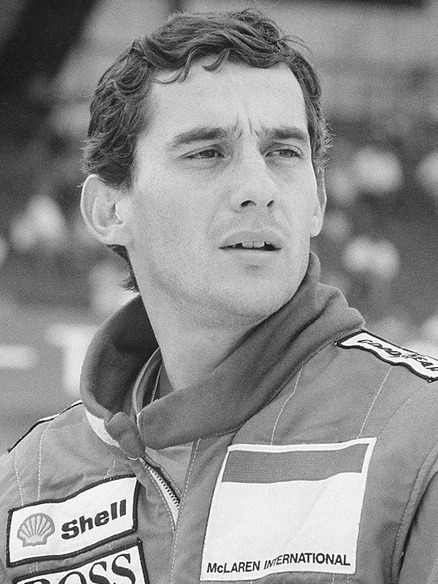
Ayrton Senna da Silva, born on March 21, 1960, in São Paulo, Brazil, is widely regarded as one of the greatest Formula 1 drivers of all time. His career was marked by extraordinary talent, an unwavering commitment to excellence, and a passion for racing that transcended the sport. Senna’s legacy extends beyond his remarkable achievements on the track; he became a symbol of national pride in Brazil and remains a legendary figure in the world of motorsports. This article explores the life, career, and legacy of Ayrton Senna, offering a detailed look at his journey to fame, his most significant accomplishments, and the events that shaped his life.
Early Life and Introduction to Racing
Ayrton Senna was born into a wealthy family in the Santana district of São Paulo. His father, Milton da Silva, was a successful businessman, and his mother, Neide Senna, provided a nurturing and supportive environment for Ayrton and his siblings, Leonardo and Viviane. From a young age, Ayrton displayed an intense interest in mechanics and speed. His father, recognizing his son’s passion, built a small go-kart for him when he was just four years old. This early exposure to racing ignited a lifelong obsession with motorsports.
Growing up in a privileged environment, Senna had access to the resources that allowed him to pursue his passion for racing. His family’s financial stability provided him with the opportunity to focus on honing his skills, and he quickly became a prodigy in the world of go-kart racing. By the age of 13, Senna was competing in official karting competitions, and his natural talent became evident as he began to dominate the circuits.
Karting Career and Early Success
Ayrton Senna’s karting career laid the foundation for his future success in Formula 1. He made his competitive debut in 1973 at the age of 13 on the Interlagos circuit in São Paulo, where he won his first race. This victory marked the beginning of a string of successes that would define his early career. Senna’s attention to detail and deep understanding of the mechanics of his kart gave him a competitive edge over his peers.
Senna’s approach to karting was meticulous. He was known for his ability to make adjustments to his kart during races, a skill that allowed him to maximize performance and outmaneuver his competitors. His signature yellow helmet, designed by Sid Mosca, with green and blue stripes symbolizing the Brazilian flag, became an iconic image associated with his identity on the track.
By the time he was 17, Senna had won his first international title, establishing himself as a rising star in the karting world. His success continued as he competed in the World Karting Championship in 1978 at Le Mans, France. Although he never won the world title, Senna’s performances were consistently impressive, and he quickly gained a reputation as a driver to watch.
Transition to Formula Racing
Ayrton Senna understood that to achieve his ultimate goal of competing in Formula 1, he would need to leave Brazil and move to Europe, where the most competitive racing environments existed. In 1981, at the age of 21, Senna moved to England to compete in the Formula Ford 1600 series. This was a crucial step in his career, as Formula Ford was known for its level playing field, where drivers competed with identical engines, putting a premium on driver skill rather than mechanical advantage.
Senna’s transition to Formula racing was seamless. He won both the Townsend-Thoresen Formula Ford 1600 championship and the RAC Formula Ford 1600 championship in his debut season, an unprecedented achievement that highlighted his extraordinary talent. Despite his success, Senna was not content; he continued to push himself, seeking greater challenges.
In 1982, Senna moved up to the Formula Ford 2000 series, where he again demonstrated his dominance by winning both the British and European championships. His relentless pursuit of perfection and his ability to adapt to different racing environments set him apart from his contemporaries.
Formula 3 and the Path to Formula 1
In 1983, Ayrton Senna took the next step in his racing career by joining the Formula 3 series, a proving ground for future Formula 1 stars. Competing in the British Formula 3 Championship, Senna quickly established himself as the driver to beat. He won the first nine races of the season, setting a new record and leaving his competitors in awe of his skill.
The rivalry between Senna and British driver Martin Brundle became one of the highlights of the 1983 season. The two drivers battled fiercely throughout the year, with Senna ultimately securing the championship after a season-long duel. His performance in Formula 3 caught the attention of several Formula 1 teams, and it became clear that Senna was destined for the pinnacle of motorsports.
Formula 1 Debut and Early Years
Ayrton Senna made his Formula 1 debut in 1984 with the Toleman team, driving a relatively uncompetitive car. Despite the limitations of his machinery, Senna’s talent shone through. His most notable performance that year came at the Monaco Grand Prix, where he finished second in a rain-soaked race that showcased his exceptional car control and bravery. Senna’s ability to excel in wet conditions would become a hallmark of his career.
In 1985, Senna joined the Lotus-Renault team, where he secured his first Formula 1 victory at the Portuguese Grand Prix. The race, held in treacherous wet conditions at the Estoril Circuit, demonstrated Senna’s mastery of driving in the rain. He went on to win two more races that season, establishing himself as a future world champion.
Senna remained with Lotus until 1987, winning a total of six Grand Prix races during his tenure with the team. His performances were marked by a relentless pursuit of perfection and an unwavering commitment to winning. However, despite his success, Lotus was unable to provide Senna with a car capable of challenging for the championship, and he began to seek opportunities with more competitive teams.
The McLaren Years: Championships and Rivalries
In 1988, Ayrton Senna joined the McLaren team, partnering with Alain Prost, one of the most successful drivers in Formula 1 history. The McLaren-Honda partnership produced one of the most dominant cars in the history of the sport, and Senna quickly established himself as a title contender.
The 1988 season saw Senna and Prost engage in a fierce battle for the championship. Senna won eight races that year, compared to Prost’s seven, and clinched his first World Championship. His victory was marked by a remarkable performance at the Japanese Grand Prix at Suzuka, where he recovered from a poor start to win the race and secure the title.
The rivalry between Senna and Prost reached its peak in 1989, with tensions between the two drivers escalating both on and off the track. The season culminated in a controversial collision at Suzuka, where Prost deliberately collided with Senna, leading to Senna’s disqualification and Prost winning the championship. The incident remains one of the most debated moments in Formula 1 history.
Senna and Prost’s rivalry continued in 1990, but this time, it was Senna who emerged victorious. In a dramatic turn of events, Senna and Prost collided again at Suzuka, but this time the collision resulted in Senna winning the championship. Senna’s aggressive driving style and determination to win at all costs defined his approach to racing, earning him both admiration and criticism.
Senna secured his third World Championship in 1991, once again defeating Prost, who had moved to Ferrari. The 1991 season was marked by Senna’s consistency and his ability to deliver exceptional performances under pressure. His victory at the Brazilian Grand Prix that year, where he won despite being stuck in sixth gear for much of the race, is considered one of his greatest achievements.
Later Years and Legacy
The early 1990s saw a shift in the competitive landscape of Formula 1, with Williams-Renault emerging as the dominant team. Despite McLaren’s decline in performance, Senna continued to deliver exceptional results, winning several races and remaining a formidable competitor.
In 1994, Senna made the decision to join Williams, a team that had established itself as the benchmark in Formula 1. Expectations were high for Senna to add to his championship tally, but the season was marred by tragedy.
The 1994 Formula 1 season began with Senna securing pole position at the first three races, but he failed to finish any of them. The third race of the season was the San Marino Grand Prix at Imola, a race that would become one of the darkest moments in the history of the sport.
On May 1, 1994, during the San Marino Grand Prix, Ayrton Senna’s car left the track at the high-speed Tamburello corner and crashed into a concrete wall. The impact was catastrophic, and despite the best efforts of the medical team, Senna succumbed to his injuries. His death sent shockwaves through the world of motorsports and beyond.
Senna’s passing at the age of 34 was a profound loss for Formula 1 and for Brazil, where he was a national hero. His funeral in São Paulo was attended by hundreds of thousands of mourners, and his legacy as one of the greatest drivers in the history of the sport was cemented.
Ayrton Senna’s Enduring Legacy
Ayrton Senna’s impact on Formula 1 and motorsports as a whole cannot be overstated. His combination of raw talent, technical skill, and sheer determination made him one of the most formidable competitors the sport has ever seen. Beyond his on-track achievements, Senna was known for his deep sense of spirituality and his commitment to philanthropy.
In the years following his death, the Ayrton Senna Foundation was established by his family to continue his legacy of helping underprivileged children in Brazil. The foundation has since provided education and support to millions of young people, embodying Senna’s belief in the importance of giving back to society.
Senna’s influence on the sport continues to be felt today. His approach to racing, his dedication to achieving perfection, and his fearless attitude have inspired generations of drivers. His name remains synonymous with excellence in Formula 1, and his life story continues to captivate fans around the world.
Conclusion
Ayrton Senna’s life was a story of passion, determination, and unparalleled talent. From his early days in karting to his dominance in Formula 1, Senna’s journey was marked by a relentless pursuit of greatness. His tragic death at the peak of his career only served to elevate his status as a legend of the sport.
Today, Ayrton Senna is remembered not only as one of the greatest drivers in the history of Formula 1 but also as a symbol of resilience, integrity, and the human spirit. His legacy lives on through the countless lives he touched, both on and off the track, and his name will forever be etched in the annals of motorsport history.


