
Introduction
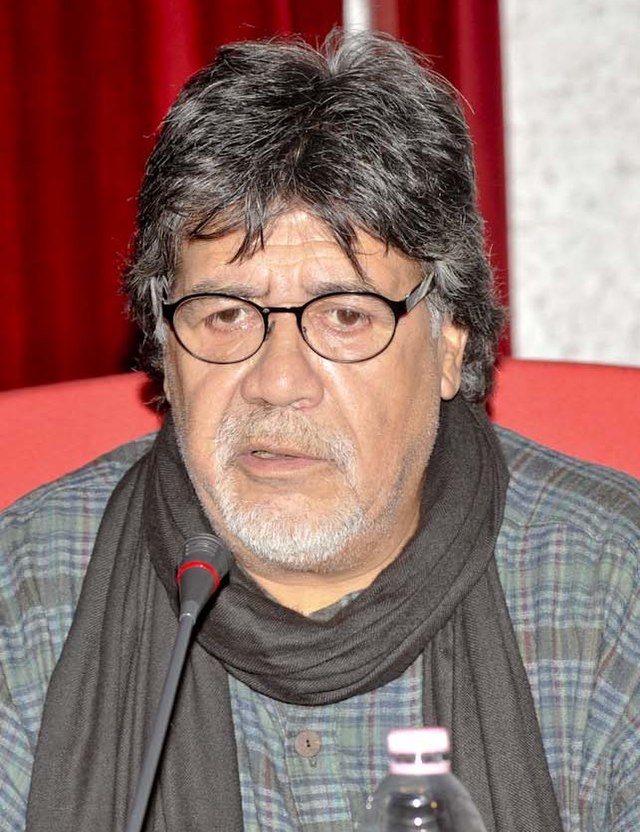
Luis Sepúlveda was a Chilean writer, poet, journalist, and political activist whose life was as captivating and tumultuous as the stories he penned. Born on October 4, 1949, in Ovalle, Chile, Sepúlveda’s journey through life was marked by his unyielding commitment to political ideals, his love for literature, and his passion for environmental activism. His works are celebrated for their lyrical prose, deep empathy for humanity, and a profound respect for nature. This article delves into the life of Luis Sepúlveda, exploring his rise to fame, his literary achievements, and the significant events that shaped his life and career.
Early Life and Influences
Luis Sepúlveda’s early life was deeply influenced by his family’s political and ideological leanings. He was born in a hotel room in Ovalle, a small city in northern Chile, under rather dramatic circumstances—his parents were fleeing from political persecution instigated by his maternal grandfather. This early exposure to political strife would later become a recurring theme in his life and work.
Raised in Valparaíso by his paternal grandfather, Gerardo Sepúlveda Tapia, an Andalusian anarchist who had fled Spain after being sentenced to death, Luis grew up surrounded by stories of resistance, rebellion, and adventure. His grandfather, along with his uncle Pepe, also an anarchist, and the literary works of authors like Emilio Salgari, Joseph Conrad, and Herman Melville, inspired in him a love for literature and a thirst for adventure.
Political Awakening and Early Activism
Sepúlveda’s political consciousness was awakened at a young age. By the time he was 15, he had joined the Communist Youth of Chile and started working as a journalist for the newspaper Clarín. His involvement in political movements deepened as he grew older. At just 20 years old, Sepúlveda won the prestigious Casa de las Américas Prize for his first book of short stories, Crónicas de Pedro Nadie. This early success in his literary career earned him a scholarship to study dramaturgy at the Lomonosov Moscow State University.
However, his time in Moscow was cut short after only four months due to what was deemed “behavior contrary to public morals.” This expulsion, reportedly triggered by his affair with a professor’s wife, marked the beginning of Sepúlveda’s peripatetic life, one characterized by constant movement, political activism, and literary creation.
Return to Chile and Involvement with Salvador Allende
Upon his return to Chile, Sepúlveda found himself at odds with his father and was subsequently expelled from the Communist Youth. Unfazed, he shifted his allegiance and joined the Ejército de Liberación Nacional (National Liberation Army) in Bolivia. His experiences in Bolivia further radicalized him, and upon returning to Chile, he earned a degree in theater direction, produced plays, wrote stories, worked in radio, and became involved in agricultural cooperatives.
During this time, Sepúlveda also joined the Socialist Party and became a member of the personal guard of President Salvador Allende, Chile’s first Marxist president elected through open elections. These years, often referred to as the “Thousand Days of the Popular Government,” were some of the most intense and rewarding in Sepúlveda’s life. He later described these days as a time of profound engagement with political activism, intellectual growth, and camaraderie among those who believed in the possibility of a better world.
Imprisonment and Exile
The 1973 military coup led by General Augusto Pinochet, which overthrew Allende’s government, marked a dark period in Sepúlveda’s life. He was arrested, tortured, and imprisoned for his political activities. For seven months, Sepúlveda was confined in a tiny cell at the Tucapel barracks, a space so small he could neither stand nor lie down fully. His release was secured only after Amnesty International intervened, leading to the commutation of his death sentence to eight years of exile.
Instead of heading to Sweden, where he had been promised a teaching position at the University of Uppsala, Sepúlveda chose to flee to Brazil, then Paraguay, and finally Quito, Ecuador. His time in exile only deepened his resolve and broadened his experiences. In Ecuador, he returned to theater and participated in an UNESCO expedition to study the impact of civilization on the Shuar indigenous people. His time living with the Shuar in the Amazon for seven months provided the inspiration for one of his most famous novels, The Old Man Who Read Love Stories.
Literary Fame and Environmental Activism
Sepúlveda’s experiences in the Amazon not only influenced his writing but also kindled a lifelong commitment to environmentalism. After receiving Nicaraguan citizenship and spending several years in Hamburg, Germany, he began working with Greenpeace in the early 1980s. His work with Greenpeace took him around the world, and his passion for environmental issues became a central theme in his writings.
Sepúlveda’s literary career flourished in the 1990s. His novel The Old Man Who Read Love Stories (1989) was a critical and commercial success, translated into numerous languages and adapted into a film in 2000. The novel is a poignant exploration of the clash between indigenous cultures and the encroaching forces of modernity, a theme that resonated deeply with readers around the world.
His other works, such as The Power of Dreams and Chronicles of the South Cone, showcase his ability to blend lyrical prose with sharp social commentary. Sepúlveda’s writing is often characterized by its poetic intensity, moral conviction, and a deep sense of empathy for the marginalized and oppressed.
Life in Spain and Continued Success
In 1996, Sepúlveda settled in Gijón, Spain, with his wife Carmen Yáñez, a poet and his long-time companion, and their children. His life in Spain was marked by continued literary productivity and activism. Sepúlveda’s later works, such as Patagonia Express and Diary of a Sentimental Killer, further established his reputation as a master storyteller with a unique voice.
His ability to weave together personal, political, and environmental narratives made his work stand out in the literary world. Sepúlveda’s stories often reflected his own life’s adventures, struggles, and his unwavering belief in the power of words to effect change.
Personal Life and Legacy
Luis Sepúlveda’s personal life was as colorful and complex as his literary creations. He was married twice to Carmen Yáñez, first in the early years of his life and then after a brief marriage to a German woman. The couple had two sons together, and Yáñez, herself a survivor of Pinochet’s dictatorship, remained his steadfast companion through the many trials and triumphs of his life.
Sepúlveda’s works often explored themes of love, loyalty, and the search for meaning in a world fraught with injustice. His deep love for nature, evident in works like The Old Man Who Read Love Stories, resonated with readers worldwide and earned him a lasting place in the pantheon of great Latin American writers.
In 2020, Sepúlveda and his wife contracted the novel coronavirus (SARS-CoV-2) during the early days of the global pandemic. Sepúlveda, one of the first prominent figures to be affected by the virus, was hospitalized in Oviedo, Spain. Despite receiving intensive care, he succumbed to the illness on April 16, 2020, at the age of 70. His death marked the loss of a powerful literary voice and a passionate advocate for social justice and environmental sustainability.
Historical Context and Impact on Literature
Luis Sepúlveda’s life and work cannot be separated from the broader historical and political context of Latin America in the 20th century. He lived through some of the most tumultuous periods in Chilean history, from the optimism of Allende’s presidency to the brutality of Pinochet’s dictatorship. His experiences as a political prisoner, exile, and activist deeply informed his literary output.
Sepúlveda was part of a generation of Latin American writers who used literature as a tool for political resistance and social change. His works are often compared to those of Gabriel García Márquez, Isabel Allende, and Mario Vargas Llosa, although his unique blend of lyrical prose and sharp political commentary set him apart.
His commitment to environmental causes also positioned him as a significant voice in the emerging field of eco-literature. Sepúlveda’s ability to draw connections between the exploitation of nature and the oppression of marginalized communities made his work particularly relevant in an era of increasing environmental awareness.
Conclusion
Luis Sepúlveda’s life was a testament to the power of literature to inspire change and the resilience of the human spirit in the face of adversity. His works continue to be read and celebrated around the world, not only for their literary merit but also for the profound humanism and empathy that they convey.
Sepúlveda’s legacy as a writer, activist, and environmentalist endures, reminding us of the importance of standing up for justice, protecting the natural world, and telling stories that matter. As we reflect on his life and work, we are reminded that the most powerful stories are those that not only entertain but also challenge us to see the world through new eyes and to act with greater compassion and courage.


