
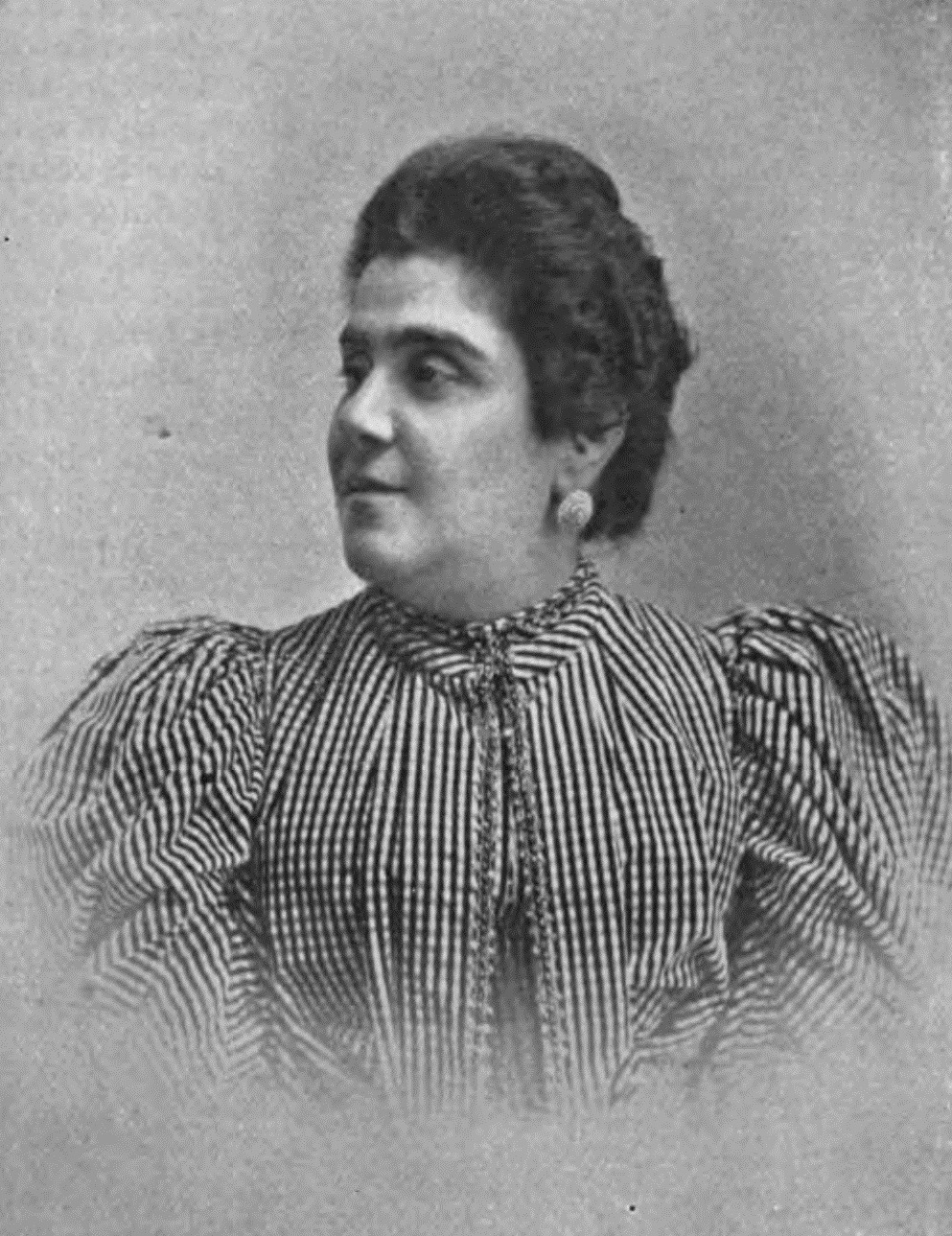
Matilde Serao, a towering figure in Italian literature and journalism, is best remembered for her pioneering role as the first Italian woman to found and direct a newspaper. Her life, spanning from her birth in Greece on March 7, 1856, to her death in Naples on July 25, 1927, was marked by a relentless pursuit of literary excellence and journalistic innovation. Serao’s legacy is not only defined by her prolific output of over seventy literary works but also by her indelible impact on the Italian journalistic landscape, especially during a time of significant cultural and technological transitions. This article explores her age, rise to fame, and the key highlights that have cemented her place in history.
Early Life and Education
Matilde Serao was born in the Greek city of Patras, the daughter of Francesco Serao, an Italian lawyer and journalist with strong anti-Bourbon sentiments, and Paolina Borely, a noblewoman of Greek descent. The political turmoil of the mid-19th century had forced her father into exile, and it wasn’t until the unification of Italy in 1860 that the family returned to their homeland. Initially settling in Ventaroli near Carinola, they later moved to Naples, where Matilde would spend most of her life.
Despite the family’s financial difficulties, which prevented her from receiving a formal education, Serao displayed an early affinity for literature and writing. Her father’s involvement in journalism provided her with a unique environment that nurtured her talents from a young age. By the age of fifteen, Serao had enrolled as an auditor at the “Eleonora Pimentel Fonseca” Normal School in Naples, where she continued to educate herself, largely as an autodidact.
In 1872, Serao made a significant personal decision by converting from the Orthodox faith of her mother to Catholicism, a move that marked her deepening connection to her Italian roots and cultural identity. This period also saw her taking on a job as an auxiliary at the State Telegraphs, a role she held for four years, during which her passion for literature and journalism continued to grow.
Entry into Journalism and Literary Beginnings
Serao’s formal entry into journalism began in 1878 when she started contributing articles to the Giornale di Napoli. Writing under the pseudonym “Tuffolina,” she quickly made a name for herself with her vibrant and incisive prose. Her first novella, Opale, was published in Corriere del Mattino in 1878, marking the beginning of her illustrious career as a writer.
In 1882, Serao moved to Rome, where she joined the editorial team of Capitan Fracassa, a cultural and literary magazine. Here, she wrote on a variety of topics, from society gossip to literary criticism, under the pseudonym “Ciquita.” It was in Rome that she published her first significant work of fiction, Fantasia (1883), which opened the doors to her recognition as a major Italian novelist. Interestingly, this work also caught the attention of Edoardo Scarfoglio, a journalist and poet who would later become her husband, despite his initial harsh critique of the novel.
Marriage and Professional Partnership with Edoardo Scarfoglio
Matilde Serao’s marriage to Edoardo Scarfoglio in 1885 was a union of two formidable literary minds, though it was also fraught with challenges. The couple collaborated on several journalistic ventures, starting with their work at Corriere di Roma, a newspaper founded by Scarfoglio. During this period, Serao continued to write prolifically, producing notable works such as Il ventre di Napoli (1884), a vivid depiction of the struggles of Naples’ lower classes, and La conquista di Roma (1885), which explored the political and social dynamics of Italy’s capital.
Their partnership extended to the founding of Il Corriere di Napoli, a newspaper that played a crucial role in shaping public opinion in southern Italy. However, despite its cultural significance, the newspaper faced financial difficulties. Nevertheless, it was during this time that Serao conceived one of her most enduring contributions to Italian journalism: the column I mosconi, originally titled Api, vespe e mosconi. This column became famous for its sharp wit and incisive social commentary, establishing Serao as a leading voice in Italian journalism.
Founding of Il Mattino and Personal Turmoil
In 1891, Serao and Scarfoglio co-founded Il Mattino, a newspaper that would go on to become one of Italy’s most influential dailies. Scarfoglio served as the director, while Serao took on the role of co-director, managing the cultural sections of the paper. Il Mattino quickly gained a reputation for its high editorial standards and its role in promoting literary and cultural discourse in Italy.
However, the success of Il Mattino was overshadowed by personal turmoil in Serao’s life. Her marriage to Scarfoglio became increasingly strained due to his infidelities. In 1892, Scarfoglio began an affair with Gabrielle Bessard, a theater singer, which led to a tragic series of events. When Bessard became pregnant, Scarfoglio abandoned her, prompting her to take her own life in front of the Scarfoglio-Serao home. Despite the public scandal, Serao chose to care for Bessard’s daughter, Paolina, a decision that highlighted her resilience and compassion.
The scandal and Scarfoglio’s behavior ultimately led Serao to leave both her husband and Il Mattino. This departure marked a significant turning point in her life, both personally and professionally.
Founding of Il Giorno and Continued Literary Achievements
Undeterred by her departure from Il Mattino, Serao embarked on a new chapter of her career by founding Il Giorno in 1903. This newspaper, which she directed with her second husband, Giuseppe Natale, was a reflection of her political and cultural beliefs. Unlike Il Mattino, Il Giorno was known for its more moderate tone, though it still tackled significant social and political issues of the day. Under Serao’s leadership, the newspaper enjoyed considerable success, further solidifying her status as a trailblazer in the world of journalism.
Serao’s literary output continued unabated during this period. She published several important works, including Il paese di cuccagna (1891), which provided a poignant critique of Neapolitan society, and La virtù di Cecchina (1906), a novel that explored themes of morality and social justice. Her writing was characterized by a deep empathy for the plight of the poor and a keen understanding of the complexities of Italian society.
In 1926, Serao’s contributions to literature were recognized with a nomination for the Nobel Prize in Literature. Although she did not win—losing out to Grazia Deledda, another prominent Italian writer—the nomination was a testament to her enduring influence and the respect she commanded in literary circles.
Legacy and Influence on Italian Journalism
Matilde Serao’s death on July 25, 1927, marked the end of an era in Italian journalism and literature. She passed away in her beloved city of Naples, at her desk, in the midst of her work—a fitting end for a woman whose life was so deeply intertwined with her craft.
Serao’s legacy is multifaceted. As a journalist, she was a pioneer, breaking new ground for women in a male-dominated field and setting new standards for editorial excellence. Her innovative approach to journalism, particularly her use of competitions and giveaways to attract subscribers, was ahead of its time and demonstrated her keen business acumen.
As a writer, Serao’s works remain important both for their literary merit and for their social commentary. Her novels and essays offer invaluable insights into the lives of ordinary Italians during a period of significant social and political change. Serao’s ability to combine her journalistic skills with her literary talents allowed her to create works that were both engaging and thought-provoking, making her a beloved figure in Italian culture.
Serao’s influence can still be felt today, both in the world of journalism and in the broader cultural landscape. She paved the way for future generations of women journalists and writers, proving that it was possible to succeed in these fields through talent, determination, and a willingness to challenge the status quo.
Conclusion
Matilde Serao was a visionary whose work transcended the boundaries of journalism and literature. Her life story is one of resilience, innovation, and unwavering dedication to her craft. From her early days in Naples to her role as a pioneering newspaper editor and acclaimed novelist, Serao’s contributions have left an indelible mark on Italian culture. As we reflect on her life and achievements, it is clear that Matilde Serao was not just a product of her time but a force that helped to shape the future of journalism and literature in Italy.
Her story is a testament to the power of perseverance and the impact one individual can have on the world. Matilde Serao’s legacy will continue to inspire and influence for generations to come, reminding us of the importance of courage, creativity, and commitment to excellence in all endeavors.


