
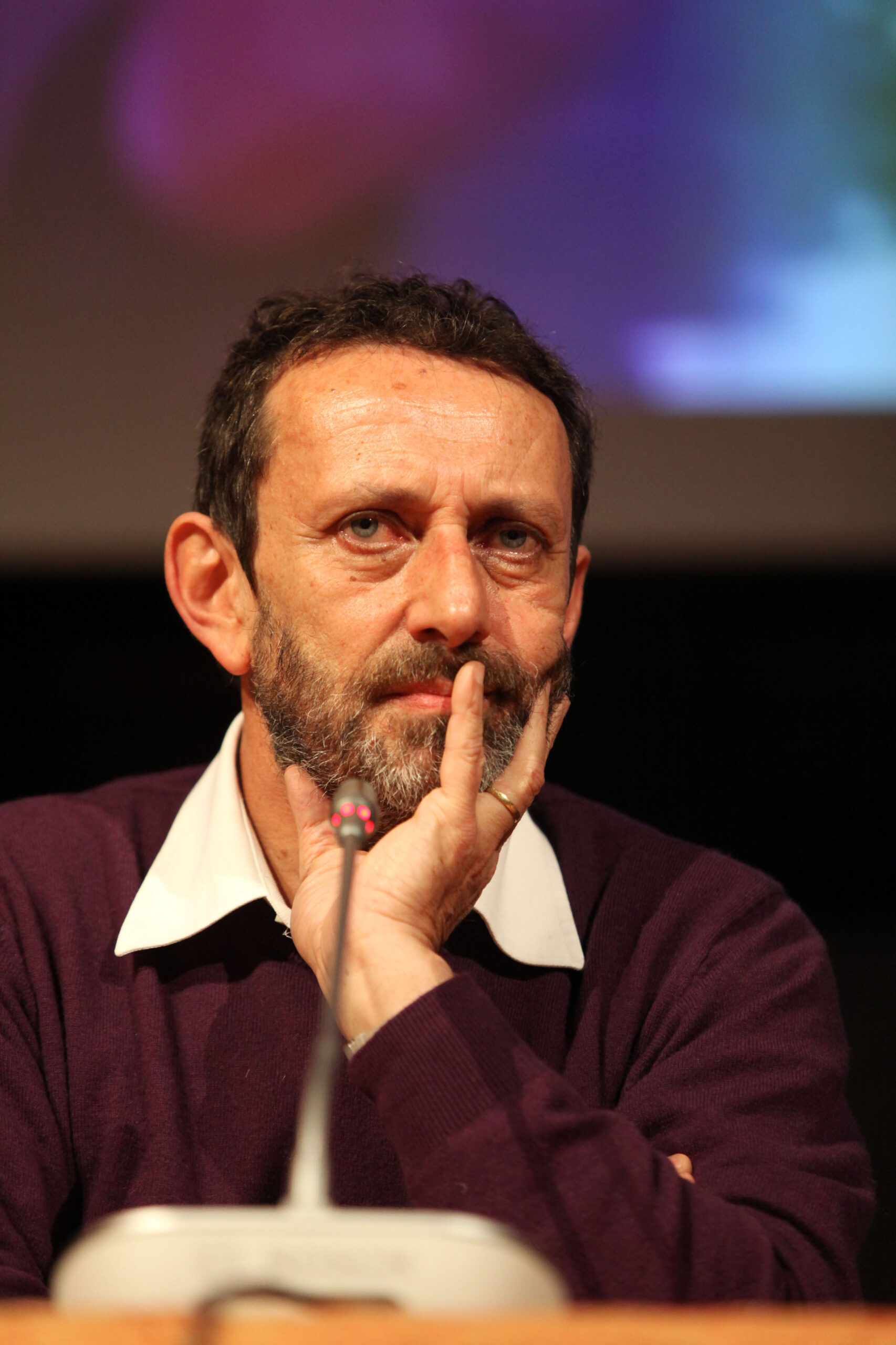
Michele Serra is an influential figure in Italian journalism and literature, known for his sharp wit, insightful political commentary, and a diverse body of work that spans various mediums. Born on July 10, 1954, in Rome, Serra has made significant contributions to the cultural and political discourse in Italy. This article delves into his life, exploring his age, the rise to fame, and the key highlights that have defined his illustrious career.
Early Life and Education
Michele Serra was born into a family that valued education and intellectualism. At the age of five, his family moved from Rome to Milan, where he would spend much of his formative years. Serra attended the prestigious Manzoni High School, where he obtained a classical diploma. His passion for literature and the arts led him to enroll in the Faculty of Modern Literature. However, he interrupted his studies during his third year to pursue a career in journalism, marking the beginning of his long and varied career in the media.
The Beginning of a Journalism Career
Serra’s entry into journalism was somewhat serendipitous. He began working for the newspaper L’Unità, a publication associated with the Italian Communist Party, as a dimafonista, a role that involved transcribing recordings. His talent and dedication quickly earned him a promotion to a full-fledged reporter and later to a sports correspondent. Serra’s writing, characterized by its sharp wit and insightful analysis, soon caught the attention of his peers.
Serra’s early work was diverse, covering everything from disc reviews and political notes to sports columns and travel chronicles. His ability to navigate different topics with ease and his commitment to the leftist cause defined his early career. In 1974, Serra formally joined the Italian Communist Party, further solidifying his ideological stance and commitment to social issues.
Rise to Fame Through Satire
The mid-1980s marked a significant turning point in Serra’s career. In 1986, he began writing satirical pieces for Tango, a satirical supplement of L’Unità directed by Sergio Staino. Serra’s satire was not only sharp but also resonated deeply with the public, earning him the Political Satire Award at Forte dei Marmi in the same year.
His success in satire led to the founding of Cuore in 1989, a satirical magazine that he directed after the closure of Tango. Cuore quickly became a cultural phenomenon in Italy, known for its biting humor and incisive political commentary. Despite its success, Serra faced challenges, including a failed bid for the European Parliament in 1989 as a candidate for the Italian Communist Party. However, he remained undeterred and continued to make significant contributions to Italian journalism and literature.
Literary Contributions and Theatrical Involvements
Beyond journalism, Serra has made significant contributions to literature and theater. In 1990, he published his first collection of short stories, Il nuovo che avanza, which was well-received by critics and readers alike. His literary style, a blend of satire, social commentary, and personal reflection, has made him a unique voice in Italian literature.
Serra’s involvement in theater is equally noteworthy. He co-wrote the theatrical recital Buone notizie with Beppe Grillo, marking Grillo’s debut in theater under the direction of Giorgio Gaber, a legendary figure in Italian theater. This collaboration highlighted Serra’s versatility and his ability to engage with different forms of storytelling.
Political Activism and Continued Journalism
Serra’s commitment to political activism has been a constant throughout his career. In 1990, he resigned from his position at Epoca in protest against Silvio Berlusconi’s acquisition of the magazine, a move that was part of the larger media battle known as the Segrate War. This act of protest underscored Serra’s principled stance and his unwillingness to compromise his values.
His political activism also saw him joining various political movements, including the Verdi Arcobaleno, the Antiprohibitionists, and the Radical Party. These affiliations were not without controversy, as they often put him at odds with the Italian Communist Party. However, Serra’s actions were driven by a desire to see the left in Italy unite into a cohesive and effective force.
In 1996, Serra began a long-standing collaboration with La Repubblica, one of Italy’s leading newspapers. He wrote a daily column titled L’amaca (The Hammock), where he provided witty and incisive commentary on current events. This column became a staple of the newspaper and further cemented Serra’s reputation as one of Italy’s most respected journalists.
Serra also contributed to L’Espresso, a prestigious Italian magazine, where he curated a column titled Satira preventiva (Preventive Satire). His work in these publications showcased his ability to blend humor with serious commentary, making complex political issues accessible to a broader audience.
Expanding Literary and Theatrical Horizons
Serra’s literary career continued to flourish in the late 1990s and 2000s. In 1997, he published his first novel, Il ragazzo mucca (The Cow Boy), which explored themes of identity and social alienation. The novel was followed by a series of successful books, including Cerimonie (Ceremonies), which won the Procida Prize in 2002.
His involvement in theater also deepened during this period. He co-wrote Giù al Nord (Down to the North) with Antonio Albanese, a popular Italian comedian and actor. The play, which premiered in 1997, was a critical success and further demonstrated Serra’s skill as a playwright.
Serra’s ability to adapt his writing to different mediums was evident in his collaboration with television as well. He was one of the writers for Che tempo che fa, a popular talk show hosted by Fabio Fazio on Rai 3. Serra’s contributions to the show included witty monologues and sharp political satire, which became a hallmark of the program.
Later Years and Legacy
In recent years, Michele Serra has continued to be an influential figure in Italian journalism and literature. His work remains as relevant as ever, with his columns and books continuing to resonate with readers. Serra’s legacy is one of intellectual rigor, sharp wit, and an unwavering commitment to social justice.
His influence extends beyond his writing. Serra has inspired a generation of journalists and writers in Italy, who look to his work as a model of how to engage with the world critically and thoughtfully. His contributions to Italian culture, whether through his journalism, literature, or theater, have left an indelible mark.
Conclusion
Michele Serra is a towering figure in Italian culture, known for his incisive journalism, satirical wit, and literary prowess. From his early days at L’Unità to his current work with La Repubblica and L’Espresso, Serra has consistently pushed the boundaries of what journalism and literature can achieve. His life and career offer a rich tapestry of experiences that reflect the social and political changes in Italy over the past several decades.
As we look back on Serra’s career, it is clear that his work has not only shaped Italian journalism but has also provided a critical lens through which to view the world. Whether through his satirical columns, his novels, or his plays, Michele Serra continues to be a vital voice in the ongoing conversation about politics, culture, and society.


