
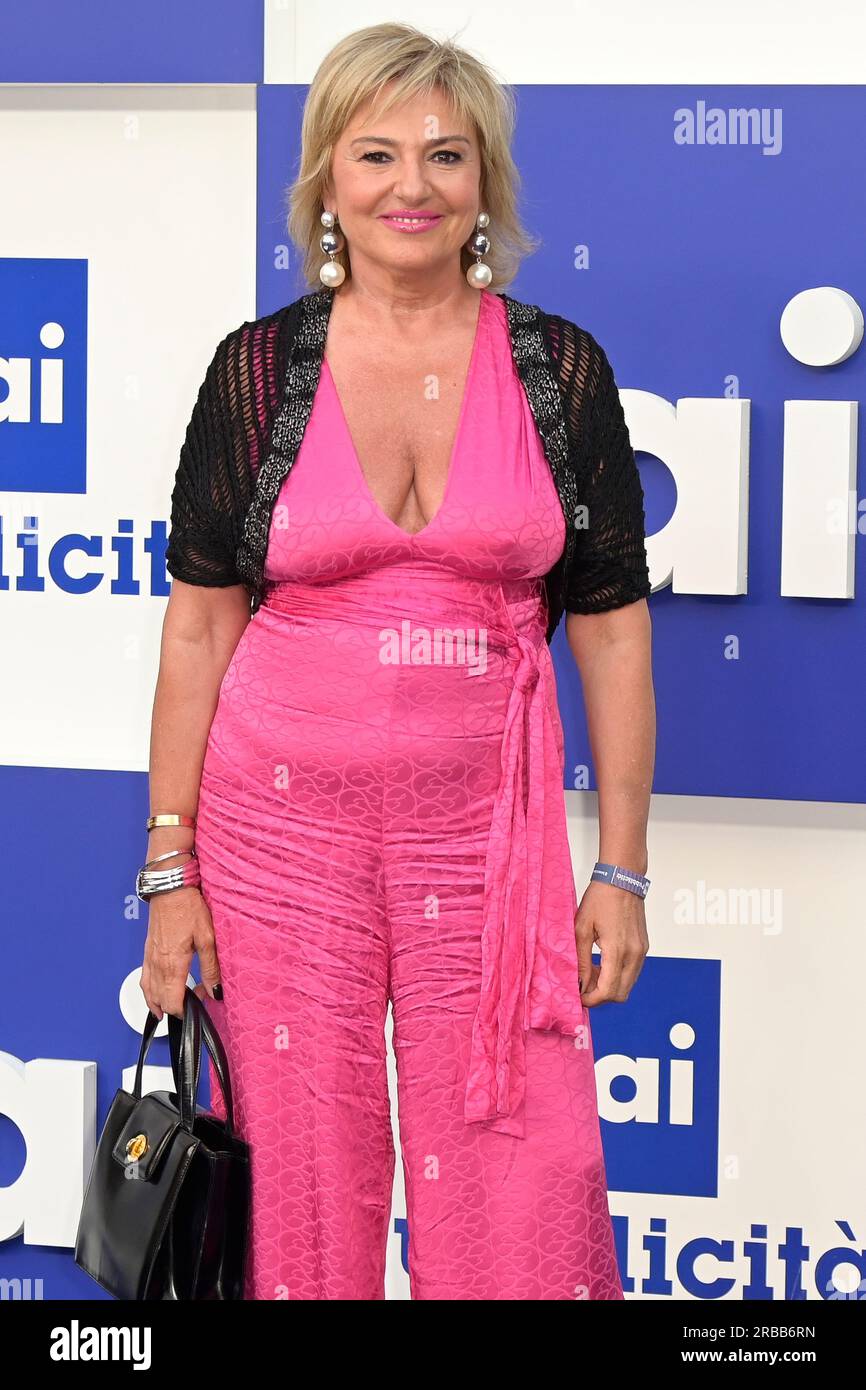
Monica Setta is a prominent Italian journalist, television presenter, and author who has made a significant mark in the fields of media and broadcasting. Born on August 5, 1964, in Brindisi, Italy, Setta has built a distinguished career, known for her sharp intellect, engaging television presence, and insightful commentary on political and social issues.
Early Life and Education
Monica Setta was born and raised in the southern Italian town of Brindisi. From a young age, she exhibited a strong interest in literature, culture, and current affairs. Her passion for knowledge led her to pursue a degree in philosophy, a field that would provide her with a solid foundation in critical thinking and analytical skills. This academic background would later prove invaluable in her journalism career, allowing her to approach complex issues with depth and nuance.
Entry into Journalism
Monica Setta began her professional journey in journalism in the late 1980s. In 1989, she officially became a professional journalist, marking the start of a career that would span over three decades. Her early work focused on financial journalism, where she contributed to respected publications such as “Il Giorno” and “Milano Finanza.” These roles helped Setta develop a reputation for her expertise in economic and financial matters, making her a trusted voice in the field.
As she honed her craft, Setta’s career trajectory took a significant turn when she was appointed as the head of service for “La Voce,” a Roman newspaper. This position allowed her to take on more responsibility and showcase her leadership skills, further cementing her place in the competitive world of journalism.
Rise to Prominence in Media
The mid-1990s marked a period of rapid career advancement for Monica Setta. In 1996, she joined RCS MediaGroup, one of Italy’s largest publishing companies, where she held the position of editor-in-chief. Initially, she worked for “Capital,” a prominent magazine focusing on business and finance. Her role at “Capital” allowed her to influence the publication’s editorial direction, bringing in a fresh perspective and expanding its readership.
In 2001, Setta took on a new challenge as the editor-in-chief of “Io Donna,” a women’s magazine published by “Corriere della Sera,” one of Italy’s most prestigious newspapers. Under her leadership, “Io Donna” flourished, becoming a leading voice in discussions on women’s issues, lifestyle, and culture. Setta’s ability to connect with readers through her insightful and relatable writing played a crucial role in the magazine’s success.
Transition to Television
While Monica Setta had already established herself as a respected journalist, it was her transition to television that truly catapulted her to national fame. Her television career began with hosting roles on La 7, a prominent Italian TV channel, where she presented a variety of programs that explored the intricacies of gossip, power, and the lives of influential women.
One of her most notable shows on La 7 was “Doppio misto,” which delved into the world of international gossip and revealed the hidden aspects of celebrity culture. Her ability to engage audiences with her sharp wit and deep understanding of the subject matter quickly made her a household name. Setta’s other notable television programs included “C’è modo e modo,” “Il cuore del potere,” and “Donne allo specchio,” each of which focused on different facets of society, politics, and personal dynamics.
Setta’s television presence continued to grow, and in 2003, she participated in the “DopoFestival” segment of the Sanremo Music Festival, one of Italy’s most watched and beloved annual events. This appearance further solidified her status as a versatile media personality capable of connecting with diverse audiences.
Dominance in Political Commentary
Monica Setta’s foray into political commentary came with her involvement in the long-running television program “Domenica In” on Rai Uno, Italy’s national broadcaster. During the 2006-2007 season, she hosted the political segment “Sette per Setta,” where she provided in-depth analysis and commentary on the week’s most pressing political issues. Her clear, articulate, and often incisive insights resonated with viewers, earning her a loyal following.
Her role on “Domenica In” extended through multiple seasons, and she continued to host the political segment under the title “Domenica In Politica” during the 2007-2008 and 2008-2009 seasons. Setta’s ability to dissect complex political situations and present them in a manner that was both accessible and engaging made her one of the most respected political commentators on Italian television.
Author and Literary Contributions
In addition to her work in journalism and television, Monica Setta is also an accomplished author. Over the years, she has penned several books, each offering a unique perspective on Italian society, politics, and the lives of influential figures. Her literary work often blends her journalistic insight with a deep understanding of human relationships and power dynamics.
One of her early books, “Berlusconi sul sofà” (1994), provided an intimate look at the life of Silvio Berlusconi, one of Italy’s most controversial and powerful political figures. The book offered readers a glimpse into Berlusconi’s personal and professional life, shedding light on the man behind the public persona.
Setta continued to explore themes of power and influence in her subsequent books. “Donne e potere” (2001) examined the role of women in positions of power, while “Cuore di manager” (2002) focused on the intersection of business leadership and personal values. In “I poteri forti” (2003), Setta delved into the concept of “strong powers” in Italian society, exploring the influence of various institutions and individuals on the country’s political landscape.
Her 2006 book, “Flavia e le altre. La moglie di Prodi e le compagne della politica,” offered a unique perspective on the lives of political spouses in Italy, with a particular focus on Flavia Prodi, the wife of former Prime Minister Romano Prodi. This book highlighted the often-overlooked role of women who support and influence their powerful husbands behind the scenes.
In “L’ho sposato per amore. Vita da First lady tra ragione e sentimento” (2007), Setta explored the complexities of life as a First Lady, blending historical accounts with personal stories to provide a comprehensive look at the emotional and practical challenges faced by women in this unique role.
Later Career and Continued Influence
Monica Setta’s career continued to evolve as she took on new roles and challenges. In 2009, she began hosting “Il fatto del giorno,” a daily talk show on Rai Due that aired during the afternoon. The show focused on current events, offering viewers a mix of news, interviews, and commentary. Setta’s ability to engage with her audience and her knack for asking probing questions made the show a success, further enhancing her reputation as a skilled and versatile presenter.
In 2010, Setta joined the jury of “Il più grande (italiano di tutti i tempi),” a Rai Due program that sought to determine the greatest Italian of all time. Hosted by Francesco Facchinetti, the show featured a diverse panel of judges who debated the merits of various historical figures. Setta’s participation in this program showcased her depth of knowledge and her ability to engage in lively, informed discussions.
Later that year, she began hosting “Peccati – i sette vizi capitali,” a late-night program that aired after “Annozero,” a popular political talk show hosted by Michele Santoro. “Peccati” explored the concept of the seven deadly sins, examining their relevance in contemporary society. The show allowed Setta to delve into moral and ethical issues, offering viewers a thought-provoking exploration of human behavior.
Legacy and Impact
Monica Setta’s influence on Italian media and journalism is undeniable. Over the course of her career, she has established herself as a leading figure in the fields of financial journalism, political commentary, and television presenting. Her ability to navigate complex topics with clarity and insight has earned her the respect of her peers and the admiration of her audience.
Setta’s work has also had a broader impact on Italian society. Through her books, television programs, and articles, she has contributed to important conversations about power, politics, and the role of women in society. Her willingness to tackle difficult subjects and challenge the status quo has made her a trailblazer in her field.
In a media landscape that is constantly evolving, Monica Setta has remained a constant presence, adapting to new formats and technologies while staying true to her core values of integrity, intelligence, and curiosity. As she continues to contribute to the world of journalism and media, there is no doubt that her legacy will endure for years to come.
Conclusion
Monica Setta is more than just a journalist and television presenter; she is a cultural commentator who has shaped the way Italians understand and engage with the world around them. Her career is a testament to the power of perseverance, intellect, and the ability to connect with an audience. As she continues to explore new avenues in her career, Monica Setta’s influence on Italian media will undoubtedly continue to grow, solidifying her place as one of the most important voices in contemporary journalism.


