
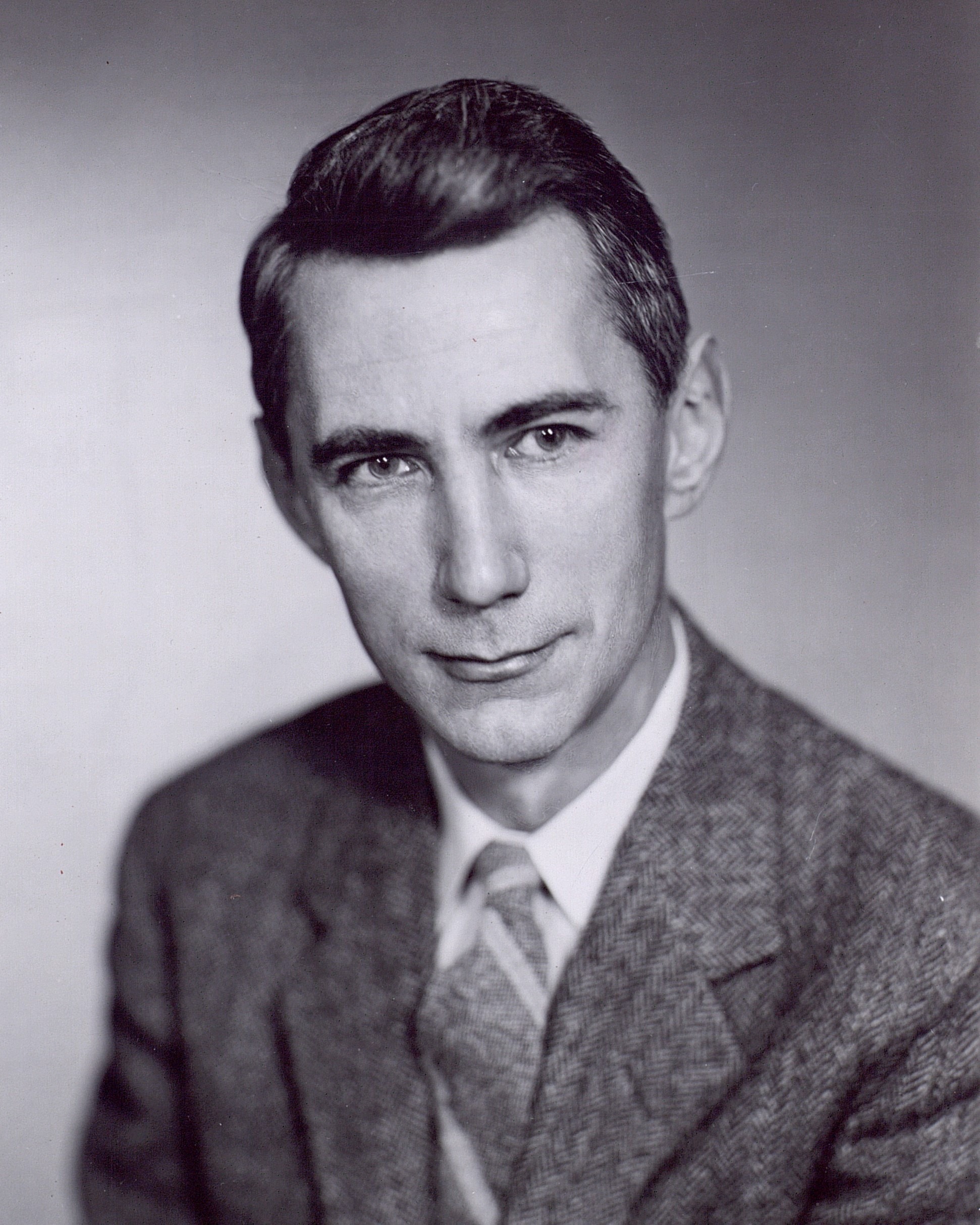
Claude Elwood Shannon, often hailed as the “Father of Information Theory,” was a pioneering mathematician, electrical engineer, and cryptographer whose work laid the foundation for the digital age. Born on April 30, 1916, in Petoskey, Michigan, Shannon’s innovative ideas revolutionized the way we understand and manipulate information. This article delves into the life and achievements of Claude Shannon, exploring his early life, significant contributions to science and technology, and his enduring legacy.
Early Life and Academic Beginnings
Claude Shannon was born into an intellectually vibrant family, with a lineage that traced back to the famous inventor Thomas Edison. This connection to one of the most prolific inventors in history perhaps foreshadowed Shannon’s future as a groundbreaking thinker. Growing up in Gaylord, Michigan, Shannon exhibited a natural curiosity for mechanical devices, often tinkering with gadgets and building small inventions during his childhood.
Shannon’s formal education began at the University of Michigan, where he pursued dual bachelor’s degrees in electrical engineering and mathematics, graduating in 1936. His multidisciplinary approach to learning would become a hallmark of his career, blending the precision of engineering with the abstract thinking required in mathematics. This combination of skills set the stage for his later work, where he would bridge the gap between theory and practical application.
The Path to MIT and Early Innovations
After completing his undergraduate studies, Shannon moved to the Massachusetts Institute of Technology (MIT) for his graduate studies. It was here that he began to explore the mathematical underpinnings of communication and information processing. His master’s thesis, completed in 1938, was a landmark achievement that introduced the idea of using Boolean algebra to simplify the design of electrical circuits. This work was revolutionary, demonstrating that electrical circuits could be analyzed and designed using the principles of symbolic logic. Shannon’s thesis is often credited as one of the most influential papers in the history of computer science, laying the groundwork for digital circuit design and, ultimately, the development of computers.
During his time at MIT, Shannon also worked at the Cold Spring Harbor Laboratory, where he applied his mathematical expertise to genetics, further showcasing his ability to apply mathematical principles across diverse fields. In 1940, he earned his Ph.D. from MIT with a dissertation titled “An Algebra for Theoretical Genetics,” blending his interest in mathematics and biology.
World War II and Work at Bell Labs
The outbreak of World War II saw Shannon being recruited to work at Bell Telephone Laboratories (Bell Labs), one of the most prestigious research institutions in the world. At Bell Labs, Shannon’s work focused on the development of secure communication systems, a critical area of research during the war. His contributions to cryptography were significant, culminating in his 1949 paper “Communication Theory of Secrecy Systems,” which laid the mathematical foundation for modern cryptography.
However, Shannon’s most famous work was published in 1948, in a paper titled “A Mathematical Theory of Communication.” In this seminal paper, Shannon introduced the concept of information entropy, a measure of uncertainty or information content, which became the cornerstone of information theory. This theory provided a quantitative framework for understanding communication systems, addressing how information could be encoded, transmitted, and decoded with minimal loss of data. Shannon’s work on information theory has had a profound impact on numerous fields, including telecommunications, data compression, and cryptography.
The Invention of the “Bit” and Legacy in Digital Technology
One of Shannon’s most enduring contributions to technology is the introduction of the “bit” as the basic unit of information. The term “bit,” short for binary digit, represents the most fundamental unit of data in digital systems, encapsulating the idea that all information can be represented as a series of binary choices—either 0 or 1. This concept is at the heart of modern computing and digital communication.
Shannon’s work extended beyond pure theory; he was deeply involved in practical applications of his ideas. His research on sampling theory, particularly the Nyquist-Shannon sampling theorem, provided the mathematical framework for converting continuous signals into discrete digital signals, a process that is essential in digital audio, video, and telecommunications systems. This theorem has become a fundamental principle in digital signal processing, enabling the digitization of analog signals, which is crucial for modern technologies such as CDs, DVDs, and digital broadcasting.
Academic Career and Continued Research
In addition to his work at Bell Labs, Shannon held a professorship at MIT from 1958 to 1978, where he continued to influence generations of engineers and scientists. His academic work during this period focused on expanding the applications of information theory and exploring new areas of research, such as artificial intelligence and robotics.
Shannon was known for his playful approach to research, often building mechanical devices and robots as part of his experiments. One of his famous creations was a mechanical mouse named “Theseus,” which could navigate a maze using relay-based memory, an early example of machine learning. Shannon’s creativity and willingness to explore unconventional ideas made him a beloved figure among his colleagues and students.
Personal Life and Interests
Despite his towering intellect, Shannon was known for his humility and quirky sense of humor. He had a wide range of interests outside of his professional work, including juggling, unicycling, and chess. These hobbies reflected his belief in the importance of maintaining a playful and inquisitive mindset, which he felt was crucial for creativity and innovation.
Shannon married Mary Elizabeth Moore, known as Betty, in 1949. Betty was a numerical analyst at Bell Labs, and the couple shared a deep intellectual connection, often collaborating on various projects. They had three children and maintained a close-knit family life. Shannon’s personal life was marked by his love of exploration and curiosity, whether in his professional work or his various hobbies.
Recognition and Legacy
Claude Shannon’s contributions to science and technology have been widely recognized. In 1956, he was elected a member of the National Academy of Sciences, one of the highest honors for an American scientist. Throughout his career, he received numerous awards and honors, including the IEEE Medal of Honor, the Kyoto Prize, and the National Medal of Science.
Shannon’s influence extends far beyond the accolades he received during his lifetime. His work laid the foundation for the digital revolution, influencing everything from the design of computer systems to the development of telecommunications networks. The concepts he introduced, such as information entropy and the bit, are now fundamental to the field of information technology.
In recognition of his impact, several statues have been erected in his honor, including those at the University of Michigan, MIT, and Bell Labs. In 2016, Google commemorated the 100th anniversary of Shannon’s birth with a special Google Doodle, celebrating his contributions to the field of information theory.
Shannon’s Enduring Influence
Claude Shannon’s legacy is not just confined to the realm of information theory. His interdisciplinary approach, blending mathematics, engineering, and computer science, has inspired countless researchers and practitioners. Shannon’s work demonstrated the power of abstract thinking and mathematical modeling in solving practical problems, a philosophy that continues to drive innovation in various fields today.
Moreover, Shannon’s playful attitude towards research serves as a reminder of the importance of curiosity and creativity in scientific inquiry. His ability to see connections between seemingly disparate fields allowed him to pioneer new areas of research and develop ideas that were far ahead of his time.
Conclusion
Claude Shannon’s life and work represent a unique blend of intellectual rigor, creativity, and practical application. As the father of information theory, Shannon’s contributions have shaped the digital world we live in today, influencing everything from the internet to modern telecommunications. His introduction of concepts like the bit and information entropy has provided the foundation for much of the technology that powers our daily lives.
Shannon’s legacy is a testament to the power of interdisciplinary research and the importance of maintaining a playful and curious approach to problem-solving. His work continues to inspire new generations of scientists, engineers, and mathematicians, ensuring that his influence will be felt for many years to come. As we continue to explore the ever-evolving landscape of digital technology, the principles and ideas pioneered by Claude Shannon will remain central to our understanding of how information is created, transmitted, and utilized in the modern world.


