
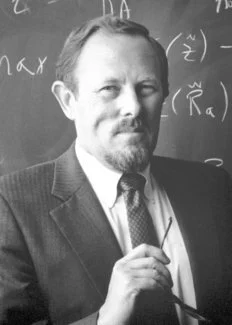
William Forsyth Sharpe, born on June 16, 1934, in Boston, Massachusetts, is an eminent economist renowned for his groundbreaking contributions to financial theory. Sharpe’s brilliance, both academically and professionally, has earned him international acclaim, including the Nobel Prize in Economic Sciences in 1990. This article explores Sharpe’s life, tracing his journey from his early academic pursuits to his significant impact on the world of finance.
Early Life and Academic Foundation
William F. Sharpe’s early life set the stage for his illustrious career. Growing up in an intellectually stimulating environment, he exhibited a penchant for analysis and mathematics from a young age. His academic journey began at the University of California, Los Angeles (UCLA), where he earned a Bachelor’s degree in 1955, followed by a Ph.D. in Economics in 1961. His time at UCLA was marked by a focus on interdisciplinary studies, a trait that would later define his approach to economics and finance.
The UCLA Medal and Early Career
Sharpe’s academic prowess did not go unnoticed. He was awarded the prestigious UCLA Medal, recognizing his significant contributions to the university and the broader academic community. After completing his doctorate, Sharpe joined the RAND Corporation, a think tank where he engaged in a wide range of studies, including game theory, economics, and computer science. His work at RAND was instrumental in shaping his analytical approach and set the foundation for his future endeavors in financial theory.
Academic Contributions and Interdisciplinary Approach
In the early 1960s, Sharpe transitioned to academia, accepting a faculty position at the University of Washington’s School of Business. His interdisciplinary approach to economics and finance distinguished him as a unique voice in the field. He believed that these disciplines were deeply intertwined with all aspects of human life, particularly in a rapidly evolving society. This belief led him to advocate for a more integrated approach to the study and application of economic principles.
In 1968, during a period of significant social and academic upheaval, Sharpe played a key role in establishing an interdisciplinary and quantitative School of Social Sciences at the University of California, Irvine. His involvement in this initiative highlighted his commitment to breaking down traditional academic silos and fostering a more holistic understanding of social and economic phenomena.
The Capital Asset Pricing Model (CAPM) and the Sharpe Ratio
Perhaps Sharpe’s most notable contribution to financial theory is the development of the Capital Asset Pricing Model (CAPM). The CAPM is a cornerstone of modern financial economics, providing a framework for understanding the relationship between risk and expected return in the context of portfolio management. This model has become an essential tool for financial analysts and investors, helping them make informed decisions about asset allocation and risk management.
In addition to the CAPM, Sharpe also developed the Sharpe Ratio, a measure used to evaluate the performance of investment portfolios. The Sharpe Ratio assesses the return of an investment relative to its risk, offering investors a way to compare the performance of different portfolios on a risk-adjusted basis. These contributions have had a profound impact on the field of finance, shaping both theoretical research and practical investment strategies.
Stanford University and Financial Innovation
In the late 1960s, Sharpe accepted a position at Stanford University’s Graduate School of Business, where he continued to advance his research in financial economics. His work at Stanford further solidified his reputation as a leading figure in the field. During this period, Sharpe also began to engage in consulting work, applying his theoretical insights to real-world financial problems.
Sharpe’s consulting work included roles at major financial institutions such as Merrill Lynch and Wells Fargo Investment Advisors. His contributions in this capacity were aimed at bridging the gap between financial theory and practice, helping institutions apply academic insights to enhance their investment strategies and risk management processes.
Founding of Sharpe-Russell Research and Financial Engines, Inc.
In 1986, Sharpe founded his own consulting firm, Sharpe-Russell Research, which later became William F. Sharpe Associates. The firm specialized in developing tools and procedures to assist pension funds and foundations in optimizing their asset allocations. Sharpe’s work in this area was driven by his belief that demographic changes and the increasing complexity of financial markets required innovative solutions to ensure the long-term sustainability of retirement systems.
Sharpe’s commitment to practical financial solutions also led him to establish Financial Engines, Inc., an online advisory service aimed at helping individual investors manage their retirement portfolios. Financial Engines provided personalized investment advice, leveraging Sharpe’s insights into risk management and portfolio optimization to help users achieve their financial goals.
Personal Life and Interests
In addition to his professional achievements, William Sharpe has led a fulfilling personal life. In 1986, he married Katryn, an accomplished artist who also played a role in his professional endeavors as an administrator of his consulting firm. The couple shares a love for sailing, opera, and sports, particularly football and basketball. Sharpe’s ability to balance a demanding career with his personal interests speaks to his multifaceted personality and his commitment to living a well-rounded life.
Nobel Prize and Recognition
William F. Sharpe’s contributions to financial economics were recognized with the Nobel Prize in Economic Sciences in 1990. He shared the award with Harry Markowitz and Merton Miller, two other pioneers in the field, for their collective work on the theory of financial economics. The Nobel Prize cemented Sharpe’s status as one of the most influential economists of his time, acknowledging the profound impact of his research on both academia and the financial industry.
In addition to the Nobel Prize, Sharpe has received numerous other accolades throughout his career. He served as the president of the American Finance Association and was awarded honorary degrees, including a Doctor of Humane Studies from DePaul University. These honors reflect the widespread recognition of Sharpe’s contributions to economics and finance, as well as his influence on generations of scholars and practitioners.
Legacy and Impact
William F. Sharpe’s legacy extends far beyond his individual achievements. His work has fundamentally altered the way economists and financial professionals think about risk, return, and portfolio management. The tools and models he developed have become integral to the practice of finance, shaping everything from academic research to the strategies employed by institutional investors.
Moreover, Sharpe’s commitment to interdisciplinary research has inspired a new generation of economists to explore the connections between finance, economics, and other social sciences. His belief in the importance of integrating different fields of study has led to a more nuanced and comprehensive understanding of economic and financial phenomena.
Conclusion
William F. Sharpe’s life and career offer a compelling example of how rigorous academic research can have a profound impact on the real world. From his early days at UCLA to his role as a Nobel laureate and leading financial consultant, Sharpe has consistently pushed the boundaries of economic thought and practice. His contributions to financial theory, particularly the CAPM and the Sharpe Ratio, have become foundational elements of modern finance. As we continue to navigate an increasingly complex financial landscape, Sharpe’s insights and innovations will remain as relevant as ever, guiding both scholars and practitioners in their pursuit of financial stability and growth.
In reflecting on William F. Sharpe’s legacy, it is clear that his work has not only transformed the field of financial economics but has also provided valuable tools for individuals and institutions seeking to navigate the challenges of modern finance. His interdisciplinary approach, combined with a deep understanding of both theory and practice, has left an indelible mark on the world of economics and finance, making him one of the most influential figures in the history of these disciplines.


