
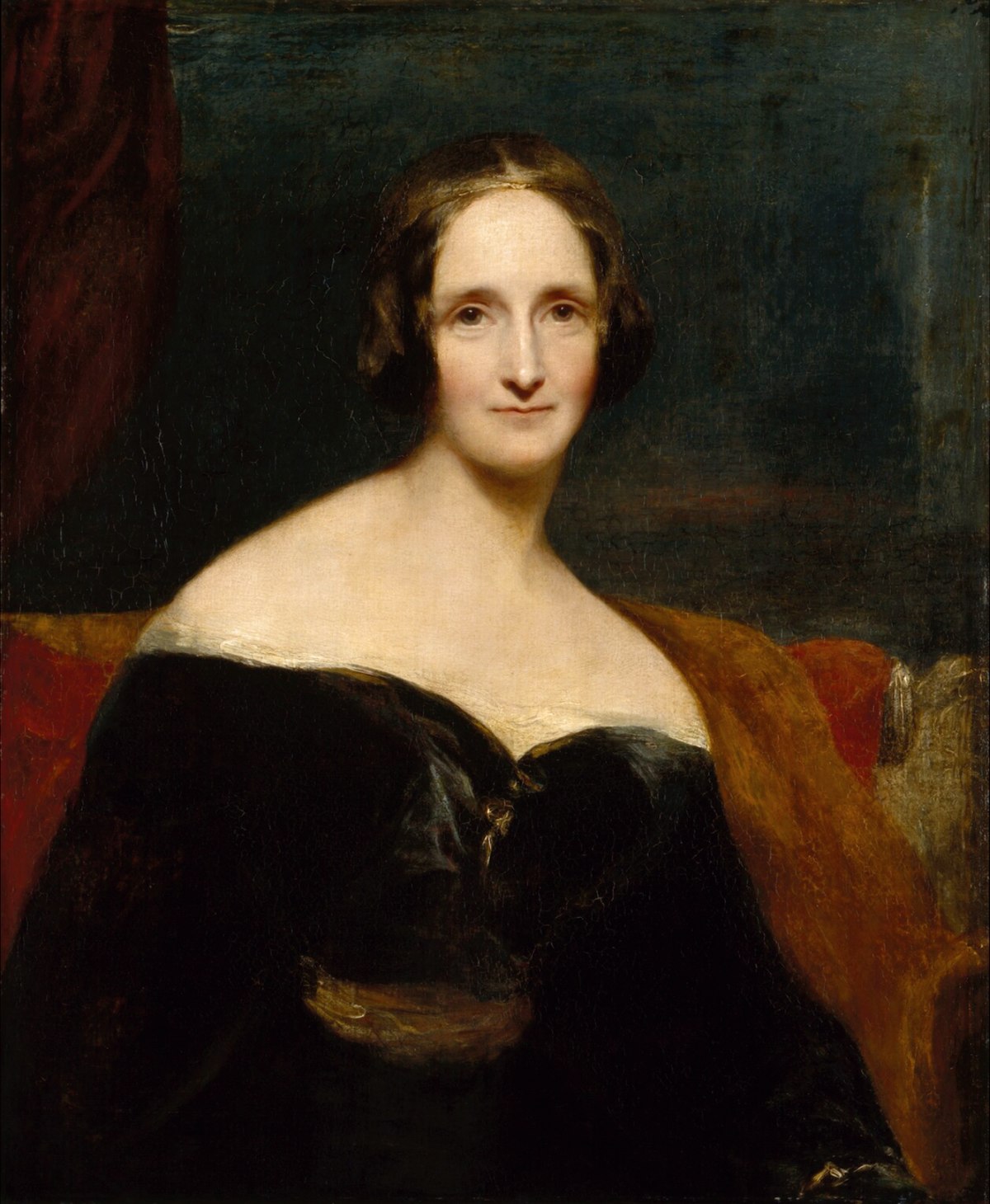
Mary Shelley, born Mary Wollstonecraft Godwin on August 30, 1797, in London, England, is one of the most renowned figures in English literature. She is best known as the author of the iconic novel Frankenstein; or, The Modern Prometheus, a work that has left an indelible mark on both the literary world and popular culture. Shelley’s life, marked by personal tragedy, intellectual brilliance, and a tumultuous romantic relationship, reflects the complexities and contradictions of her time. This article explores Mary Shelley’s life, her rise to fame, and the enduring legacy of her work.
Early Life and Intellectual Influences
Mary Shelley was born into an intellectual and progressive family. Her father, William Godwin, was a prominent philosopher and political thinker, known for his anarchistic views and his writings on political justice. Her mother, Mary Wollstonecraft, was a pioneering feminist and the author of A Vindication of the Rights of Woman, a foundational text in feminist philosophy. Tragically, Wollstonecraft died just days after Mary’s birth, leaving a profound void in her life. Despite this loss, Mary grew up surrounded by books and ideas, with her father’s intellectual circle including luminaries such as Samuel Taylor Coleridge and William Wordsworth.
Mary’s education was unorthodox for a woman of her time. She had access to her father’s extensive library and was encouraged to read widely. This exposure to radical ideas and literature from a young age profoundly shaped her worldview and writing. Mary was particularly influenced by the works of classical authors such as Ovid and the philosophical writings of John Locke and Jean-Jacques Rousseau, which explored themes of human nature, education, and society—themes that would later permeate her own work.
The Romantic Relationship with Percy Bysshe Shelley
Mary’s life took a dramatic turn when she met the poet Percy Bysshe Shelley in 1814. Percy, already a well-known figure in literary circles for his radical ideas and poetry, was married at the time, but he and Mary quickly fell in love. Their relationship was intense and controversial, marked by a shared passion for literature, philosophy, and radical politics. In July 1814, the couple eloped to France, a decision that scandalized society and strained their relationships with family and friends.
Their life together was far from easy. They traveled extensively across Europe, often struggling with financial difficulties and personal tragedies. Despite these hardships, their relationship was intellectually and creatively fruitful. Percy encouraged Mary in her writing, and the couple often collaborated on literary projects. Their shared experiences and the turbulent nature of their lives provided rich material for Mary’s creative work.
The Genesis of Frankenstein
The story of how Mary Shelley came to write Frankenstein is as legendary as the novel itself. In the summer of 1816, Mary and Percy Shelley, along with Mary’s stepsister Claire Clairmont, traveled to Lake Geneva, where they stayed with the poet Lord Byron and his physician, John Polidori. The weather that summer was unusually cold and stormy, leading the group to spend much of their time indoors. To pass the time, Byron suggested that each of them write a ghost story. This challenge led to the creation of two significant works: John Polidori’s The Vampyre, which laid the foundation for the modern vampire genre, and Mary Shelley’s Frankenstein.
Mary initially struggled to come up with a story, but one night she had a vivid dream that provided the inspiration she needed. In her dream, she saw a pale student of unhallowed arts kneeling beside the thing he had put together—a hideous figure that he had brought to life. This dream became the seed for Frankenstein, a novel that would explore profound questions about creation, responsibility, and the consequences of playing God.
Frankenstein: A Masterpiece of Gothic Literature
Frankenstein; or, The Modern Prometheus, published in 1818 when Mary was just 20 years old, is widely regarded as one of the first works of science fiction. The novel tells the story of Victor Frankenstein, a young scientist who creates a living being from the dead using scientific knowledge and experimentation. However, the creature he brings to life, though initially benevolent, becomes a monstrous figure after being shunned by society, leading to a series of tragic events.
The novel’s themes resonate with contemporary readers as much as they did with its original audience. Frankenstein explores the dangers of unchecked scientific ambition, the ethical implications of creating life, and the profound loneliness and alienation experienced by those who are different. The novel also reflects Mary Shelley’s own experiences and fears, particularly the sense of loss and abandonment she felt after the deaths of her mother and, later, her own children.
Frankenstein was published anonymously, with many assuming that Percy Shelley was the author, given his fame at the time. However, it quickly became clear that the novel was Mary’s creation, and it was soon hailed as a masterpiece of Gothic literature. The novel’s success established Mary Shelley as a significant literary figure, though she would continue to face challenges in her personal and professional life.
Personal Tragedies and Later Works
Mary Shelley’s life was marked by a series of personal tragedies that influenced her later work. After the publication of Frankenstein, Mary and Percy Shelley continued to travel across Europe. In 1822, they settled in Italy, but their time there was marred by the deaths of their two children. The loss of her children plunged Mary into deep grief, a theme that would recur in her later writings.
Tragedy struck again in 1822 when Percy Shelley drowned in a boating accident off the coast of Italy. His death left Mary devastated and financially strained. She returned to England with their only surviving child, Percy Florence Shelley, and focused on supporting herself through her writing.
Despite the difficulties she faced, Mary Shelley continued to write prolifically. Her later works include the novels Valperga (1823), The Last Man (1826), and Lodore (1835). Of these, The Last Man is perhaps the most significant, as it is one of the earliest examples of post-apocalyptic fiction. The novel, set in the late 21st century, tells the story of the last survivor of a global plague, reflecting Mary’s own sense of isolation and loss following the deaths of her loved ones.
Mary also dedicated herself to preserving and promoting Percy Shelley’s literary legacy. She edited and published his works, ensuring that his contributions to English literature would not be forgotten. Her devotion to his memory, combined with her own literary achievements, solidified her place in the pantheon of English Romantic writers.
The Legacy of Mary Shelley
Mary Shelley’s influence on literature and culture is profound and enduring. Frankenstein has been adapted countless times in various forms, including stage plays, films, television shows, and graphic novels. The character of Frankenstein’s monster has become an iconic figure in popular culture, representing the dangers of scientific hubris and the consequences of creating life.
Beyond Frankenstein, Mary Shelley’s work has inspired generations of writers, particularly in the science fiction and Gothic genres. Her exploration of complex themes such as the nature of humanity, the ethics of creation, and the power dynamics between creator and creation continue to resonate with contemporary audiences.
Mary Shelley’s life and work also offer valuable insights into the challenges faced by women writers in the 19th century. Despite the limitations placed on her by society, she managed to carve out a space for herself in the literary world and produce works of lasting significance. Her perseverance in the face of personal and professional obstacles serves as an inspiration to aspiring writers, particularly women, who seek to make their voices heard.
Conclusion
Mary Shelley’s life was as dramatic and complex as the stories she created. From her early years surrounded by intellectuals and radicals, to her tumultuous relationship with Percy Shelley, to her enduring legacy as the author of Frankenstein, Mary Shelley remains a towering figure in the history of English literature. Her work continues to be studied, adapted, and celebrated, reminding us of the enduring power of storytelling and the profound questions it can raise about the human condition.
As we reflect on Mary Shelley’s contributions to literature and culture, it is clear that her influence extends far beyond her own time. Her exploration of the ethical and philosophical implications of scientific discovery, as well as her insights into the human experience, continue to resonate with readers today. Mary Shelley’s legacy is not just that of the creator of Frankenstein, but of a writer whose work challenges us to think deeply about the world around us and our place within it.


