
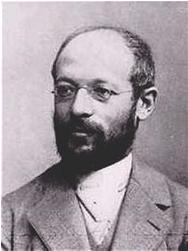
Georg Simmel, born on March 1, 1858, in Berlin, Germany, is widely recognized as one of the founding figures of sociology. His contributions to the field have had a profound and lasting impact, not only on sociology but also on philosophy and cultural theory. Simmel’s intellectual legacy is marked by his exploration of the complexities of modern life, the nature of social interactions, and the philosophical underpinnings of society. This article delves into Simmel’s life, his rise to fame, and the key highlights of his career, offering detailed insights into the nuances and historical context of his work.
Early Life and Education
Georg Simmel was born into a Jewish family that had converted to Christianity, a fact that would influence his later thinking about identity and society. His father, a successful businessman, died when Simmel was still a young boy, leaving the family in financial difficulties. Simmel’s upbringing in Berlin exposed him to the intellectual and cultural life of the city, which played a significant role in shaping his future academic pursuits.
In 1876, Simmel enrolled at the University of Berlin, initially intending to study law. However, his interests quickly shifted to philosophy, history, and psychology. Simmel’s academic journey was marked by his engagement with some of the most prominent thinkers of his time, including Theodor Mommsen, Eduard Zeller, and Hermann Grimm. His doctoral dissertation, completed in 1881, focused on the philosophy of Immanuel Kant, and it set the stage for his future work in both philosophy and sociology.
Academic Career and Contributions to Sociology
Simmel’s academic career began in earnest in 1885 when he was granted the position of Privatdozent (private lecturer) at the University of Berlin. This role, which allowed him to lecture independently, was pivotal in his development as a thinker and educator. Simmel quickly gained a reputation for his engaging and intellectually stimulating lectures, which attracted students and scholars from various disciplines. Notably, he was among the first university professors in Prussia to admit women into his lectures, a decision that reflected his progressive views on education and society.
One of Simmel’s early and significant contributions to sociology was his work on social differentiation, published in 1890 as “Social Differentiation.” In this work, Simmel explored how social structures and individual identities are formed through processes of differentiation and interaction. He argued that society is not a static entity but a dynamic network of relationships, where individuals and groups constantly influence and shape one another. This idea of society as a web of interactions would become a central theme in Simmel’s later work.
Simmel’s exploration of social forms and interactions led him to develop what he called “formal sociology.” This approach focused on analyzing the forms of social interaction—such as competition, cooperation, and conflict—independently of their content. By doing so, Simmel sought to uncover the underlying patterns and structures that govern social life. His work in this area laid the groundwork for later developments in sociology, particularly in the study of social networks and the dynamics of group behavior.
The Philosophy of Money and Cultural Critique
One of Georg Simmel’s most influential works is “The Philosophy of Money,” published in 1900. In this book, Simmel examined the social and cultural implications of money, arguing that it plays a central role in shaping modern society. Unlike Karl Marx, who focused on the material conditions of production, Simmel was interested in how money affects human relationships and social values.
Simmel proposed that money, as a medium of exchange, abstracts and quantifies human interactions, reducing the richness of social life to mere transactions. This process of abstraction, he argued, leads to a sense of alienation and a loss of meaning in social relationships. However, Simmel also acknowledged that money facilitates freedom and individual autonomy by allowing people to transcend traditional social structures.
“The Philosophy of Money” is not just an economic treatise; it is a profound critique of modernity and the complexities of life in an increasingly commodified world. Simmel’s analysis of money as a social form influenced later thinkers, including Max Weber and Theodor Adorno, and remains relevant in contemporary discussions about the effects of capitalism on society.
Sociability and the Art of Interaction
Another key area of Simmel’s work is his exploration of sociability—the art of interacting with others for the sake of the interaction itself. In his essay “The Sociology of Sociability,” Simmel described sociability as a form of social interaction that is stripped of any ulterior motives, such as economic gain or social status. Instead, it is driven by the pleasure of the interaction and the mutual recognition of each participant’s individuality.
Simmel argued that sociability is a vital aspect of social life because it allows individuals to engage with one another on equal terms, free from the pressures of hierarchy and competition. This idea reflects Simmel’s broader interest in the forms of social interaction and the ways in which individuals navigate the complexities of modern society.
Simmel’s concept of sociability also has important implications for understanding urban life, particularly in the context of the modern city. He observed that the anonymity and diversity of urban environments create opportunities for new forms of social interaction, while also posing challenges to traditional forms of community and belonging.
The Legacy of Georg Simmel
Georg Simmel’s intellectual legacy is vast and multifaceted, encompassing contributions to sociology, philosophy, cultural theory, and even aesthetics. His work has influenced a wide range of disciplines and continues to be studied and debated by scholars today. Simmel’s ideas about social interaction, the role of money in society, and the nature of modernity have had a lasting impact on the social sciences, particularly in the areas of sociology and cultural studies.
Despite his significant contributions, Simmel’s academic career was not without challenges. Throughout his life, he struggled to gain recognition within the German academic establishment, which often viewed his work as too interdisciplinary and lacking in systematic rigor. It was not until 1914, at the age of 56, that Simmel was finally appointed as a full professor at the University of Strasbourg. This appointment, however, came just a few years before his death in 1918, and he never achieved the level of institutional recognition that many of his contemporaries enjoyed.
Simmel’s marginalization within the academic world can be partly attributed to his eclectic interests and his refusal to conform to the rigid disciplinary boundaries of his time. His work spans a wide range of topics, from the philosophy of culture to the sociology of fashion, and he often employed analogical reasoning to draw connections between seemingly unrelated phenomena. While some critics viewed this approach as a weakness, others saw it as a testament to Simmel’s intellectual creativity and his ability to think outside conventional frameworks.
The Influence of Simmel’s Thought on Modern Sociology
Simmel’s influence on modern sociology is profound, particularly in the areas of social network analysis, urban sociology, and the sociology of culture. His emphasis on the forms of social interaction and the patterns of relationships within society laid the groundwork for the development of social network theory, which examines how individuals are connected through networks of relationships and how these networks shape social behavior.
In urban sociology, Simmel’s work on the modern city, particularly his essay “The Metropolis and Mental Life,” has been highly influential. In this essay, Simmel argued that the fast-paced, impersonal nature of urban life creates both opportunities and challenges for individuals. On the one hand, the anonymity of the city allows for greater freedom and individuality; on the other hand, it can lead to feelings of alienation and a sense of detachment from others. Simmel’s analysis of the psychological impact of urban life continues to resonate with scholars studying the effects of modernity on social life.
Simmel’s contributions to the sociology of culture are also significant. His exploration of the relationship between individual identity and social forms, as well as his analysis of the role of culture in shaping social interactions, has influenced a wide range of cultural theorists. Simmel’s work has been cited by scholars such as Pierre Bourdieu and Michel Foucault, who have built on his ideas to develop their own theories of social power and cultural production.
Conclusion: The Enduring Relevance of Georg Simmel
Georg Simmel’s life and work offer a rich and complex portrait of a thinker who was deeply engaged with the challenges and contradictions of modernity. His exploration of social forms, his critique of the effects of money on social life, and his analysis of the dynamics of urban life have left an indelible mark on the social sciences. Simmel’s ability to traverse disciplinary boundaries and to draw connections between diverse areas of thought has made his work enduringly relevant, not only to sociologists but also to scholars in philosophy, cultural studies, and beyond.
Simmel’s legacy is one of intellectual curiosity and a commitment to understanding the complexities of social life. His work continues to inspire and challenge scholars, offering insights into the ways in which individuals navigate the ever-changing landscape of modern society. As we continue to grapple with the social and cultural transformations of the 21st century, Georg Simmel’s thought remains a valuable resource for understanding the forces that shape our world.


