
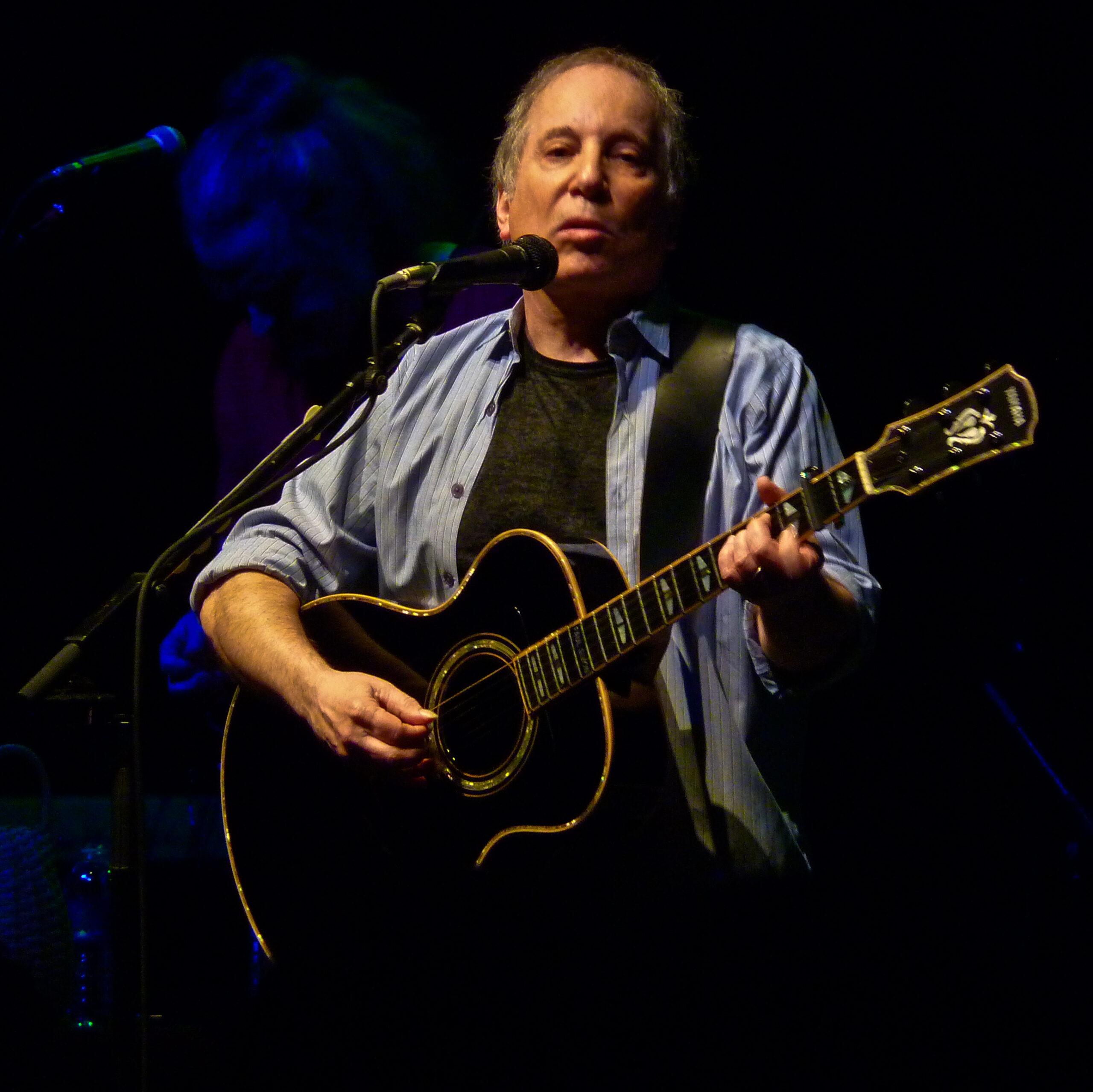
Paul Simon is a towering figure in the world of music, known for his exceptional songwriting, distinct voice, and the profound impact he has had on the landscape of popular music. Born on October 13, 1941, in Newark, New Jersey, Simon’s career spans more than six decades, during which he has become one of the most celebrated and influential artists of all time. His work, both as a solo artist and as one half of the iconic duo Simon & Garfunkel, has left an indelible mark on generations of musicians and fans alike.
Early Life and Musical Beginnings
Paul Simon was born into a Jewish family in Newark, New Jersey, and grew up in the Forest Hills neighborhood of Queens, New York. His father, Louis Simon, was a college professor and dance bandleader, while his mother, Belle, was an elementary school teacher. Music was a significant part of Simon’s upbringing, with his father’s influence playing a pivotal role in his early exposure to music.
Simon met Art Garfunkel when they were both attending Forest Hills High School. The two boys bonded over their shared love of music and began performing together, initially adopting the stage names “Tom & Jerry,” a playful nod to the popular cartoon characters. Under these pseudonyms, they recorded their first single, “Hey, Schoolgirl,” in 1957, which became a minor hit and marked the beginning of their musical partnership.
The Formation and Success of Simon & Garfunkel
The duo of Simon & Garfunkel would go on to become one of the most iconic musical partnerships in history. Their music, characterized by its harmonious melodies and introspective lyrics, struck a chord with the burgeoning folk-rock movement of the 1960s. In 1964, they released their debut album, Wednesday Morning, 3 A.M., which included an acoustic version of “The Sound of Silence.” Initially, the album did not achieve commercial success, leading Simon and Garfunkel to briefly go their separate ways.
However, in 1965, producer Tom Wilson added electric guitar and drums to “The Sound of Silence” without Simon’s initial knowledge, transforming it into a folk-rock anthem. The re-released version quickly climbed to the top of the charts, reaching No. 1 on the Billboard Hot 100. This unexpected success prompted Simon to return to the United States from England, where he had been pursuing a solo career, and rekindled the partnership with Garfunkel.
From that point on, Simon & Garfunkel’s career skyrocketed. They released a series of critically acclaimed albums, including Sounds of Silence (1966), Parsley, Sage, Rosemary and Thyme (1966), Bookends (1968), and their magnum opus, Bridge over Troubled Water (1970). The latter album, which included hits like “The Boxer,” “Cecilia,” and the title track, solidified their place in music history, with the title song becoming one of the best-selling singles of all time.
The Breakup and Solo Career
Despite their success, tensions between Simon and Garfunkel began to grow, largely due to creative differences and Garfunkel’s burgeoning acting career. After the release of Bridge over Troubled Water, the duo officially parted ways in 1970. While Garfunkel pursued acting and solo music projects, Simon embarked on a solo career that would further cement his status as a musical genius.
Paul Simon’s solo career began with the release of his self-titled album in 1972, which included the hit singles “Mother and Child Reunion” and “Me and Julio Down by the Schoolyard.” The album showcased Simon’s growing interest in world music, incorporating elements of reggae, Latin music, and other global sounds. This eclectic approach would become a hallmark of his solo work.
Throughout the 1970s and 1980s, Simon continued to release successful albums, including There Goes Rhymin’ Simon (1973), which featured hits like “Kodachrome” and “Loves Me Like a Rock,” and Still Crazy After All These Years (1975), which won the Grammy Award for Album of the Year. The latter album included the classic track “50 Ways to Leave Your Lover,” which became Simon’s only solo No. 1 hit on the Billboard Hot 100.
Graceland and Global Influence
One of the defining moments of Paul Simon’s career came in 1986 with the release of Graceland. The album, heavily influenced by South African music, was a groundbreaking work that brought the sounds of African music to a global audience. Recorded with a variety of South African musicians, including the vocal group Ladysmith Black Mambazo, Graceland was a commercial and critical success, winning the Grammy Award for Album of the Year in 1987.
Graceland not only revitalized Simon’s career but also played a significant role in raising awareness about the political situation in South Africa, particularly the system of apartheid. The album’s fusion of American folk-rock with African rhythms and melodies was a bold artistic statement, and its success helped to bridge cultural divides and introduce many listeners to the rich musical traditions of Africa.
The album’s title track, “Graceland,” and other hits like “You Can Call Me Al” and “Diamonds on the Soles of Her Shoes” became some of Simon’s most enduring songs. The accompanying world tour brought Simon and his South African collaborators to audiences around the globe, further cementing the album’s legacy.
Later Career and Continued Innovation
Following the success of Graceland, Paul Simon continued to push the boundaries of his music. In 1990, he released The Rhythm of the Saints, an album inspired by Brazilian music and recorded with musicians from South America. The album received widespread acclaim for its intricate rhythms and poetic lyrics, further demonstrating Simon’s ability to blend different musical traditions into a cohesive and innovative sound.
In 1999, Simon was inducted into the Rock and Roll Hall of Fame as a solo artist, having already been inducted with Art Garfunkel in 1990. The 2000s saw Simon continue to explore new musical directions, including the release of Surprise (2006), an album that featured collaborations with the avant-garde musician and producer Brian Eno.
Simon’s later years have been marked by a return to his roots as a songwriter, with albums like So Beautiful or So What (2011) receiving praise for their lyrical depth and mature reflections on life, love, and mortality. In 2016, Simon released Stranger to Stranger, which debuted at No. 3 on the Billboard 200 and was noted for its experimental sounds and exploration of themes such as spirituality and the human condition.
Personal Life and Legacy
Paul Simon’s personal life has been as eventful as his career. He has been married three times: first to Peggy Harper, with whom he had a son, Harper Simon; then to actress Carrie Fisher, in a brief but high-profile marriage; and finally to singer Edie Brickell, with whom he has three children. Despite the ups and downs of his personal life, Simon has remained a devoted father and continues to live a relatively private life.
Simon’s influence on popular music is immeasurable. His ability to blend different musical styles, his gift for melody, and his profound lyrical insights have inspired countless artists across genres. Whether as part of Simon & Garfunkel or as a solo artist, Simon’s songs have become part of the fabric of American culture, resonating with listeners of all ages.
Reunion with Art Garfunkel and Final Tours
Despite their separation in the 1970s, Paul Simon and Art Garfunkel have reunited several times over the years for concerts and tours. Their most notable reunion came in 1981, when they performed a free concert in Central Park, New York City, which drew an estimated 500,000 people. The concert was a massive success, and a live album, The Concert in Central Park, was released to critical and commercial acclaim.
The duo also embarked on a world tour in 2003-2004, titled “Old Friends,” which saw them performing their classic hits to sold-out audiences around the world. The tour was a reminder of the timeless appeal of Simon & Garfunkel’s music and the enduring connection between the two artists, despite their personal differences.
In 2018, Paul Simon announced his farewell tour, “Homeward Bound – The Farewell Tour,” signaling the end of his live performances. The tour was a celebration of his incredible career, with Simon performing songs from every era of his music. Although he has retired from touring, Simon has not ruled out the possibility of recording new music or making occasional live appearances.
Conclusion
Paul Simon’s life and career are a testament to the power of music to transcend boundaries, connect people, and articulate the human experience. From his early days with Art Garfunkel to his groundbreaking solo work and continued innovation in his later years, Simon has consistently demonstrated a unique ability to capture the zeitgeist while remaining true to his artistic vision.
As a songwriter, Simon has penned some of the most enduring and beloved songs in popular music history. As a performer, he has captivated audiences with his voice, his guitar playing, and his charisma. And as an artist, he has continually pushed the boundaries of what music can be, exploring new sounds, cultures, and ideas.
Paul Simon’s legacy is secure as one of the greatest musicians of all time, a true icon whose work will continue to inspire and resonate for generations to come.


