
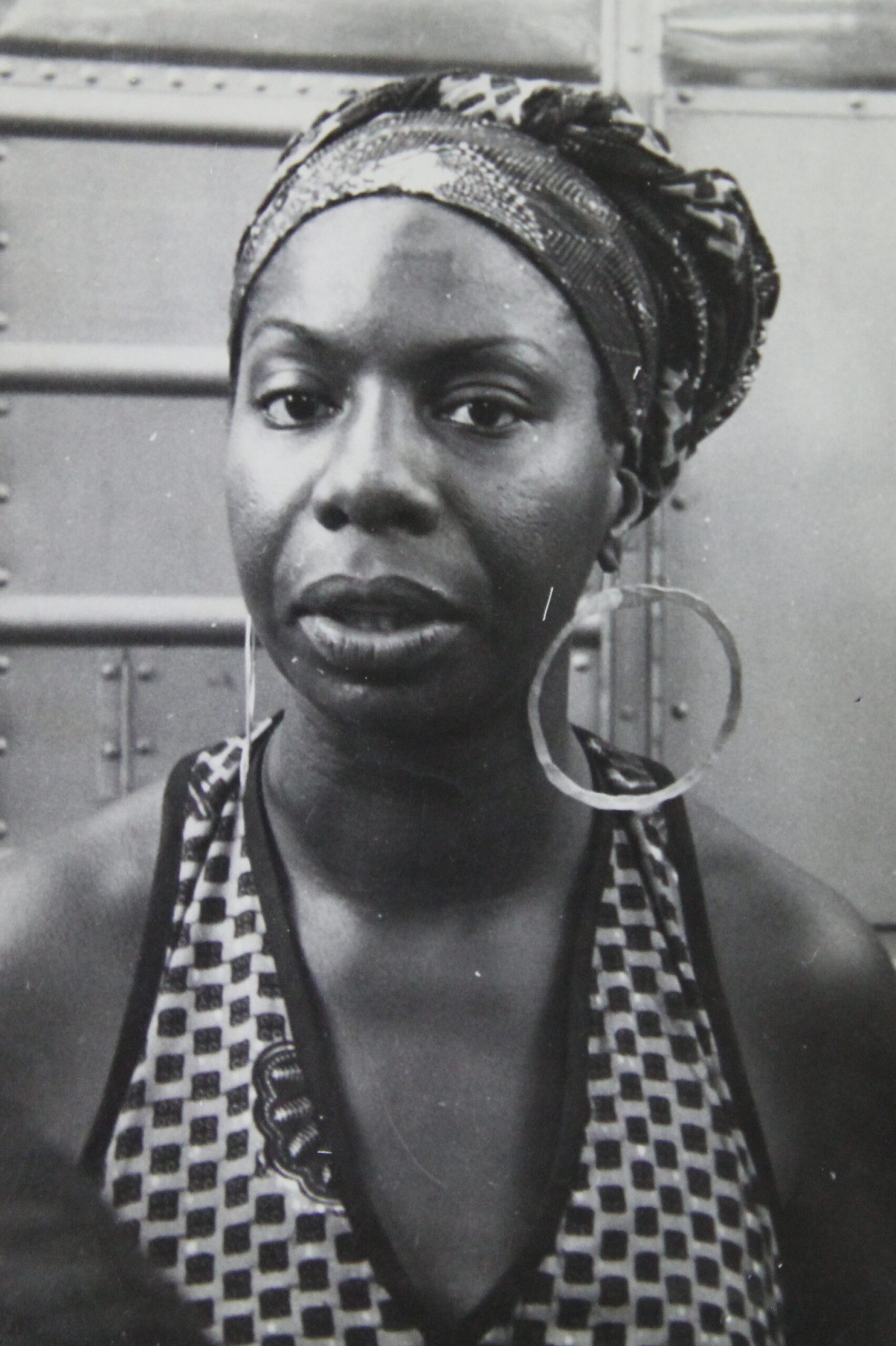
Nina Simone, born Eunice Kathleen Waymon on February 21, 1933, in Tryon, North Carolina, was a legendary American singer, songwriter, pianist, and civil rights activist. Known as the “High Priestess of Soul,” Simone’s music transcended genre boundaries, blending jazz, blues, classical, gospel, and folk into a unique and powerful sound. Her voice, often described as a deep, rich contralto, combined with her emotive piano playing, made her one of the most influential musicians of the 20th century. This article delves into Simone’s life, career, and lasting impact on both music and social justice.
Early Life and Musical Beginnings
Nina Simone was born into a large family as the sixth of eight children. Her parents, John Divine Waymon and Mary Kate Waymon, were hardworking individuals; her mother was a Methodist minister and housekeeper, while her father was a handyman and entrepreneur. From a young age, Simone showed an extraordinary talent for music. By the age of three, she was already playing the piano, and by seven, she was performing at her local church.
Simone’s early experiences with racial discrimination had a profound impact on her life and career. One of the most formative moments occurred when she was just 12 years old. Simone was set to perform at a recital in her hometown, but her parents were asked to move to the back of the hall to make room for white attendees. This incident marked the beginning of Simone’s lifelong struggle against racial injustice, a theme that would later permeate her music.
Despite the pervasive racism of the time, the black community in Tryon recognized Simone’s prodigious talent and raised money to fund her education. This support allowed her to attend the Allen High School for Girls, a boarding school in Asheville, North Carolina. After graduating, Simone continued her studies at the Juilliard School of Music in New York City, where she honed her classical piano skills. Her dream was to become the first African American classical pianist, but those dreams were dashed when she was denied a scholarship to the prestigious Curtis Institute of Music in Philadelphia, a rejection she believed was based on her race.
The Birth of Nina Simone
Faced with the harsh realities of the music industry and needing to support herself, Simone began performing in bars and nightclubs in Atlantic City, New Jersey. It was during this time that she adopted the stage name “Nina Simone” to avoid her mother’s disapproval of her singing in such venues. “Nina” came from a nickname given to her by a boyfriend, and “Simone” was inspired by the French actress Simone Signoret.
Simone’s nightclub performances were unique, blending classical, jazz, blues, and folk music. Her repertoire included songs by Johann Sebastian Bach, George Gershwin, and Duke Ellington, among others. Her ability to move effortlessly between genres, combined with her soulful voice and skilled piano playing, quickly garnered attention. In 1958, she recorded her first album, Little Girl Blue, which included the hit single “I Loves You, Porgy.” The song became a major success, reaching the Top 20 on the Billboard Hot 100 and establishing Simone as a rising star.
Rise to Fame and Civil Rights Activism
The 1960s were a defining decade for Nina Simone, both musically and politically. As the civil rights movement gained momentum, Simone became increasingly vocal about issues of racial inequality and social justice. Her music reflected her activism, with songs that addressed the struggles and frustrations of African Americans.
One of her most famous songs from this period is “Mississippi Goddam,” written in 1963 in response to the assassination of civil rights leader Medgar Evers in Mississippi and the bombing of the 16th Street Baptist Church in Birmingham, Alabama, which killed four young black girls. The song was a powerful expression of anger and frustration, and it became an anthem for the civil rights movement. However, its controversial lyrics led to it being banned in several Southern states, and Simone faced backlash from some white audiences.
Simone continued to produce music that reflected her commitment to social justice. Songs like “Four Women,” “To Be Young, Gifted and Black,” and “Old Jim Crow” tackled themes of black identity, racial pride, and resistance. Her music was not just entertainment; it was a form of protest and a call to action. Simone’s involvement in the civil rights movement extended beyond her music; she was also a close friend and ally of prominent figures like Malcolm X and Dr. Martin Luther King Jr.
Personal Struggles and Life Abroad
Despite her success, Nina Simone’s life was marked by personal struggles, including mental health issues and turbulent relationships. She was diagnosed with bipolar disorder later in life, which contributed to her erratic behavior and mood swings. Simone’s first marriage to Don Ross, a beatnik who abused her, ended in divorce. Her second marriage to Andrew Stroud, a New York City police detective who became her manager, was also fraught with difficulties. Stroud was physically abusive, and their marriage ended in divorce after years of turmoil.
In the late 1960s, disillusioned by the lack of progress in the civil rights movement and facing increasing hostility in the United States, Simone decided to leave the country. She spent the next few decades living in various countries, including Liberia, Switzerland, the Netherlands, and Barbados, before finally settling in the South of France in 1994. During this period, Simone’s recording output slowed, and she became increasingly isolated from the music industry. However, she continued to perform sporadically, and her live performances were still met with critical acclaim.
Musical Evolution and Legacy
Nina Simone’s music evolved throughout her career, reflecting the changes in her personal life and the world around her. While her early work was heavily influenced by classical music, jazz, and blues, her later recordings incorporated elements of African music, soul, and even reggae. Despite the shifts in style, Simone’s music remained deeply personal and politically charged.
One of her most critically acclaimed albums from her later years is Baltimore (1978), which includes a mix of jazz, blues, and reggae. Although not a commercial success, the album showcased Simone’s versatility and her ability to adapt to new musical trends while maintaining her unique voice.
Simone’s influence on music and culture is profound. She paved the way for future generations of black female artists who saw in her a role model for artistic expression and social activism. Artists such as Lauryn Hill, Alicia Keys, and John Legend have all cited Simone as a major influence on their work. Her songs have been covered by countless musicians across various genres, demonstrating the enduring appeal of her music.
Controversies and Final Years
Nina Simone’s later years were marked by a series of controversies and legal troubles. In the 1980s, she was charged with tax evasion for refusing to pay taxes as a protest against the Vietnam War. Simone’s erratic behavior also continued, leading to several altercations with the law. In one notable incident, she fired a gun at a record company executive whom she believed had stolen royalties from her.
Despite these challenges, Simone continued to perform and record music. Her concerts remained powerful, emotional experiences, and she retained a devoted fan base. In 1993, she published her autobiography, I Put a Spell on You, in which she candidly discussed her life, career, and struggles with mental illness and abuse.
Simone’s health began to decline in the late 1990s, and she was diagnosed with breast cancer. She continued to perform until her health no longer allowed it, with her final concert taking place in 2001 at the Bishopstock Festival in the United Kingdom. Even in her final years, Simone’s passion for music and her commitment to social justice never waned.
Nina Simone passed away on April 21, 2003, at her home in Carry-le-Rouet, France, at the age of 70. Her death marked the end of an era, but her legacy lives on through her music and her influence on subsequent generations of artists.
Historical Context and Cultural Impact
Nina Simone’s career spanned some of the most tumultuous decades in American history, and her music was inextricably linked to the social and political upheavals of the time. She emerged during the civil rights movement, a period of intense struggle for African Americans fighting for equality and justice. Simone’s music provided a soundtrack to this movement, giving voice to the frustrations, hopes, and dreams of black Americans.
Her willingness to speak out against injustice, both in her music and in her personal life, set her apart from many of her contemporaries. Simone was not afraid to challenge the status quo, and her music often served as a form of protest. Her songs addressed issues of race, identity, and power, making her a powerful figure in both the music industry and the broader social landscape.
Simone’s impact extended beyond the United States. Her international travels and eventual relocation to Europe reflected her global perspective and her disillusionment with American society. Despite her physical distance from the United States, her music continued to resonate with audiences around the world, and she became a symbol of resistance and resilience.
Conclusion
Nina Simone was more than just a musician; she was a cultural icon, a voice for the voiceless, and a fearless advocate for social justice. Her life was marked by both incredible achievements and profound struggles, but through it all, she remained true to her artistic vision and her commitment to fighting for what she believed in.
Simone’s music continues to inspire and challenge listeners today, reminding us of the power of art to effect change. As we look back on her life and career, it is clear that Nina Simone’s influence will be felt for generations to come. Her legacy is one of courage, creativity, and an unwavering dedication to justice, making her one of the most important figures in the history of music and civil rights.


